
Found a tick on your skin or your pet and need to know which kind it is? Deer tick vs dog tick identification matters because the two species carry different diseases and different risk timelines. The good news: you can usually tell them apart with three clues — size, color, and markings. Use this guide to ID the tick in front of you, then take the right next step.
Side-by-Side Comparison #
| Feature | Deer Tick (blacklegged tick) | American Dog Tick | |—|—|—| | Size (unfed adult female) | Small — about 3-4.5 mm, roughly a sesame seed | Larger — about 5 mm or more, noticeably bigger | | Body color | Reddish-orange abdomen with a black shield (scutum) covering the front third | Brown body with white, cream, or gray ornate markings on the shield | | Male appearance | Small, uniformly dark brown/black body | Larger, brown with pale mottled pattern across the whole back | | Nymph stage | Tiny — about 2 mm, like a poppy seed; harder to spot | Rarely encountered on people as nymphs | | Engorged size | Swells to a gray-blue bean shape, up to ~10 mm | Swells much larger, gray-green, up to ~15 mm | | Peak activity | Nymphs late spring-summer; adults fall and mild winter days | Spring through early summer | | Habitat | Wooded edges, leaf litter, tall grass | Grassy fields, trails, roadsides, less dense woods | | Key diseases (can carry) | Lyme disease, anaplasmosis, babesiosis | Rocky Mountain spotted fever, tularemia |
The fastest ID: if the adult female is small and reddish with a solid black shield and no white markings, think deer tick. If it is larger and brown with pale, ornate patterning on its back, think dog tick.
Deer Tick Field Marks #
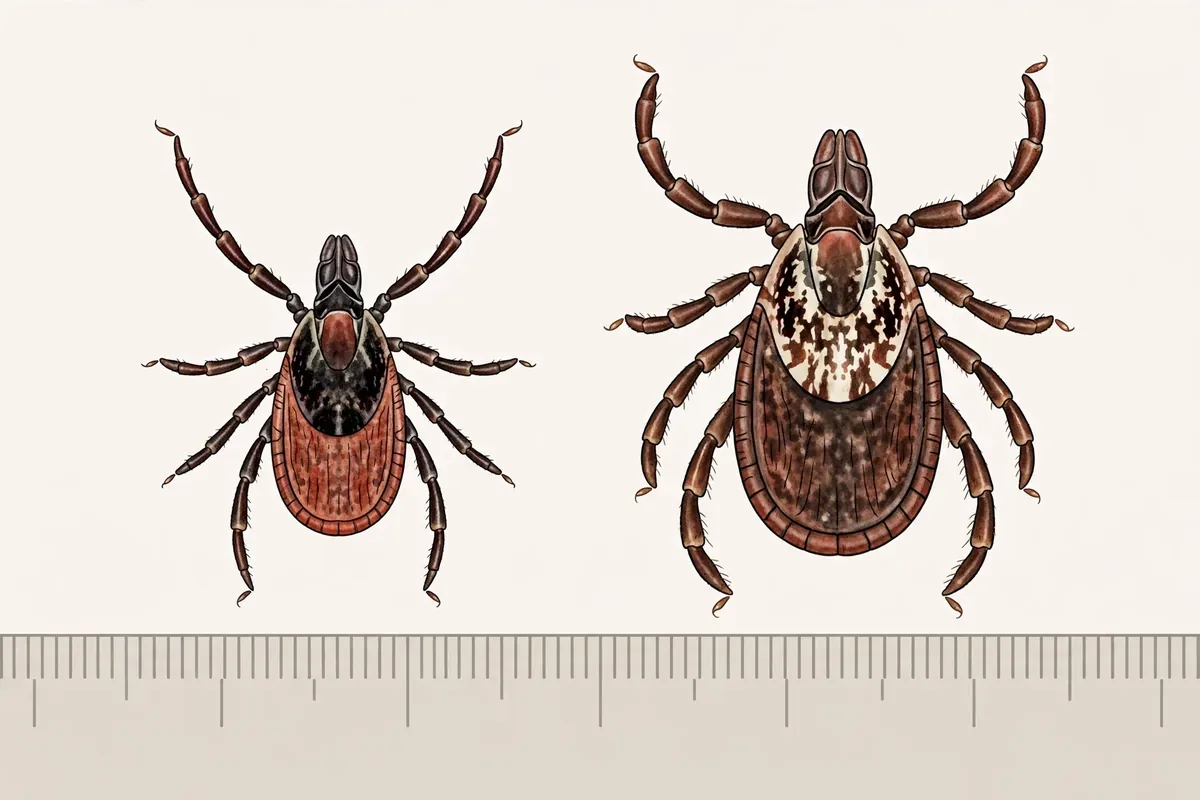
The deer tick — more accurately called the blacklegged tick — is the one behind Lyme disease, so it gets the most attention.
What to look for:
- Small overall size. Unfed adult females are sesame-seed sized. This is why they get missed during casual tick checks.
- Two-tone body. The female’s abdomen is a brick or orange-red color, with the black scutum (the hard plate behind the head) covering only the front portion. That black shield on an otherwise reddish body is the signature look.
- Dark legs. As the name suggests, the legs are dark brown to black.
- Nymphs are poppy-seed tiny. The nymph stage causes most Lyme transmission precisely because people do not see it. A nymph looks like a dark speck with legs — check with a magnifier if you are unsure.
- Eight legs = adult or nymph; six legs = larva. Larvae are rarely a Lyme risk but are still worth removing.
Where you meet them: woods, brushy edges, leaf litter, and tall grass — especially where deer and mice live. Unlike dog ticks, adult blacklegged ticks stay active on warmer fall and even winter days, so tick season for them is effectively year-round in mild climates.
Dog Tick Field Marks #
The American dog tick is the larger, showier cousin — and the one most often found on dogs, though it bites people readily.
What to look for:
- Bigger body. Even unfed, adult females are clearly larger than a deer tick — roughly the size of a watermelon seed. They are hard to miss by comparison.
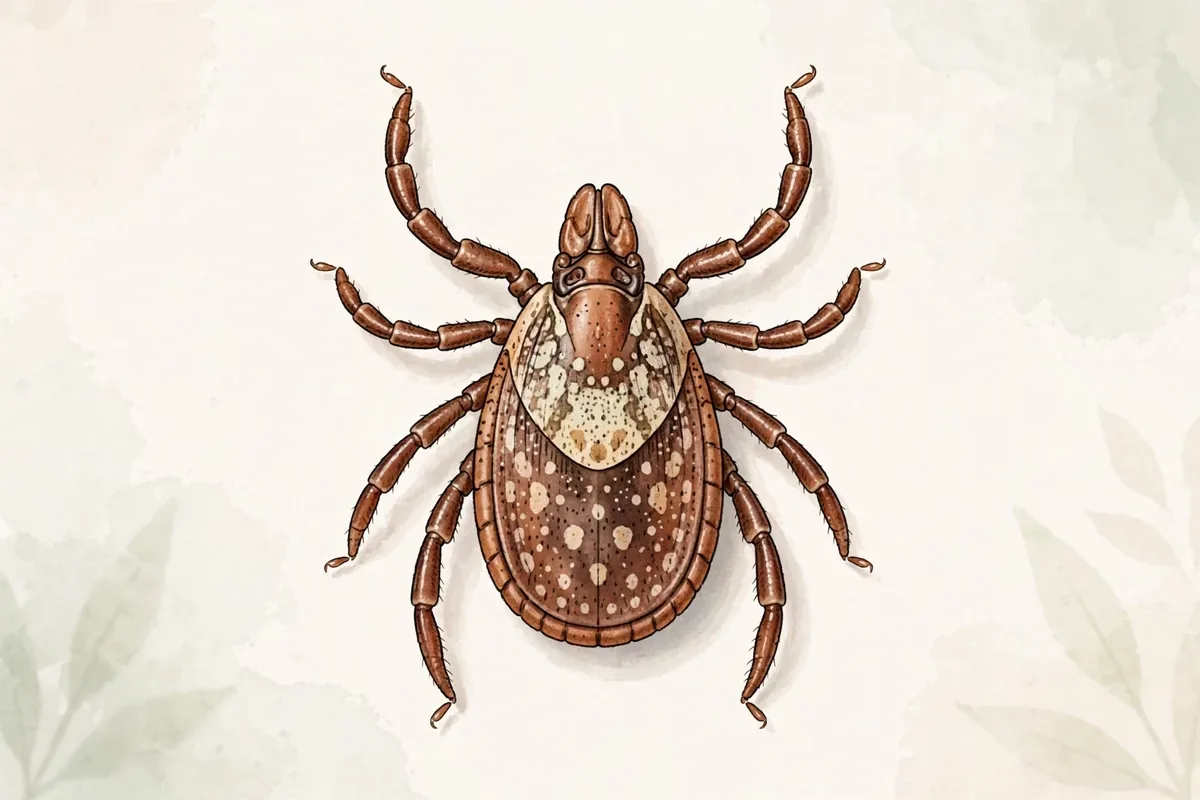
- Ornate pale markings. The shield carries white, cream, or gray swirling patterns. In females the markings sit on the front scutum; in males the pattern spreads across the whole back.
- Brown base color. The body beneath the markings is a medium brown — no reddish-orange abdomen like the deer tick.
- Dramatic engorgement. A fully fed female dog tick balloons to a gray-green, grape-sized mass. If what you pulled off looks enormous, it is probably a dog tick that has been feeding for days.
Where you meet them: open grassy areas, meadows, trails, and roadsides. Dog ticks prefer sunnier, more open habitat than deer ticks. Their peak is spring into early summer, and they are far less active in fall.
What the ID Means for Your Next Steps #
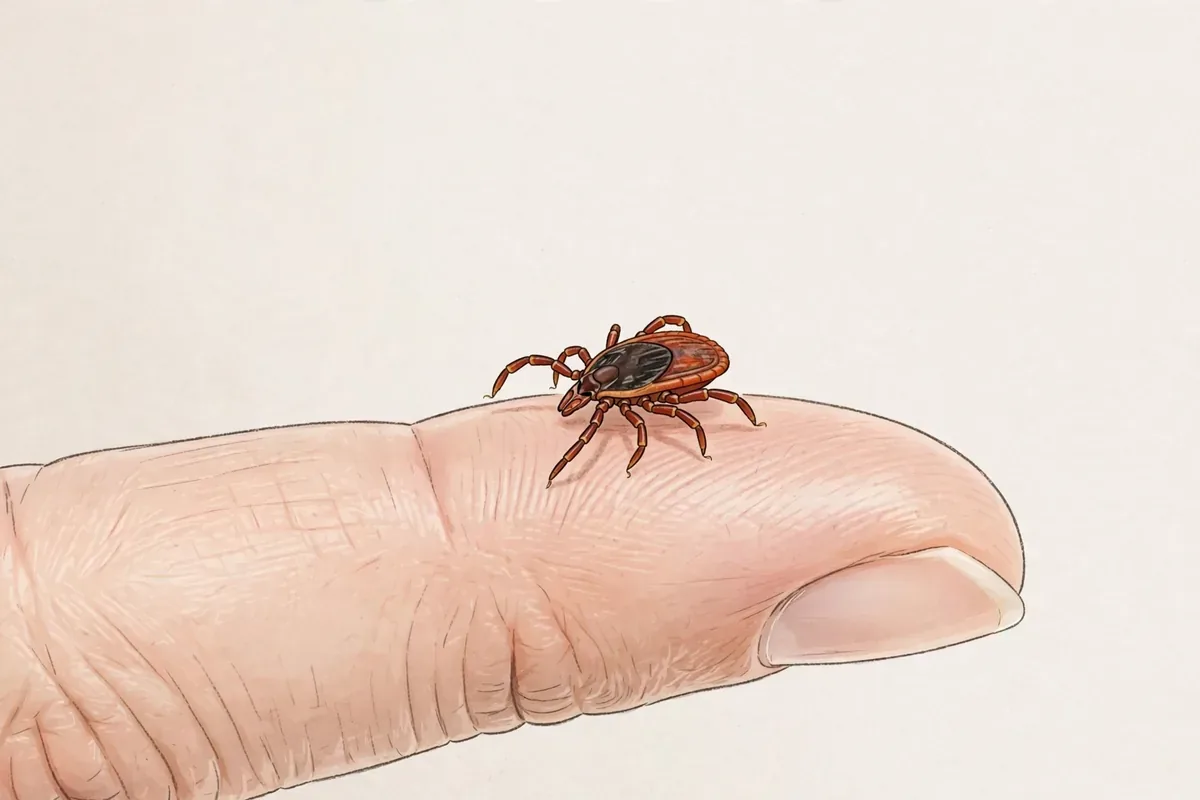
Identifying the tick helps you and your doctor judge risk — but it does not change the first steps.
Do this regardless of species:
- Remove it properly. Grasp the tick as close to the skin as possible with fine-tipped tweezers and pull straight up with steady pressure. See how to remove an attached tick safely for the full technique.
- Save the tick. Tape it to an index card or drop it in a sealed bag with the date and where on the body you found it. Identification is much easier with the actual tick, and whether to save a tick after a bite explains why it can matter for your doctor.
- Clean the bite. Wash the area and your hands with soap and water or an antiseptic.
- Note the timeline. Write down when you found the tick and your best guess of how long it was attached — engorgement level helps.
How the ID changes the conversation with your doctor:
- Deer tick attached 24+ hours — ask about Lyme disease risk and whether a preventive antibiotic is appropriate for your situation. Risk rises with attachment time; a tick attached only briefly carries far less risk.
- Dog tick — ask about Rocky Mountain spotted fever and tularemia symptoms to watch for over the coming weeks, especially fever, headache, or a rash.
- Unknown species — bring the saved tick or a clear photo so your doctor can help identify it.
Never try to guess the species from a blurry phone photo alone when a real decision depends on it — when in doubt, save the tick and ask a professional.
Warning signs: when to seek care #
Call 911 immediately if you develop trouble breathing or swallowing, swelling of the face, lips, or throat, widespread hives, dizziness or fainting, or a racing heartbeat — these signal a severe allergic reaction and are rare after tick bites but always an emergency. Use an epinephrine auto-injector first if you have one.
Call your doctor promptly if a fever, headache, unusual fatigue, or rash develops in the weeks after any tick bite — especially the expanding bull’s-eye rash of Lyme disease or the spotted rash sometimes seen with Rocky Mountain spotted fever. Red streaks spreading from the bite, increasing pain, swelling, warmth, pus, or a bite that looks worse after 24-48 hours all warrant medical evaluation for possible infection.
Frequently asked questions #
Can you get Lyme disease from a dog tick? #
The American dog tick is not considered a meaningful vector of Lyme disease — that role belongs to the blacklegged (deer) tick. Dog ticks are, however, the main US vector of Rocky Mountain spotted fever. Correct identification therefore points your doctor toward the right illnesses to watch for, which is exactly why the ID matters.
Are deer ticks really smaller than dog ticks? #
Yes, noticeably so. An unfed adult female deer tick is about the size of a sesame seed; an unfed adult female dog tick is more like a watermelon seed — roughly twice the size. The difference is obvious when you see them side by side, which is why size is the single fastest field clue.
What if the tick is too engorged to identify? #
Heavy engorgement stretches the body and can obscure markings, but the scutum (the hard plate behind the mouthparts) does not stretch — its color and pattern remain visible. A black scutum on a reddish engorged body suggests deer tick; pale ornate markings on the scutum suggest dog tick. Your doctor or local health department can confirm from the saved specimen.
Do male ticks bite too? #
Yes — males of both species can bite, though they feed for shorter periods and are less commonly the source of disease transmission. Male deer ticks are small and uniformly dark; male dog ticks are larger with the pale mottled pattern across the whole back. Remove and save any tick you find attached, male or female.
Medical and editorial note #
This guide is general information about tick identification and is not medical advice. Species identification from photos or memory is imperfect — if a tick was attached to you, save the specimen and talk to your doctor about species-specific risks and whether preventive treatment is appropriate.


