
A sudden yowl, frantic pawing at the face, or a mysterious swelling — a cat bitten by spider encounters is more common than most owners realize, because cats hunt exactly the small moving things that bite back. Most spider bites on cats are minor and resolve on their own, but a few US spiders can cause serious harm. Here is how to read the signs, give safe first aid, and know when your cat needs a veterinarian now.
Signs Your Cat Was Bitten #
You will rarely witness the bite itself. Instead, watch for the cluster of signs that follows.
Immediate behavioral signs:
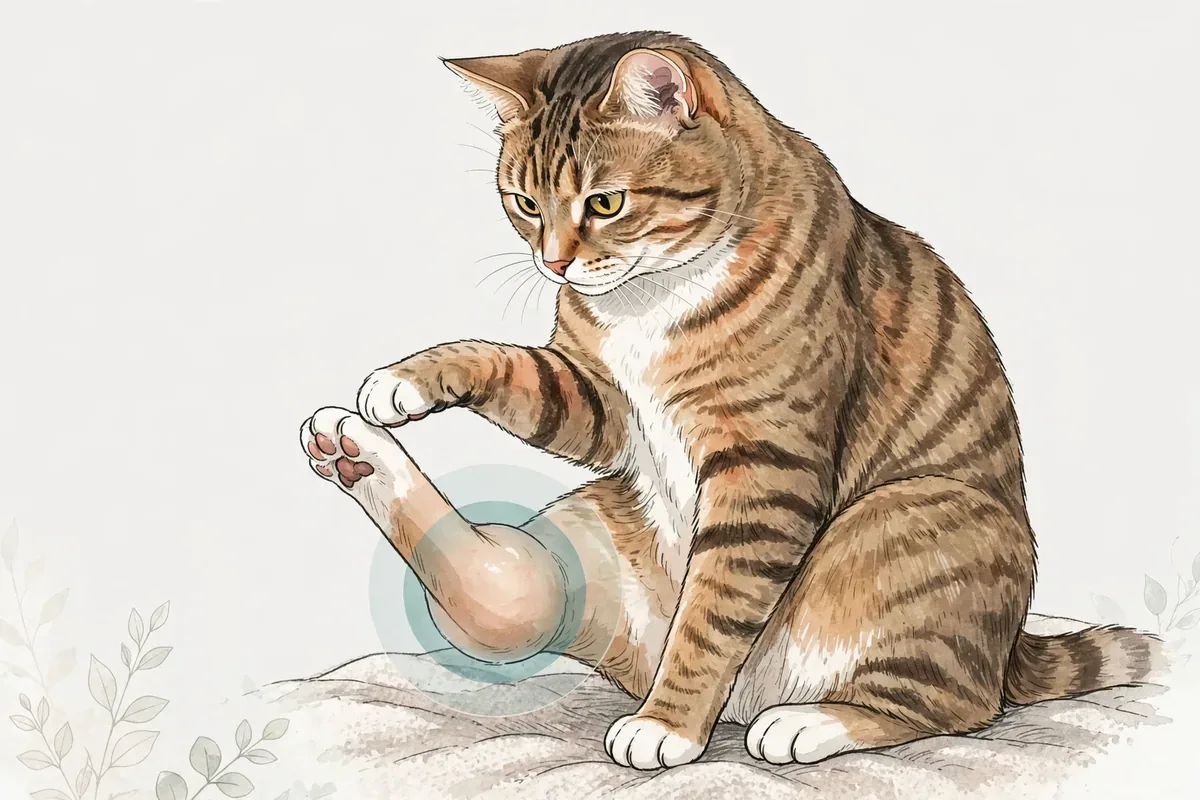
- A sudden cry or flinch, followed by frantic licking, chewing, or pawing at one spot — face, paws, and legs are the usual targets.
- Limping or holding up a paw if the bite is on a foot.
- Agitation or hiding — a cat in pain often retreats under furniture or becomes uncharacteristically aggressive when touched.
Physical signs developing over minutes to hours:
- Localized swelling, especially on the face, muzzle, or paws. Mild puffiness around a single spot is the most common finding.
- Redness or a small puncture mark — hard to see through fur; part the hair gently to look.
- Drooling if the bite is on the muzzle or the cat mouthed the spider.
- Lethargy — a normally active cat going quiet and still after an incident deserves attention.
Signs of a serious reaction (act fast):
- Rapidly spreading swelling, particularly around the face and throat.
- Vomiting, diarrhea, or drooling that will not stop.
- Tremors, muscle rigidity, or trouble walking — these can indicate black widow envenomation.
- Difficulty breathing, pale or blue-tinged gums, collapse.
- A wound that darkens, ulcerates, or grows over days — possible with recluse-type bites.
The tricky part: cats hide pain instinctively. A cat that seems “fine” an hour later may still be developing a reaction — monitor for at least 24 hours after any suspected bite, and longer if the spider might have been a dangerous species.
Which Spiders Are Dangerous to Cats #
The vast majority of US house spiders cannot seriously harm a cat. Two groups deserve real respect.
Black widow spiders:
- Identification: glossy black body with a red or orange hourglass marking on the underside of the abdomen. Found in woodpiles, sheds, garages, cluttered basements, and outdoor furniture.
- Why they matter: black widow venom is a potent neurotoxin. Cats are small, so a full envenomation hits them hard — muscle cramping, rigid abdomen, tremors, elevated heart rate, and in severe cases, breathing difficulty.
- Bites are uncommon but serious. Widows are shy and bite only when pressed against skin — exactly what happens when a cat pounces on one.
Brown recluse spiders:
- Identification: tan to brown body with a dark violin-shaped marking on the back, long thin legs. They hide in undisturbed indoor spots — closets, attics, boxes, behind furniture.
- Why they matter: their venom can cause tissue damage around the bite. In cats, a recluse bite may start as mild swelling and develop over days into an open, slow-healing wound.
- Often misidentified. Many brown spiders get blamed as recluses; true recluses have a limited range (mainly the south-central US) and six eyes in pairs rather than eight. Do not guess — photograph from a safe distance if you can.
Everything else: common house spiders, wolf spiders, jumping spiders, and orb weavers may cause a brief sting-like pain and minor local swelling at most. A cat that pounced on a spider and shows only mild, fading swelling almost certainly met one of these.
Do not handle the spider. If you can safely photograph it from a distance or trap it under a jar for the vet to see, that helps — but never risk a bite to yourself trying to catch it. Your description of where it was found matters too.
Safe First Aid at Home #
For a cat with mild, local signs and no red flags, calm home care is appropriate while you monitor.
Do this:
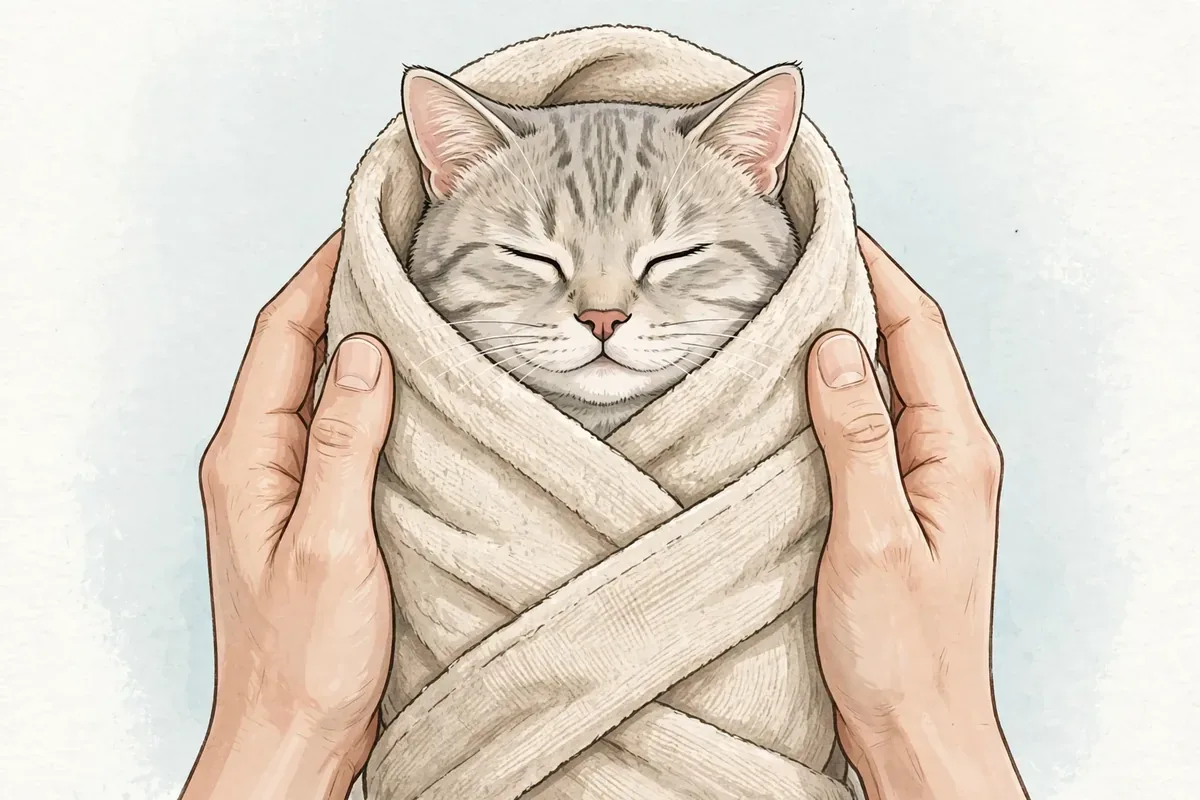
- Keep your cat calm and still. Excitement and exertion spread venom faster. Confine your cat to a small, quiet room.
- Gently examine the area. Part the fur and look for swelling, redness, or puncture marks. Note the location and take a photo for comparison later.
- Apply a cool compress. Wrap ice or a cold pack in a thin towel and hold it gently against the swollen area for 5-10 minutes. Most cats tolerate this poorly — do not force it if your cat panics; calm matters more.
- Prevent licking and chewing. An e-collar (cone) or snug recovery suit keeps the cat from irritating the wound. Licking introduces mouth bacteria and turns a minor bite into an infected one.
- Call your vet for guidance. Even for mild bites, a quick call lets your vet advise whether to watch at home or come in. Describe the signs, the timeline, and the spider if you saw it.
Do NOT:
- Give any human medication. No antihistamines, no pain relievers, no topical creams unless your veterinarian specifically directs them — many human drugs are toxic to cats, and dosing is never guesswork.
- Do not cut, suck, or squeeze the bite. These folk measures do not remove venom and cause tissue damage.
- Do not apply heat to a fresh bite — it can increase swelling.
- Do not “wait and see” through red-flag symptoms. The serious signs above override all home care.
Cats and stinging insects have their own risks too — if the culprit might have been a bee rather than a spider, see cat stung by a bee: first aid and when to call the vet. For keeping any bite clean during healing, how to clean a bite or sting safely applies to pets as well as people.
After the First Hours: Monitoring #

The 24-hour watch:
- Recheck the site every few hours. Mild swelling should plateau and improve within a day.
- Watch appetite, litter box, and energy. A cat that stops eating, hides continuously, or becomes unusually lethargic needs veterinary evaluation even if the bite site looks okay.
- Photograph the site daily. Subtle spreading is easier to catch in photos than from memory.
Days 2-7:
- Most minor bites resolve within a few days with no treatment beyond the basics above.
- A wound that darkens, opens, oozes, or grows needs veterinary care — tissue injury from certain spider venoms declares itself over days, not hours.
- Limping that worsens rather than improves, or swelling that migrates, also warrants a vet visit.
Prevention: reduce indoor spider encounters by decluttering storage areas, sealing cracks around doors and windows, shaking out bedding and laundry in spider-prone areas, and keeping woodpiles away from the house. Supervise outdoor cats around sheds, woodpiles, and rock walls where widows live.
Warning signs: when to seek care #
Call your vet or an emergency animal hospital immediately if your cat shows difficulty breathing, collapse, pale or blue gums, uncontrolled vomiting, tremors or seizures, rigid or painful abdomen, rapidly spreading facial or throat swelling, or a bite wound that is blackening, ulcerating, or growing. Do not wait for morning — these signs need emergency veterinary care now.
Call your regular vet promptly (same day) for any suspected spider bite with more than mild local swelling, any bite from a spider you believe was a black widow or brown recluse, swelling that worsens after 24 hours, loss of appetite or unusual lethargy, or a wound that is not clearly improving within a few days. When in doubt, call — veterinarians would rather triage a mild bite by phone than see a serious one too late.
Frequently asked questions #
How can I tell if my cat was bitten by a spider or stung by a bee? #
It is often impossible to tell from the swelling alone. Clues: a bee sting may leave a visible stinger (look, but do not dig), tends to cause rapid dramatic swelling on the face or paw, and the cat may have been pawing at a flying insect. Spider bites more often happen around clutter, woodpiles, or baseboards. If unsure, describe the circumstances to your vet — the context helps more than the bump.
My cat seems fine now — can I skip the vet? #
For a mild, local reaction that is clearly improving within 24 hours, watchful home monitoring with a vet phone call is reasonable for many cats. But “seems fine” in cats is unreliable — they mask pain. If there is any doubt about the spider species, any systemic sign (vomiting, lethargy, appetite loss), or the swelling is more than mild, get the cat examined.
Are spider bites on cats usually serious? #
No — the overwhelming majority are minor. Cats encounter spiders constantly, and most spiders cannot do them meaningful harm. Serious cases cluster around black widow and brown recluse bites, secondary infection from chewing the wound, and rare individual hypersensitivity. The right response is calm monitoring plus a low threshold for veterinary help, not panic.
Should I try to find the spider? #
Only if you can do it safely — photograph from a distance or trap it under a container without handling it. Never reach into a woodpile, wall void, or clutter blind. If you cannot find it safely, your description of the location and the cat’s symptoms gives the vet enough to work with. Do not delay care to hunt for the spider.
Medical and editorial note #
This guide is general information about spider bites in cats and is not veterinary advice. Never give your cat human medications or guess at doses — always consult your veterinarian. If your cat shows any emergency signs, contact your vet or an emergency animal hospital immediately.


