
A bee sting to the eyelid is painful, frightening, and almost guaranteed to swell the eye shut. A bee sting on eyelid skin demands two things at once: fast stinger removal to limit venom, and vision-safe care because the eye itself is inches away. Act calmly, work quickly, and know exactly which symptoms turn this from a home-care situation into an urgent one.
First Steps: The First 10 Minutes #
Speed matters more than technique in the first minutes — the stinger keeps pumping venom until it is out.
Do this immediately:
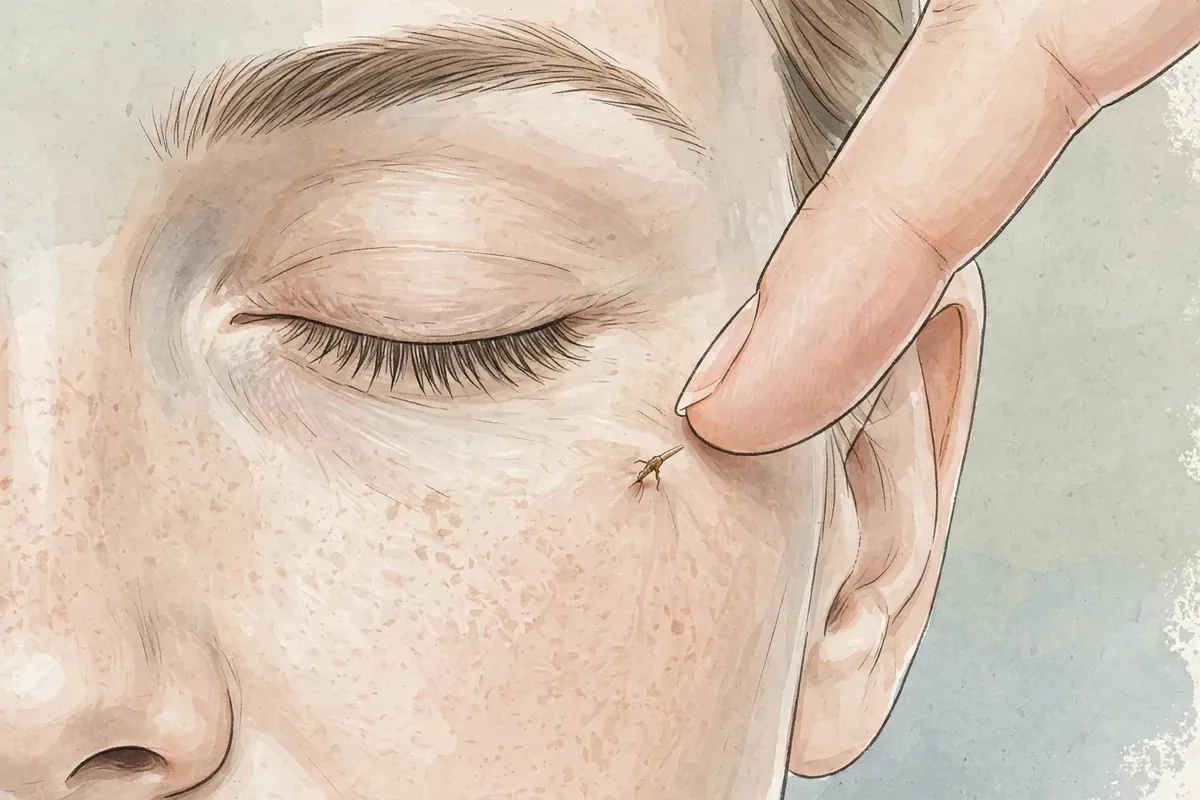
- Remove the stinger now. Honeybees leave the stinger behind with its venom sac attached. Scrape it off sideways with a fingernail, a credit card edge, or the dull side of a knife — do not waste time hunting for perfect tweezers first. Full technique is in how to remove a bee stinger.
- Do not squeeze the venom sac. If you use tweezers, grasp below the sac, close to the skin. Pinching the sac pushes more venom in.
- Move away from the area. If one bee stung, others may be nearby — especially near hives, flowering bushes, or garbage. Walk calmly away; do not swat wildly.
- Keep the eye closed. This protects the cornea from accidental rubbing while you work and keeps the area still.
- Clean gently. Once the stinger is out, wash the eyelid area with mild soap and cool water, keeping soap out of the eye.
What NOT to do in the first minutes:
- Do not suck the venom out — it does not work and risks mouth injury or infection.
- Do not apply heat — heat increases blood flow and can worsen swelling near the eye.
- Do not rub the eye, however strong the urge. Rubbing spreads venom through the loose eyelid tissue and can scratch the cornea.
For the broader first-aid sequence that applies to any sting, see first 10 minutes after a sting.
The 48-Hour Swelling Timeline #
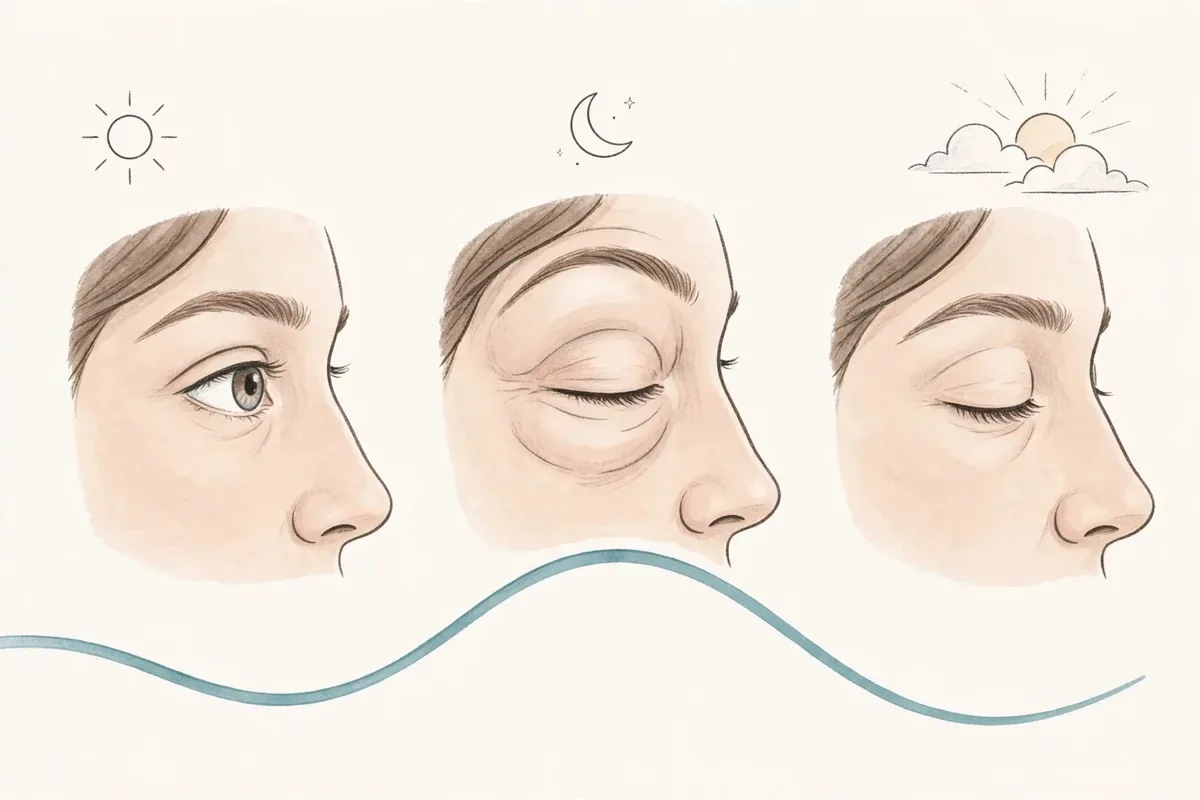
Eyelid stings follow a predictable arc. Knowing it prevents panic at each stage.
Hour 0-6: the sharp phase.
- Immediate pain and burning at the sting site — the worst pain is usually in the first hour.
- Rapid swelling begins. The eyelid puffs quickly because the tissue is thin and loose. The eye may close partially or fully within hours.
- Redness and warmth spread around the sting point.
Hour 6-24: the peak builds.
- Swelling reaches its maximum, often the morning after the sting (fluid pools overnight). The eye may be completely shut — this looks alarming but is typical.
- Throbbing or aching replaces the sharp pain. The lid may feel tight and bruised.
Day 2-3: the turn.
- Swelling plateaus, then starts receding. Improvement is gradual — the lid opens a little more each day.
- Itching replaces pain as the dominant sensation. This is a normal healing sign, though still miserable near the eye.
Day 4-7: resolution.
- Swelling fades to mild puffiness, sometimes with yellowish-green bruise-like discoloration as trapped blood pigment clears.
- Residual tenderness at the exact sting point can linger a few more days.
What to do during this window:
- Cold compress cycles. Wrap ice in a clean cloth and hold gently against the closed lid for 10-15 minutes, several times daily, especially in the first 48 hours.
- Oral antihistamine per label directions can reduce itching and some swelling. Talk to your pharmacist about options; for children, follow age-labeled dosing or ask the pediatrician.
- Sleep with the head elevated to limit overnight fluid pooling.
- Track the arc. If swelling is clearly worsening after 48 hours instead of plateauing, that breaks the normal pattern — get evaluated.
Vision Safety: Protecting the Eye #
The sting is on the lid, but the eye itself needs active protection throughout healing.
Protect vision:
- Check vision early. Once the initial pain eases, cover the good eye and check the stung eye’s vision as best you can — even through a swollen lid, note whether light, shapes, or movement are perceived normally. Any obvious vision loss is urgent.
- Do not put creams on the lid margin. Hydrocortisone and combination creams are not for use near the eyes. Keep all topical products off the eyelid itself.
- Contact lenses out. Switch to glasses until the swelling fully resolves — lenses trap debris against a compromised lid and raise infection risk.
- Sunglasses help. Light sensitivity is common with a swollen lid; dark glasses reduce squinting and accidental rubbing outdoors.
Watch the eye, not just the lid:
- The white of the eye may look pink or bloodshot from the inflammatory response — mild redness alone is common.
- What is NOT normal: sharp pain inside the eyeball, pain when moving the eye, sudden vision changes, or discharge. Those point to the eye itself being involved and need same-day care.
- Children cannot always describe vision changes. If a child will not open the eye after the swelling starts improving, complains the eye (not the lid) hurts, or bumps into things on that side, get them evaluated promptly.
Warning signs: when to seek care #
Call 911 immediately for trouble breathing or swallowing, swelling of the lips, tongue, face, or throat beyond the stung eyelid, widespread hives, dizziness or fainting, or a racing heartbeat. A sting near the eye does not change anaphylaxis protocol: use an epinephrine auto-injector first if prescribed, then call 911.
Seek urgent or same-day care for any vision change (blurry, double, or lost vision), eye pain or pain with eye movement, discharge from the eye, or swelling that spreads from the eyelid across the cheek or forehead. A sting site that keeps worsening after 48 hours, develops red streaks, increasing warmth, or pus, or is accompanied by fever, needs medical evaluation for possible infection. Stings inside the mouth or throat are a separate emergency — do not wait.
Frequently asked questions #

How long will my eye stay swollen shut after a bee sting? #
Typically the worst swelling is at 24-48 hours, with the eye progressively opening over days 3-5 and near-full resolution within a week. Bruise-like discoloration can linger a few extra days. If the lid is still completely shut and not improving by day 4, have it checked.
Should I take an antihistamine for a bee sting on the eyelid? #
An oral antihistamine per label directions is a reasonable home measure for itching and mild swelling, and many people find it helps. It does not treat anaphylaxis and does not replace emergency care if severe symptoms appear. If you have a known bee-sting allergy, follow your allergist’s action plan — which usually starts with epinephrine, not antihistamines.
The stinger is too close to my eye to scrape — what now? #
Do not probe near the eyeball with sharp objects or press on the eye. If you cannot remove the stinger safely with a gentle sideways scrape, go to urgent care or the ER — clinicians remove stingers near the eye routinely and can check the eye surface at the same time. A few extra minutes of venom is far less risky than injuring the eye.
Can a bee sting on the eyelid damage vision permanently? #
A sting confined to the eyelid skin very rarely affects vision permanently — the swelling looks dramatic but the eyeball itself is usually untouched. Permanent problems are associated with direct injury to the eye surface, severe infection, or delayed treatment of complications. That is exactly why vision checks and the red flags above matter: they catch the rare cases where the eye itself is involved.
Medical and editorial note #
This guide is general information about bee stings on the eyelid and is not medical advice. Because the eye is involved, keep your threshold for professional care low — any doubt about vision, eye pain, or spreading swelling deserves same-day evaluation by a clinician.


