
You can’t enjoy your backyard when every cold drink comes with a winged, uninvited guest. If you’re wondering what attracts wasps to your yard, the honest answer is simple: wasps don’t visit by accident. Your yard is offering them food, water, or shelter — usually all three. Cut off those three things with the 10 fixes below, and most of your wasp problem solves itself without a spray can.
First, understand the three magnets #
Before the fixes, a quick tour of wasp motivation. Wasps are foragers with excellent memories — once a scout finds something good, she recruits nest-mates, which is why one wasp on Tuesday becomes twelve by Friday.
Food. In spring and early summer, wasps hunt protein (other insects, meat scraps) to feed their larvae. By late summer and fall, the colony’s needs shift to sugar — and that’s when your soda cans, fallen fruit, hummingbird feeders, and barbecue sauces become irresistible. Sweet and protein-rich foods are the two big food magnets.
Water. Like everything alive, wasps need water, especially in hot weather. Dripping faucets, birdbaths, pet bowls, pool edges, and AC-unit condensation can become regular drinking spots wasps return to daily.
Shelter. Every wasp you see was born somewhere nearby. Eaves, sheds, deck undersides, hollow fence posts, woodpiles, dense shrubs, and underground cavities all make fine nest sites. A yard full of undisturbed nooks invites multiple nests in one season.
The 10 fixes below are organized around these three magnets — each a genuinely separate action, most costing little or nothing.
Food: fixes 1–4 #
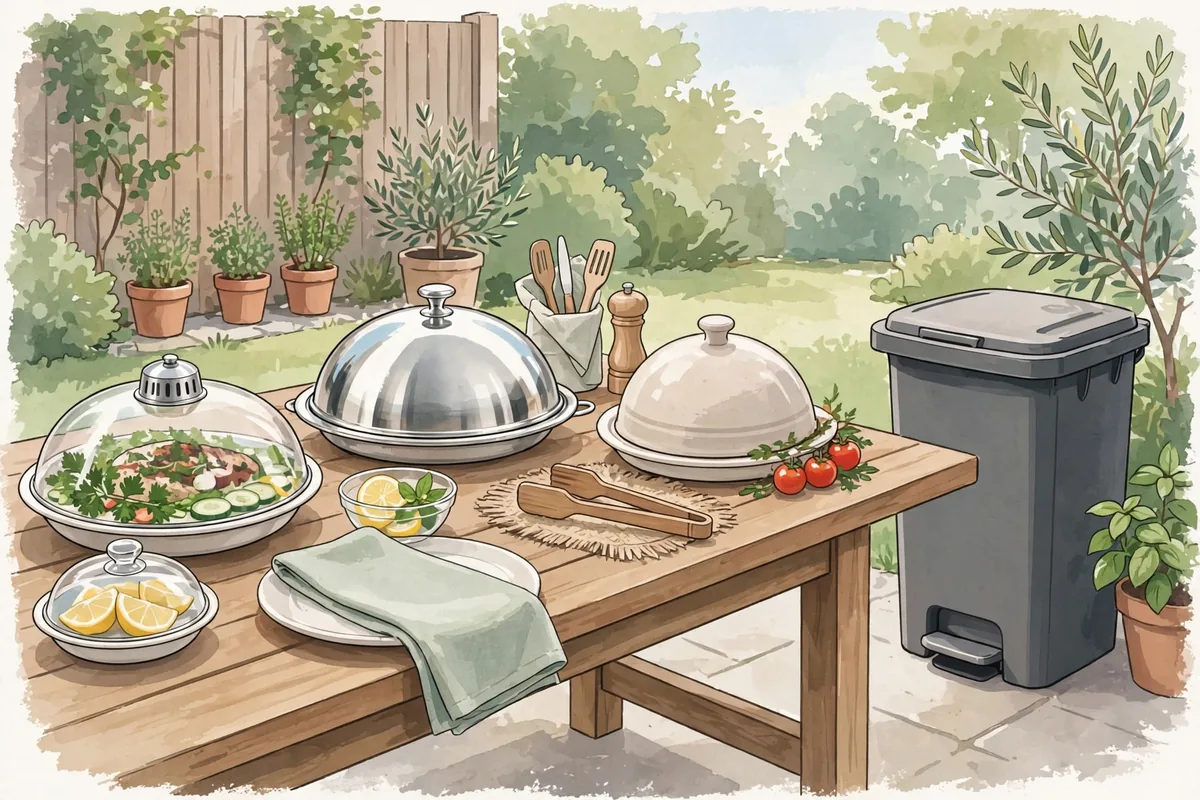
Fix 1: Cover food the moment it comes outside. The single most effective change at any outdoor meal is physical coverage — lids, mesh food tents, or even inverted bowls over serving dishes. Wasps find exposed food within minutes; covered food barely registers. Make covering food the habit, not swatting wasps after they arrive.
Fix 2: Seal your trash cans — really seal them. An open or loose-lidded garbage can is a 24-hour wasp buffet, especially one holding meat scraps, sweet wrappers, or soda cans. Use cans with tight-fitting, preferably locking lids; rinse recyclables; and bag food waste before it goes in the bin. If wasps are working your cans, the lids aren’t doing their job.
Fix 3: Clean the grill after every use. Grease, charred meat bits, and drippings are protein magnets. A grill left dirty between cookouts can draw wasps for days. Scrape grates, empty the drip tray, and wipe side shelves after cooking — five minutes that removes one of the strongest attractants in the yard.
Fix 4: Pick up fallen fruit — and watch the pet food. Overripe fruit on the ground is pure sugar to a late-summer wasp. Harvest ripe fruit promptly and pick up drops every day or two during fruit season. The same goes for pet food bowls left outside: protein-rich kibble and wet food attract wasps as reliably as they attract neighborhood cats. Feed pets indoors when possible, or bring bowls in after meals.
Water: fixes 5–6 #
Fix 5: Eliminate standing water. Walk your yard after watering or rain and look with wasp eyes: saucers under pots, clogged gutters, kiddie pools, tarped puddles, rain-filled wheelbarrows. Empty, overturn, or refresh these regularly; change birdbath water every couple of days, which also discourages mosquitoes.
Fix 6: Repair drips and leaks. A dripping outdoor faucet or a weeping hose connection is a wasp water fountain. Fix washers, tighten connections, and check irrigation lines for slow leaks; redirect AC condensate lines pooling on the ground. To a wasp in August, a reliable drip is worth returning to every day.
Shelter: fixes 7–8 #
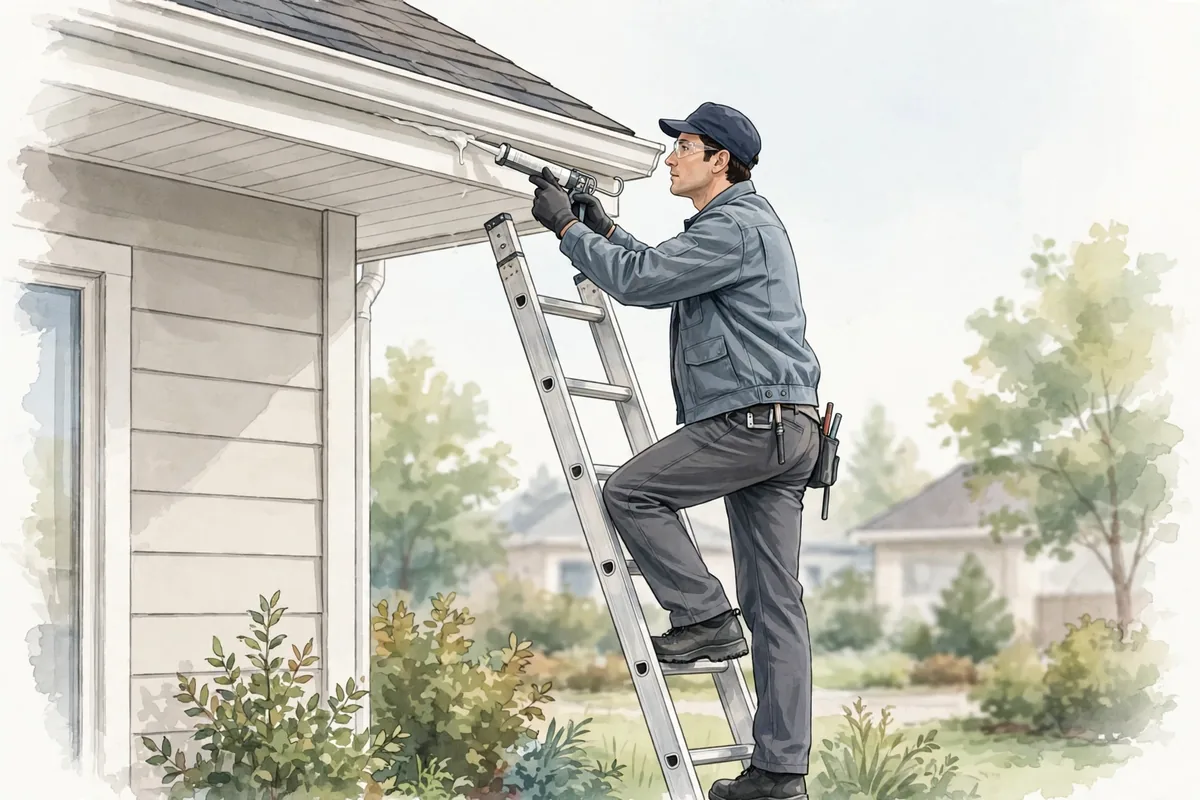
Fix 7: Seal the gaps they nest in. In spring, walk the house and outbuildings looking for the small voids where queens start nests: gaps under eaves and soffits, openings around utility lines, cracks in siding, hollow fence posts (cap them), and gaps under deck boards. Caulk, mesh, and expanding foam close most of these in an afternoon. You’re not just blocking this year’s queens — you’re blocking every future year’s.
Fix 8: Check for and remove early nests. The cheapest nest removal is the one done in spring, when the nest is golf-ball sized and holds only the queen. Inspect eaves, porch ceilings, shed interiors, and play equipment every week or two from spring onward. A brand-new paper-wasp umbrella can often be knocked down safely at night (when wasps are inactive and home) with a long-handled tool — but anything larger than a golf ball, enclosed in a wall, or underground should go to a professional. If you’re unsure where a nest is, how to find a wasp nest walks through safe tracking methods.
Habits: fixes 9–10 #
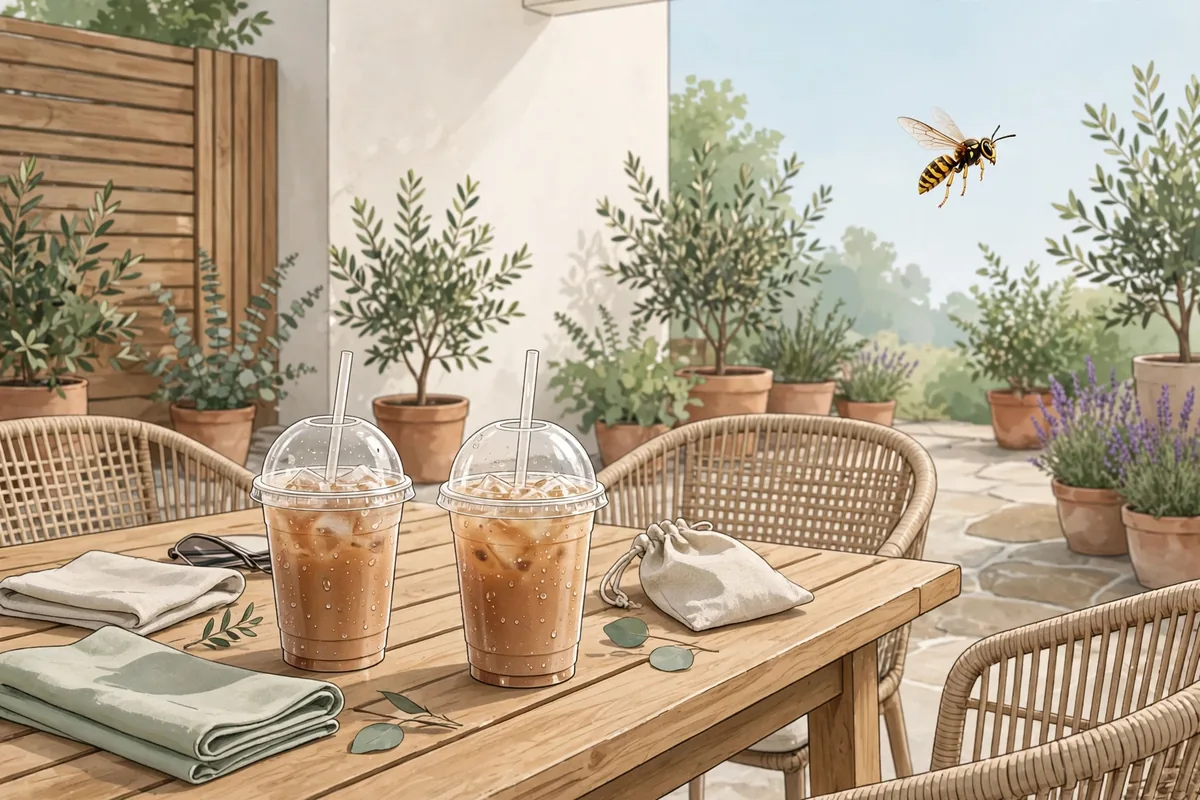
Fix 9: Serve drinks in covered containers. Open cans and cups of soda, beer, or juice are wasp traps in the most literal sense — wasps crawl inside, and the next sip can mean a sting inside the mouth. Pour drinks into cups with lids and straws, or use can covers. This single habit prevents some of the nastiest stings of summer.
Fix 10: Rethink scents and landing spots near seating areas. Strong floral perfumes, scented lotions, and bright clothing can draw curious wasps toward people — the evidence is anecdotal rather than rigorous, but reducing strong scents in the seating area costs nothing. More concretely, keep the dining and lounging area clean: wipe tables after meals, sweep up crumbs and spills promptly, and don’t leave sweet drink residue in cups. A clean patio simply offers wasps no reason to linger.
One honest note on a popular tip: decoy nests (fake nests hung to scare off real ones) are widely sold, but the evidence is thin — wasps of the same species do nest near each other in the wild. The ten fixes above, which remove actual attractants, are far more reliable than any deterrent gadget.
What not to do #
A few common reactions make things worse:
- Don’t swat at wasps. Swatting usually fails and can provoke stings — and a crushed wasp releases alarm pheromones that summon nest-mates. Stay still, or move away slowly and calmly.
- Don’t seal a nest entrance to “solve” it. Trapped wasps chew through drywall into your living space. Removal or professional treatment beats entrapment every time.
- Don’t pour gasoline on a ground nest or set it on fire. This causes more human injuries than the wasps do. If a ground nest is near foot traffic, keep people away and call a professional.
- Don’t ignore a nest that keeps rebuilding. If nests reappear in the same spot year after year, that spot is prime real estate — sealing the void (Fix 7) matters more than repeatedly knocking down nests.
For keeping wasps away from the food itself at gatherings, wasps at a picnic: how to keep them away from food has event-specific tactics that pair well with these yard fixes.
Warning signs: when to seek care #
Call 911 immediately if a sting causes trouble breathing or swallowing, swelling of the face, lips, tongue, or throat, widespread hives, dizziness or fainting, or a racing heartbeat — these are signs of a severe allergic reaction (anaphylaxis). If the person carries an epinephrine auto-injector, use it first, then call 911 even if they seem to recover.
Fewer attractants means fewer encounters, but stings can still happen. Seek urgent care if: multiple stings occur; swelling spreads well beyond the sting site or keeps growing after 48 hours; a sting lands on or inside the mouth, throat, or near the eye; or infection signs appear — increasing pain, warmth, pus, or red streaks. Anyone with a known sting allergy who gets stung should contact their clinician even if the first minutes look fine.
Frequently asked questions #
Will these fixes get rid of wasps completely? #
They’ll sharply reduce wasp traffic, but probably not to zero. Wasps are mobile foragers — a neighbor’s fallen fruit or an unmanaged lot nearby can still send visitors your way. What the fixes do is remove your yard’s reasons for wasps to stay, nest, and recruit. Pair attractant removal with early nest checks each spring for the best results.
Why are wasps worse in late summer? #
Colony needs change through the season. In spring and early summer, workers hunt protein to feed growing larvae. By late summer, the larvae are mostly raised and the colony’s demand shifts to sugar — exactly when your sodas, fruit, and desserts are outdoors most. That seasonal sugar craving is why August barbecues feel like wasp conventions.
Do wasp traps help or hurt? #
Traps catch wasps, but they can also attract more wasps to your yard than they catch — the bait lures foragers from a wide radius. If you use traps, place them well away from seating and dining areas (at the far edge of the property, not on the patio table). Traps are a supplement to attractant removal, never a substitute for it.
I did everything and still have a nest — now what? #
Fixes prevent future problems; they don’t remove an established nest. A built nest needs direct handling: small early-season nests can sometimes be dealt with at night, but anything large, enclosed, or in a high-traffic spot is a professional’s job. Once it’s gone, your fixes make that spot far less attractive for next year’s queens.
Medical and editorial note #
This guide offers general information about reducing wasp attractants around your home, not medical or pest-control advice for your specific situation. Never approach an active nest closely, and leave established nests — especially large, enclosed, or ground-level ones — to licensed pest professionals. If anyone is stung and shows signs of a severe allergic reaction, call 911; for any concerning sting, contact a healthcare professional.


