
Wasp sting on neck? Wash the site, apply cold, and watch it more closely than you would a sting on an arm or leg. The neck has thin skin, a rich blood supply, and lymph nodes that react strongly — so swelling tends to be more dramatic — and it sits close to the throat and airway. Most neck stings still heal uneventfully, but this location earns extra vigilance and a lower threshold for seeking care.
Why the neck is a special location #
The neck is not just another patch of skin. Several features make stings here behave differently:
- Thin, sensitive skin. Neck skin is thinner than skin on the limbs, so venom spreads through the local tissue more readily and the inflammatory response looks more dramatic.
- Rich blood and lymph supply. The neck is packed with blood vessels and lymph nodes. Expect more swelling, and do not be surprised if the lymph nodes under your jaw feel tender for a few days — that is your immune system working, not a complication.
- Proximity to the airway. Swelling on the side or front of the neck is near the throat. Most local swelling stays local, but any sign that swelling is spreading toward the throat, or any change in breathing, swallowing, or voice, turns this into an emergency.
- Visibility and anxiety. A swollen neck is hard to ignore and easy to worry about. Having a clear picture of what normal looks like (below) helps you monitor calmly instead of guessing.
None of this means a neck sting is automatically dangerous — it means the monitoring bar is higher and the response to warning signs should be faster.
Immediate treatment: step by step #

Treat a neck sting promptly, with a light touch — the skin here bruises and irritates easily:
- Move away from the wasp. Wasps can sting repeatedly and often defend nests in groups. Get clear of the area before treating anything.
- Wash gently. Clean the sting site with mild soap and cool water. Pat dry — do not scrub.
- Apply cold. A cold pack or ice wrapped in a soft cloth, held lightly against the sting for 10 minutes on and 10 minutes off. Repeat over the first few hours. Cold is your best tool against neck swelling.
- Ease itching and inflammation. A low-strength hydrocortisone cream applied per label directions, or an oral antihistamine per label directions if itching is bothersome, can help. Talk to your pharmacist if you take other medications.
- Keep the area uncovered when possible. Tight collars, necklaces, and scarves can irritate the sting site and make swelling feel worse. Loosen anything around the neck.
- Stay upright and calm. If swelling is noticeable, avoid lying flat for long stretches in the first hours — sitting upright is more comfortable and makes it easier to notice any throat-related symptoms.
The cold compress for bites and stings guide has timing details if you want to get the technique exactly right.
Normal vs. concerning: reading the swelling #
Here is how to interpret what you see over the next few days:
Normal — monitor at home:
- Redness and a raised welt at the sting site within minutes to hours.
- Swelling that increases over the first 24 to 48 hours, then starts shrinking. On the neck this can look surprisingly large.
- Itching that replaces pain after the first day or two.
- Tender lymph nodes under the jaw or along the neck for a few days.
- Gradual improvement over three to seven days, sometimes with a faint mark lingering longer.
Concerning — seek medical care:
- Swelling that keeps growing after 48 hours instead of stabilizing.
- Swelling spreading across a large portion of the neck, toward the jaw, or down toward the collarbone.
- Any throat tightness, voice change, difficulty swallowing, or breathing difficulty — emergency, call 911.
- Red streaks, pus, increasing pain after the first day or two, or fever — possible infection.
- Hives appearing elsewhere on the body, dizziness, or nausea — possible systemic allergic reaction.
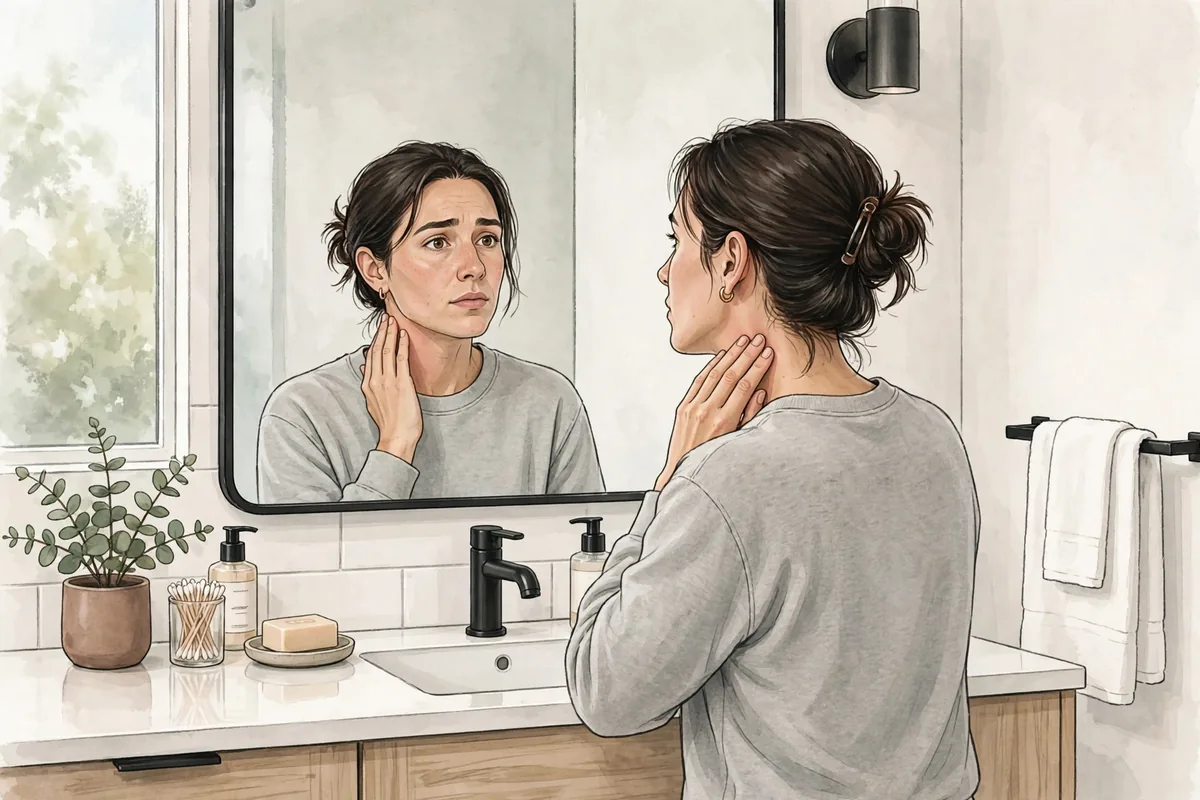
When in doubt, photograph the swelling at intervals. A clear visual record of whether it is growing or shrinking is genuinely useful — both for your own reassurance and for any clinician you consult. The sting swelling emergency guide helps you judge when swelling itself is the emergency.
Red flags specific to neck stings #

Because of the location, watch for these in particular during the first 24 hours:
- Voice changes. New hoarseness or a muffled voice after a neck sting deserves immediate medical attention.
- Swallowing difficulty. Trouble swallowing saliva or food, or a feeling of throat tightness, is an emergency sign.
- Breathing changes. Any shortness of breath, noisy breathing, or sense of the throat narrowing — call 911.
- Rapidly expanding swelling. A welt that doubles in size over an hour or two, especially spreading toward the front of the throat, should be evaluated urgently.
- Numbness or tingling spreading beyond the sting site, or swelling that feels hard and hot — have a clinician assess it.
You do not need to stare at your neck all day, but check in every hour or two during the first several hours, and make sure someone else knows you were stung in case symptoms escalate while you sleep.
Warning signs: when to seek care #
Call 911 immediately for trouble breathing or swallowing, a voice that becomes hoarse or muffled, swelling of the throat, lips, or tongue, visible swelling spreading rapidly across the neck, widespread hives, dizziness or fainting, or a racing heartbeat. If you carry an epinephrine auto-injector and show signs of a severe allergic reaction, use it first, then call 911.
Seek same-day medical care for swelling that keeps growing after two days, red streaks, pus, fever, or severe pain at the sting site. A neck sting with no warning signs still deserves a call to your doctor or urgent care if the swelling is large enough to worry you — location alone is a reasonable cause for professional reassurance.
Frequently asked questions #
Is a wasp sting on the neck dangerous? #
Usually not, but the neck deserves more caution than a limb. Thin skin and rich blood supply mean more dramatic swelling, and proximity to the airway means breathing or swallowing difficulty, voice changes, or rapidly spreading swelling should be treated as emergencies. Most neck stings heal normally within a week.
How long does swelling from a wasp sting on the neck last? #
Similar to other sting sites: swelling typically peaks within 24 to 48 hours and fades over three to seven days. Because neck tissue swells readily, it may look worse than a comparable sting on an arm. Swelling that keeps growing after 48 hours should be evaluated.
Should I go to urgent care for a wasp sting on my neck? #
Go — or call 911 — immediately for any breathing difficulty, swallowing difficulty, voice change, throat tightness, rapidly expanding swelling, or signs of allergic reaction. For a sting with only local pain, redness, and swelling, home treatment with close monitoring is reasonable, with a low threshold for seeking care if anything changes.
Why are my lymph nodes swollen after a neck sting? #
Tender, slightly swollen lymph nodes under the jaw or along the neck are a normal immune response to a sting in that drainage area. They typically settle within a few days as the sting heals. Nodes that become very large, very painful, or are accompanied by fever deserve medical evaluation.
Medical and editorial note #
This guide provides general information about wasp stings to the neck and is not medical advice. Because of the neck’s proximity to the airway, err on the side of seeking care — a clinician would rather reassure you about a normal reaction than treat a delayed emergency. Any breathing or swallowing difficulty, voice change, or rapidly worsening swelling warrants immediate emergency care.


