
You wake up to a tender, swollen spot on your lip and your mind jumps straight to the worst possibility. Here’s the reassuring truth about a spider bite on lip: actual spider bites on the lips are uncommon, and most suspected “spider bites” turn out to be something else entirely. Treat the spot gently, watch it closely, and give lip swelling extra respect because it’s close to your airway.
First things first: it probably was not a spider #
Entomologists and dermatologists report that spider bites are widely overdiagnosed. Most spiders rarely bite people, and many bumps, sores, and swellings blamed on spiders are actually cold sores, pimples, ingrown hairs, allergic reactions, or bacterial skin infections. The brown recluse — the spider behind most scary stories — lives only in parts of the south-central US, bites only when trapped against skin, and most of its bites heal on their own.
On the lip, the usual suspects are even less spider-like. A new cold sore starts as a tingling, then forms small blisters that crust over. A pimple or clogged pore near the lip line can swell fast and feel hot. Contact irritation from a new lip balm, toothpaste, or food can puff one side of the lip within hours. And a bacterial infection of a small cut or cracked lip can look alarming quickly.
So before assuming spider, ask yourself: did you actually see a spider bite you? If not, treat the diagnosis as a guess — one that a clinician can help sort out. Getting the cause right matters, because cold sores, infections, and allergies each need different care. If you’re comparing possibilities, a look at common bite and sting warning signs can help you spot which symptoms actually signal something serious.
Why the lip gets special caution #
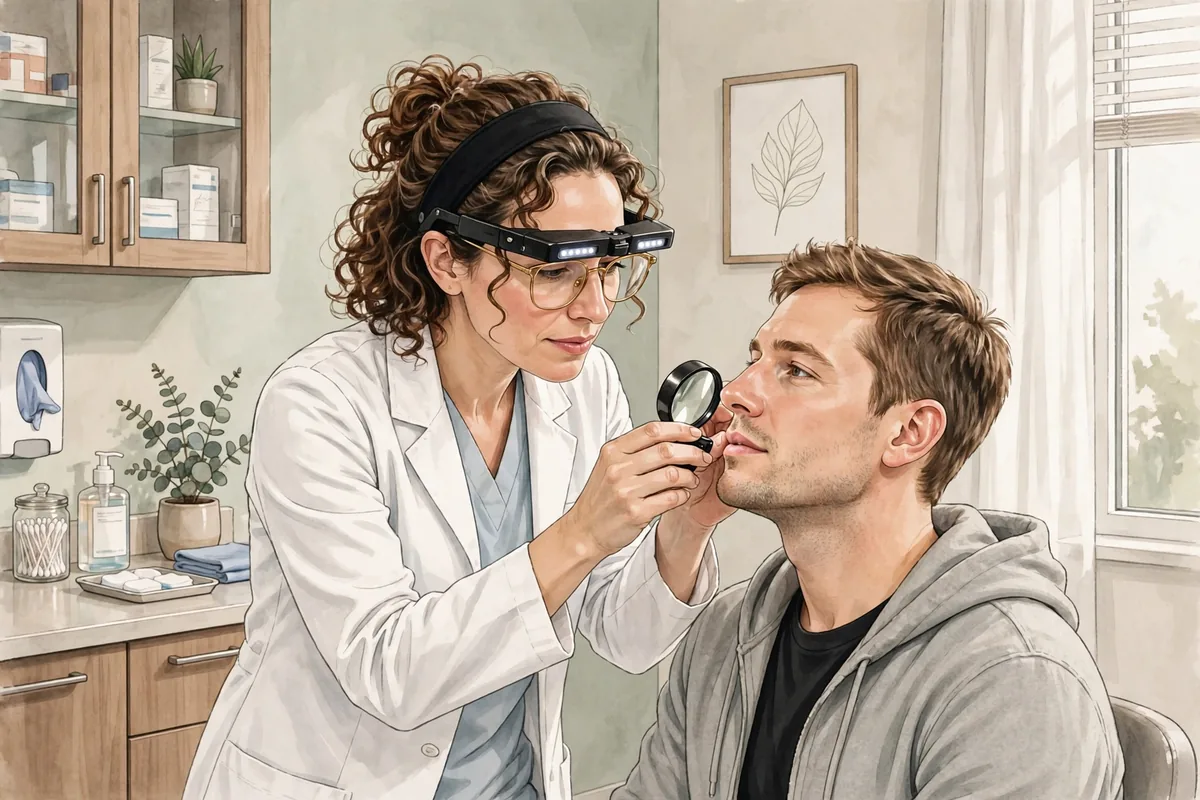
The lip is thin, richly supplied with blood vessels, and very close to your airway. That combination means swelling shows up faster and more dramatically than it would on, say, your forearm — and it deserves a lower threshold for seeking help.
Swelling can escalate. What starts as mild puffiness can progress over hours. Because the tissue is so close to the throat and tongue, significant lip swelling can make swallowing uncomfortable or, in rare severe reactions, threaten the airway. Don’t adopt a “wait and see” attitude with fast-growing swelling here.
The mouth is full of bacteria. Picking, squeezing, or biting at a sore spot on the lip seeds it with germs from your mouth and hands. An infection on the lip can spread quickly in this blood-rich tissue, so hands-off is especially important.
Eating and talking keep disturbing it. Every meal, drink, and conversation moves the lip, which can reopen scabs and slow healing. Soft foods, drinking through a straw, and avoiding spicy or acidic foods for a day or two reduce irritation while it settles.
The takeaway: a sore spot on the lip is rarely dangerous, but this is the one body location where you should escalate sooner rather than later if swelling grows or breathing changes.
What to do right now #
Apply a cool compress. Wrap ice or a cold pack in a clean cloth and hold it gently against the lip for 10–15 minutes at a time. Cold reduces swelling and numbs soreness without any risk to the tissue.
Keep it clean, hands off. Wash your hands before touching the area, and don’t pick, squeeze, or chew at it. If the skin is broken, rinse gently with mild soap and water and leave it open to the air rather than smothering it in products.
Skip the home remedies. No toothpaste, no essential oils, no heated spoons on the lip — the skin here is thin and reacts badly to harsh substances. Lip tissue needs the gentlest version of everything.
Consider an oral antihistamine per label directions if the swelling looks allergic — for example, it appeared quickly after a new food, medication, or product, and itches more than it hurts. This can take the edge off mild allergic swelling, but it is not a substitute for emergency care if swelling is growing fast.
Track the timeline. Note when it started, whether it’s getting better or worse hour by hour, and whether you develop fever, spreading redness, or any breathing or swallowing changes. That timeline is exactly what a clinician will ask about.
If swelling is spreading across the lip, the tongue or throat feels involved, or breathing or swallowing feels different in any way, stop waiting and get emergency help — see the warning section below.
What healing usually looks like #
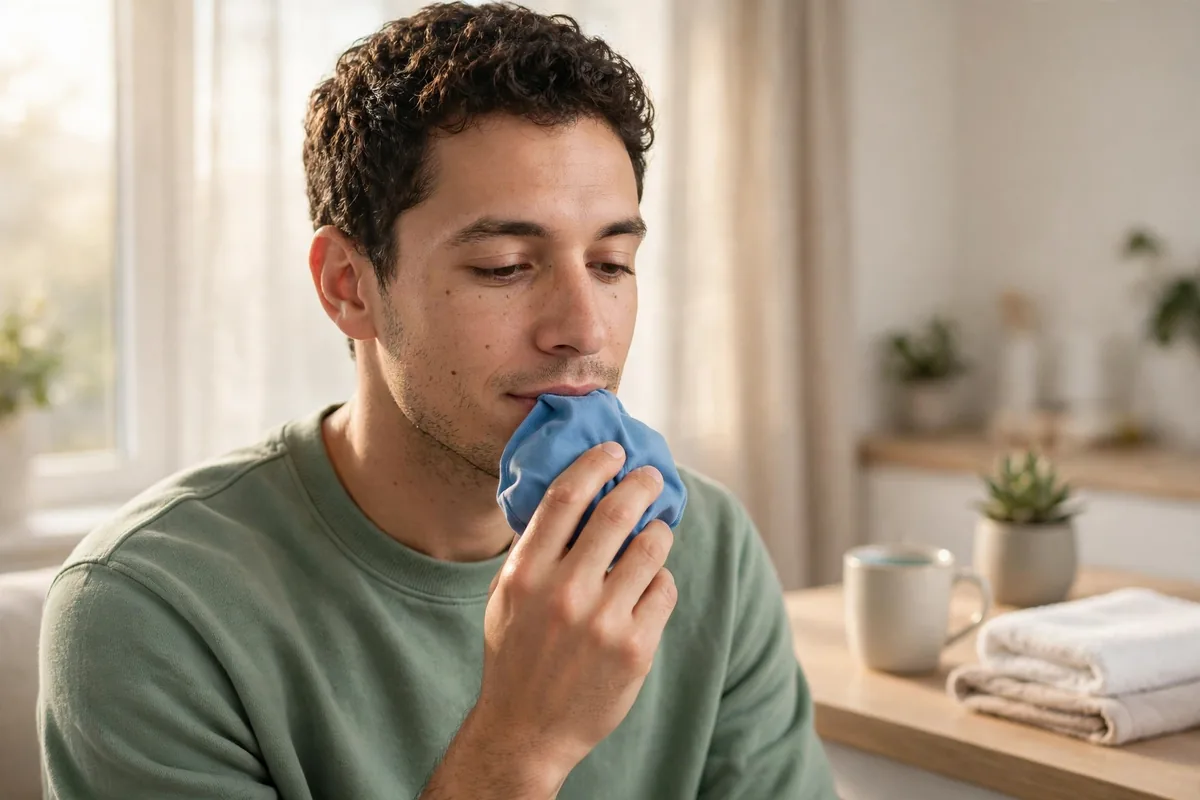
For most harmless causes — a minor bite, an irritated pore, a mild allergic puff — the worst swelling peaks within the first day and starts improving by day two or three. Tenderness fades first; the visible puffiness takes a little longer.
Cold sores follow their own script: tingling, then a cluster of small blisters, then crusting and healing over roughly a week to ten days. If your “bite” is following this pattern, it’s a cold sore, not a spider.
Watch for the infection pattern instead: increasing pain, spreading redness, warmth, swelling that keeps growing after 24 hours, or pus. That trajectory means germs, not venom, and it needs a clinician.
Don’t expect a dramatic two-fang mark. Real spider bites rarely leave the clean double puncture people imagine. The absence of fang marks proves nothing either way — and their supposed presence doesn’t confirm a spider.
If the spot is clearly improving each day, you’re on the right track. If it’s getting worse after a day or two, or you can’t tell what it is, have a healthcare professional look at it in person. When swelling itself is the concern, the guidance on sting swelling emergencies explains when puffiness crosses the line into danger.
Warning signs: when to seek care #
Call 911 immediately if you have trouble breathing or swallowing, swelling of the face, lips, tongue, or throat that is spreading, widespread hives, dizziness or fainting, or a racing heartbeat. These are signs of a severe allergic reaction, and the lip’s closeness to the airway makes fast action critical. If you carry an epinephrine auto-injector, use it right away — but still call 911, because epinephrine buys time and does not replace emergency care.
See a doctor promptly — same day or urgent care — if lip swelling keeps growing after a few hours, spreads to the cheek or under the chin, the area becomes very painful, hot, or drains pus, you develop fever, or the spot isn’t improving after several days. Any suspected bite near the eye or inside the mouth deserves the same urgency. And if you ever actually saw the spider, try to note what it looked like or safely capture it — accurate identification helps a clinician rule serious species in or out.
Frequently asked questions #
Can a spider bite cause a swollen lip? #
It’s possible but uncommon. Spiders don’t seek out lips, and most lip swellings blamed on spiders turn out to be cold sores, pimples, allergic reactions, or infections. The location alone doesn’t confirm a spider — but swelling near the airway always deserves close watching regardless of cause.
When should lip swelling be treated as an emergency? #
Immediately if swelling is spreading fast, involves the tongue or throat, or comes with trouble breathing or swallowing, hives, dizziness, or a racing pulse. Don’t wait to see if it plateaus — airway-adjacent swelling is the one scenario where early emergency care is always the right call.
How can I tell a cold sore from a bite? #
Cold sores usually announce themselves with tingling or burning before anything is visible, then form a cluster of tiny blisters that crust over. They also tend to recur in the same spot. A bite or pimple is more likely to be a single tender bump without the tingle-first pattern, and it won’t follow the blister-crust cycle.
Should I take an antihistamine for a swollen lip? #
An oral antihistamine per label directions is reasonable for mild, itchy, allergy-type swelling — for instance after a new food or lip product. But it won’t fix an infection or a cold sore, and it must never delay emergency care if swelling is growing quickly or affecting breathing or swallowing.
Medical and editorial note #
This guide is general information about suspected spider bites on the lip, not medical advice. Lip swelling sits close to the airway, so when in doubt, err on the side of getting checked. If the swelling is changing quickly, spreading, or worrying you at all, see a healthcare professional or seek emergency care promptly.


