
Your dog is suddenly yelping on the patio, lifting a paw, and drooling — and you live in the Southwest. The direct answer: scorpion sting in dogs usually looks like a sudden sharp pain (yelp, paw-lifting, face-pawing, drooling) that eases within an hour or so, but stings from the Arizona bark scorpion can cause muscle tremors, twitching, and roving eye movements — and those signs mean an emergency vet visit right away. Most scorpion stings in US dogs are mild, like a bee sting, but you cannot tell a mild sting from a serious one in the first few minutes, so watch closely.
Where and when dogs get stung #
Scorpions are most active at night and hide during the day under rocks, bark, woodpiles, outdoor furniture cushions, shoes, and clutter near the house. Dogs get stung on the nose, face, lips, or paws — the parts they lead with when sniffing and digging. Curious puppies and terriers that paw at anything that moves are the most frequent victims.
The Arizona bark scorpion is the only scorpion in the United States considered medically significant. It lives in Arizona, Nevada, New Mexico, and southeastern California. Striped bark scorpions in Texas and Oklahoma can sting too, but they are typically much less dangerous to people and pets. If you live in the bark scorpion’s range, take every suspected sting more seriously — and tell your vet where the sting happened. If you live elsewhere in the US, most scorpion stings are painful but not dangerous; still, any sting near the mouth, throat, or eye deserves a call to the vet.
Scorpion season runs roughly from spring through fall, peaking in the hottest months. Black-light flashlights make scorpions glow, and some owners sweep the yard at night to reduce the risk — a practical habit in bark-scorpion country.
Signs of a scorpion sting in dogs #
Mild reactions — similar to a bee sting — usually appear within minutes: a sharp yelp or sudden limp, lifting or shaking the paw, pawing at the face or mouth, localized swelling and redness, drooling, and restlessness. Most dogs settle down within an hour, and the swelling fades over a day or two. Keep watching even if your dog seems better.
Serious signs — most associated with the Arizona bark scorpion — need an emergency vet immediately: muscle tremors or twitching, rigid or jerky movements, uncoordinated walking, roving or unusual eye movements, heavy drooling that does not stop, crying out repeatedly, or collapse. These signs can develop quickly after the sting. Smaller dogs face more risk from the same amount of venom.
If your dog was stung on or inside the mouth, watch for throat or tongue swelling that could interfere with breathing. Any difficulty breathing, blue or pale gums, or sudden collapse is an emergency regardless of what you think caused it.
What to do first at home #

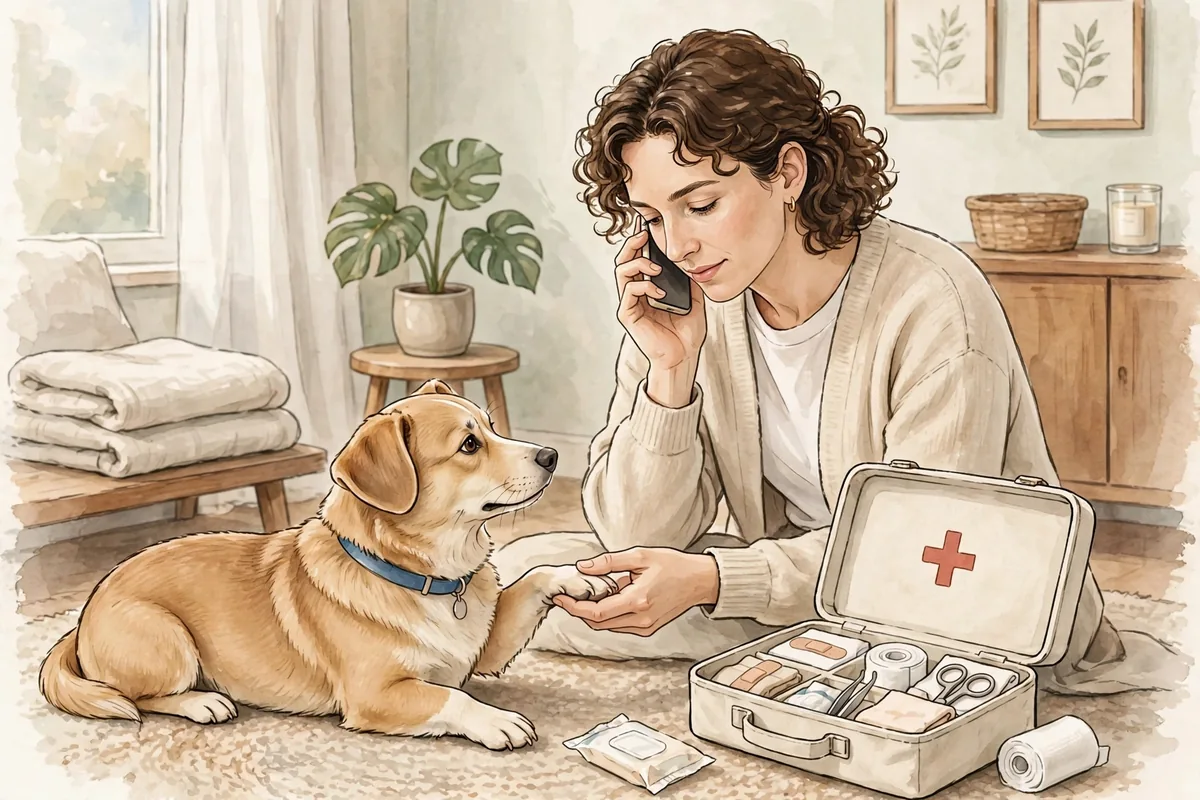
- Stay calm and keep your dog still. Carry small dogs; leash larger ones. Less movement slows how fast anything spreads through the body, and a panicked dog is harder to examine.
- Check for the sting site. Look at the paws, nose, and mouth for redness, swelling, or a puncture mark. If the sting is on the mouth or throat and swelling is building, head to the vet without delay.
- Apply a cold compress wrapped in a cloth to the sting area for about 10 minutes. This eases pain and limits swelling. Never put ice directly on skin or hold it there longer than 10–15 minutes.
- Call your vet or an emergency vet clinic now. Describe the signs, your dog’s size, and where you live. In bark-scorpion country, vets have seen this before and will tell you whether to come in or monitor at home. For more on what human sting care looks like, see scorpion sting treatment: safe first aid, relief, and when to get help.
- Note the time. When the sting happened, when the first signs appeared, and whether they are getting better or worse — this helps the vet judge the situation.
- Watch for at least a few hours. Mild signs can be monitored at home only if your vet agrees. Serious signs need professional care, not waiting.
What NOT to do after a scorpion sting #
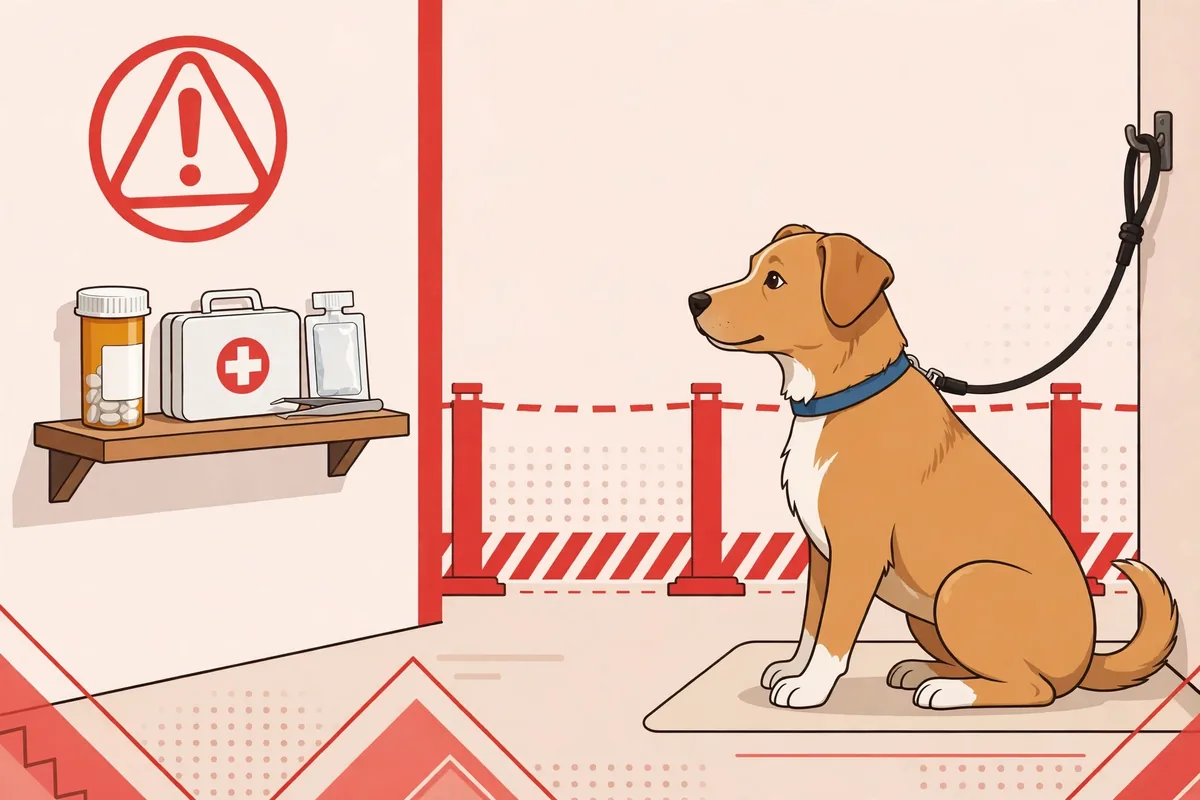
- Do not give your dog any human medication. No pain relievers, no antihistamines, no home remedies from the internet — dosing for dogs is different and some human drugs are toxic to them. “Ask your vet” is the only safe rule here.
- Do not try to cut, suck, or burn the sting site. These folk remedies do not remove venom and can injure your dog or infect the wound.
- Do not assume a calm dog is a fine dog. Some bark-scorpion signs, like tremors and eye changes, can take time to appear. Keep monitoring even after the yelping stops.
- Do not wait to see if it “gets worse.” With bark-scorpion stings, calling early is always the better choice. A vet visit that turns out unnecessary is far better than a crisis that started too late.
- Do not let your dog eat or drink freely if it is drooling heavily or having trouble swallowing — it could aspirate. Let the vet assess first.
Preventing the next sting #
Scorpion-proofing is mostly about removing hiding spots: clear woodpiles, rocks, and clutter away from the house; seal gaps under doors and around pipes; shake out outdoor bedding and shoes before the dog uses them; and keep grass and brush trimmed near patios and kennels. In bark-scorpion country, some owners scan the yard with a UV black light after dark — scorpions fluoresce and are easy to spot and remove. Professional pest control is worth considering if you see scorpions inside the house regularly. Teach dogs a solid “leave it” so they are less likely to paw at a scorpion in the first place — and if your dog already tangles with other backyard insects, the guidance in fly bites on dogs’ ears treatment covers another common outdoor annoyance.
Warning signs: when to seek care #
Call 911 immediately (for you or another person): if anyone stung shows trouble breathing or swallowing, swelling of the face, lips, tongue, or throat, widespread hives, dizziness or fainting, or a racing heartbeat. Use epinephrine right away if it has been prescribed, then call 911 even if the person feels better.
For your dog, the urgent-care triggers are the serious signs listed above: muscle tremors or twitching, roving eye movements, uncoordinated walking, heavy unrelenting drooling, repeated crying, or collapse — go to an emergency vet immediately. Also seek veterinary care promptly for stings on the mouth or throat with swelling, swelling that keeps growing after the first hour, or any sign that is getting worse instead of better. When in doubt, call your vet or an emergency animal hospital and describe what you see.
Frequently asked questions #
How do I know if my dog was stung by a scorpion or a bee? #
You often cannot tell from the outside — both cause sudden pain, yelping, and local swelling. Scorpions are nocturnal, so a nighttime sting on a patio or near woodpiles points toward a scorpion. In the Southwest, bark-scorpion signs like tremors and roving eye movements are the tell. When in doubt, treat it as a possible scorpion sting and call your vet, describing the time and place.
Are scorpion stings usually fatal to dogs? #
No. Most scorpion stings in US dogs cause only pain and temporary swelling, even in the Southwest. The Arizona bark scorpion is the exception that vets take seriously, especially in small dogs — its venom can cause tremors and breathing difficulty. Prompt veterinary care makes a real difference, which is why early signs like tremors mean “go now,” not “wait and see.”
Can my vet do anything for a scorpion sting? #
Yes. Vets can provide pain control, sedation for distressed dogs, fluids, and supportive care for tremors or breathing problems. In bark-scorpion country, some emergency clinics carry bark-scorpion antivenom, so call ahead and ask if your dog shows serious signs. Bring the time of the sting and a description of symptoms.
Should I try to catch the scorpion? #
Only if you can do it safely — do not risk another sting for you or your dog. A photo from a distance is enough. Never pick up a scorpion with bare hands. If you can safely capture it in a sealed jar, it can help the vet confirm the species, but identification is not required for treatment.
Medical and editorial note #
This article is general information about scorpion stings in dogs, not medical or veterinary advice. Every dog, sting, and situation is different — if your dog may have been stung, contact your veterinarian or an emergency animal hospital promptly. If a person is stung too, see a healthcare professional.


