
You found a tick, got it off — and now the waiting begins. If you’re asking how soon do tick bite symptoms appear, here’s the direct answer: local skin irritation can show up within hours to a couple of days, but tick-borne illness symptoms take much longer — Lyme disease symptoms usually begin 3 to 30 days after an infectious bite, while ehrlichiosis and anaplasmosis typically appear 1 to 2 weeks after the bite. Absence of early symptoms doesn’t mean you’re in the clear — a watchful plan beats guessing.
The short version: a symptom timeline #
It helps to separate two different clocks. Clock one is your skin’s reaction to the bite itself. A small red bump, mild itching, or tenderness at the bite site often develops within hours to a few days. This is your immune system reacting to tick saliva and the tiny wound — not necessarily infection.
Clock two is infection. Tick-borne illnesses need time to take hold after the tick feeds. The rough timeline:
- Hours to 2 days: local redness, itching, or a small bump from the bite wound itself. Usually harmless and fading.
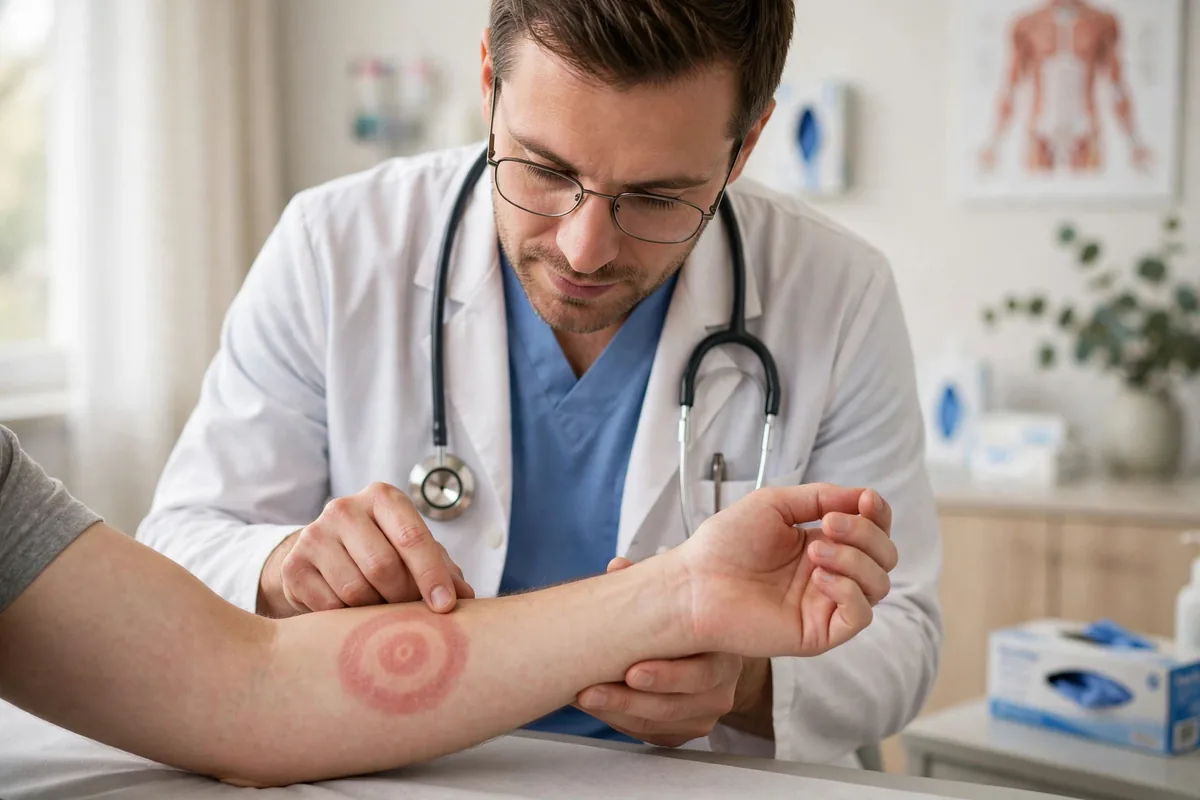
- Around day 7 (but ranging 3 to 30 days): the erythema migrans rash of Lyme disease — often a round, expanding patch sometimes called a “bull’s-eye” — may appear if the bite transmitted the Lyme bacteria.
- 1 to 2 weeks: flu-like symptoms of ehrlichiosis and anaplasmosis (fever, headache, muscle aches) typically develop in those who will get sick.
One caveat: many people never notice the bite at all. Ticks — especially the tiny nymphs that most often transmit Lyme — feed painlessly and can be the size of a poppy seed. If symptoms appear “out of nowhere” a week or two after a hike, the bite may simply have gone unnoticed.
Why local irritation is not the same as infection #
This distinction trips up a lot of people. A red, itchy spot the day after you pulled a tick off usually reflects your skin’s local reaction — similar to a mosquito bite. Tick saliva contains proteins your body may react to, and the mechanical bite wound itself causes brief inflammation. This kind of reaction typically appears within hours, stays small, and fades within a few days.
Infection arrives later: a rash showing up a week after the bite, especially one expanding outward over days, deserves a different level of attention than next-day itching. Likewise, fever or flu-like symptoms starting a week or more after outdoor exposure point to tick-borne illness, not the bite wound.
That said, don’t dismiss a spreading mark as “probably just irritation.” Photograph the bite site on day one so you can compare later — a bull’s-eye or expanding rash grows noticeably over days, while simple irritation shrinks.
Lyme disease: when symptoms usually start #

Lyme disease, spread mainly by blacklegged (deer) ticks, has a slow timeline. Symptoms typically begin 3 to 30 days after an infectious bite, with the characteristic expanding rash often appearing around day 7. The rash isn’t itchy or painful for most people, which is one reason it gets overlooked.
Two honest hedges here. First, not everyone develops a rash. Clinical experience suggests a sizable minority of Lyme patients never notice one, so no rash does not rule Lyme out. Second, the bite that transmits Lyme often lasts a long time — the bacteria generally need the tick feeding for roughly 36 hours or more. A tick removed quickly carries meaningfully less risk than one that fed for a day or two, though no single rule covers every case.
Early Lyme symptoms beyond the rash — fatigue, muscle and joint aches, headache, swollen lymph nodes — mimic a dozen other illnesses, which is the frustrating part. What earns them a clinician’s attention is context: recent tick exposure in a Lyme-endemic area, plus symptoms arriving in the 3-to-30-day window. Keep the calendar date of the bite; it is the single most useful fact you can hand your doctor.
Other tick-borne illnesses and their timing #
Lyme gets the headlines, but other infections have their own clocks — and some move faster. Ehrlichiosis and anaplasmosis, spread by lone star ticks and blacklegged ticks respectively, typically cause symptoms 1 to 2 weeks after the bite. The picture is flu-like: fever, chills, headache, muscle aches, sometimes nausea. If you develop these roughly a week after a known or suspected tick bite, contact a clinician rather than waiting it out as “a summer cold.”
Exact timings for other tick-borne illnesses are less certain, so this guide won’t assign numbers it can’t support. The pattern that matters: a fever or flu-like illness starting days to a couple of weeks after tick exposure is a reason to call your doctor and mention the bite. Clinicians diagnose based on exposure history and clinical signs, not on a single early lab test — so the story you tell matters.
Why you might never know you were bitten #
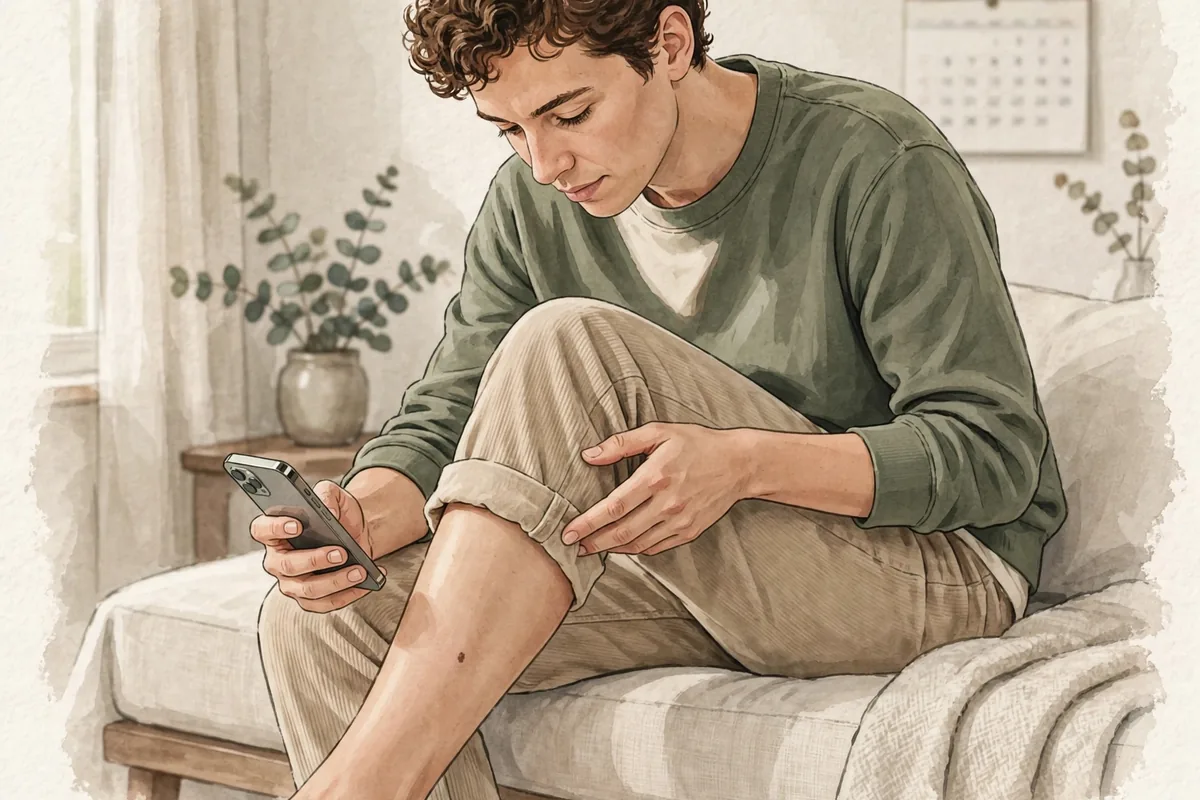
Here’s the uncomfortable truth behind much tick anxiety: most people who get tick-borne illnesses never saw the tick. Nymph-stage ticks are tiny, their bite is painless, and they favor hidden spots — behind ears, along the hairline, in the armpits, around the waistband, behind the knees. The bite itself leaves no immediate mark in many cases.
Full-body tick checks after outdoor activity in tick season, showering within a couple of hours of coming indoors, and permethrin-treated clothing (per label) all reduce the chance of an unnoticed bite.
If you do find an attached tick, note the date, where on the body it was, and roughly how long it may have been attached (an engorged, swollen tick has been feeding longer). Save the tick in a sealed bag or jar with the date written on it — identification can help your clinician assess risk. This record-keeping turns guesswork into something a doctor can actually use.
What to do while you watch the calendar #
Here’s an action plan for the first month after a bite:
- Document day one. Photograph the bite site and write down the date, location on your body, and where you likely picked up the tick. This becomes your reference point.
- Remove correctly if the tick is still attached. Use fine-tipped tweezers, grasp close to the skin, and pull straight up with steady pressure; clean the area after. Don’t squeeze, twist, or burn it.
- Watch on a schedule. Check the bite site every day or two for an expanding rash, and note any new fever, headache, or muscle aches for at least 30 days.
- Ask your clinician about preventive treatment if the situation is high-risk. Some clinicians recommend a single preventive antibiotic dose in narrow cases — e.g., a tick attached 36+ hours in a high-risk area, removed within about 72 hours. This is a clinician’s decision, not a do-it-yourself step — ask rather than assume.
- Don’t take antibiotics “just in case” on your own. Unnecessary antibiotics have real downsides — let a clinician judge the risk properly.
After the first month, tick bite aftercare for the next few weeks covers longer-term monitoring, including when lingering symptoms deserve a second look.
Warning signs: when to seek care #
Call 911 immediately if you develop trouble breathing or swallowing, swelling of the face, lips, tongue, or throat, widespread hives, dizziness or fainting, or a racing heartbeat — these are signs of a severe allergic reaction (anaphylaxis). If you carry an epinephrine auto-injector, use it first, then call 911 even if you feel better afterward.
For non-emergency situations, seek care if: a rash keeps expanding over several days; fever, chills, headache, or muscle aches develop within a month of a tick bite; redness spreads, red streaks appear, or pus forms; the bite is near your eye or genitals; or mouthparts remain embedded. Mention the bite date and location — that context shapes every decision.
Frequently asked questions #
Can symptoms start the same day as the bite? #
Tick-borne illness symptoms almost never start the same day. Same-day redness or itching is nearly always a local skin reaction to the bite itself, not infection. Illness symptoms need days to weeks to develop. If you feel flu-like within hours of a bite, another cause is more likely — but still monitor the bite site on schedule.
I never saw a tick but have a bull’s-eye rash. What should I do? #
See a clinician promptly. An expanding circular rash with central clearing, plus recent outdoor exposure in a tick-heavy area, is treated as Lyme disease in many clinical settings — doctors often diagnose it by appearance and history rather than waiting for a blood test, since early tests can miss it. Don’t wait for more symptoms to appear.
Does a bigger local reaction mean a higher infection risk? #
Not necessarily. The size of the next-day bump reflects your individual immune response to tick saliva, not the amount of bacteria transmitted. Track spreading and timing, not just size.
How does ehrlichiosis timing compare to Lyme? #
Ehrlichiosis symptoms typically appear 1 to 2 weeks after the bite — a narrower and somewhat earlier window than Lyme’s 3-to-30-day range. Both can start with flu-like symptoms, which is why telling your clinician about the exposure and its date matters for getting the right diagnosis.
Medical and editorial note #
This guide is general information about tick bite symptom timing, not medical advice for your specific situation. Tick-borne illness risk depends on your region, the tick species, and how long the tick was attached — factors only a healthcare professional can weigh for you. If you’re worried about a bite or developing symptoms, contact your doctor or an urgent-care clinic rather than waiting for the “right” day on a timeline.


