
A horse fly bite that looks angry on day one is normal. One that looks angrier on day three is not. The direct answer on horse fly bite infection signs: watch for redness that spreads outward after 24–48 hours instead of fading, red streaks running away from the bite, increasing warmth and swelling, pus or cloudy drainage, and fever — any of these means you should call your doctor or urgent care. Most horse fly bites stay minor and heal on their own; infection is uncommon but worth catching early.
Why horse fly bites get infected #
Horse flies bite differently from mosquitoes. A mosquito slides a needle-like tube into your skin; a horse fly’s scissor-like mouthparts slash the skin open and lap up the blood. That is why horse fly bites hurt immediately, bleed more, and leave a larger, ragged wound. A bigger wound gives bacteria — from the fly, from the environment, or from your own fingernails — a better entry point.
Infection usually arrives one of two ways. The bite itself can introduce bacteria, especially if you were near livestock, stagnant water, or manure. Far more often, scratching breaks the skin further and pushes bacteria into the wound. This is why every guide to horse fly bites hammers the same point: do not scratch. For step-by-step care of the bite itself, see horse fly bite treatment.
People at higher risk of infection include anyone with diabetes, poor circulation, a weakened immune system, or breaks in the skin near the bite. If any of those describe you, be extra watchful and lower your threshold for calling a clinician.
Infection warning signs to watch #
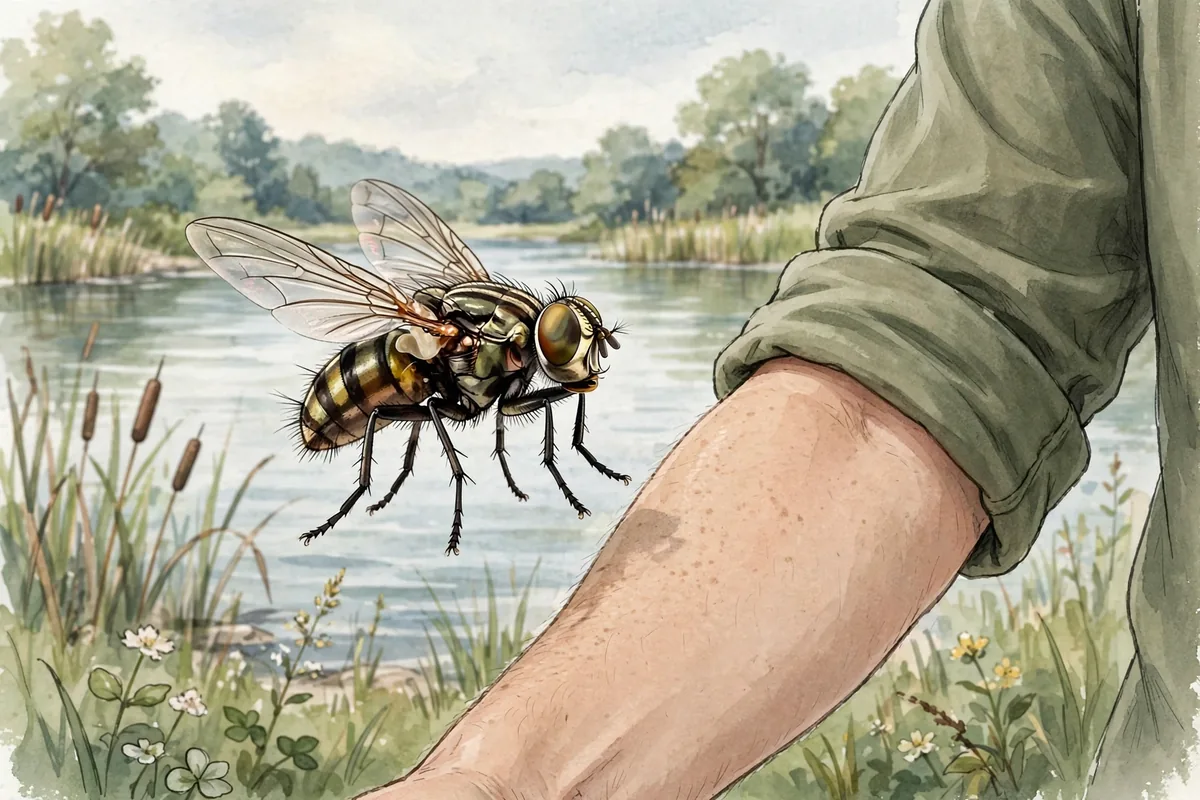
Normal healing looks like this: pain and redness peak within hours, then slowly fade over a few days. The bite may itch, and a small firm lump can linger for a week or more. That is unpleasant but normal.
Infection warning signs follow a different pattern — the bite gets worse instead of better:
- Redness spreading outward after the first 24–48 hours. Normal redness shrinks; infection expands.
- Red streaks extending from the bite toward the heart — a classic sign of a spreading skin infection.
- Increasing warmth and swelling at the site, not decreasing.
- Pain that intensifies days after the bite instead of easing.
- Pus, cloudy fluid, or yellow crusting on the wound.
- Fever, chills, or feeling generally ill alongside the bite.
- Swollen, tender lymph nodes near the bite (for example, in the armpit or groin).
One early flag that deserves attention: redness that keeps expanding past about a day or two is worth marking. The guide on what to do when a bite gets redder after 24 hours walks through how to track this. These signs point to bacterial skin infections such as cellulitis, which need professional treatment — antibiotics, not home remedies.
Home care in the first 48 hours #
Good early care is your best defense against infection:
- Clean the bite right away. Wash with soap and lukewarm water, pat dry, and keep it clean. This single step does more to prevent infection than anything else.
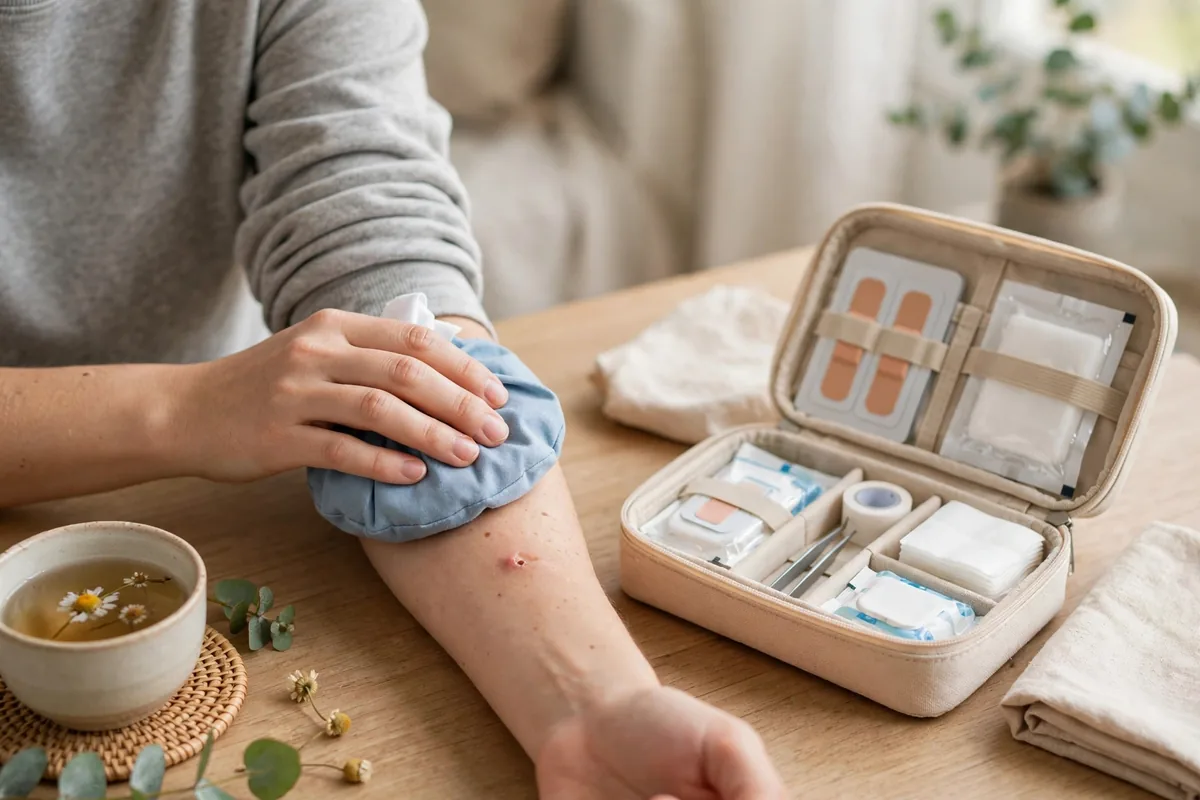
- Apply a cold compress for 10–15 minutes at a time, several times a day, to reduce swelling and dull the pain. Wrap ice in a cloth — never apply it directly to skin.
- Cover a bleeding or open bite with a clean bandage until it closes. Change the bandage daily or whenever it gets wet or dirty.
- Ease itching without scratching. An oral antihistamine taken per label directions can help with itch; ask a pharmacist if you take other medications. Keep fingernails short and clean so accidental scratching does less damage.
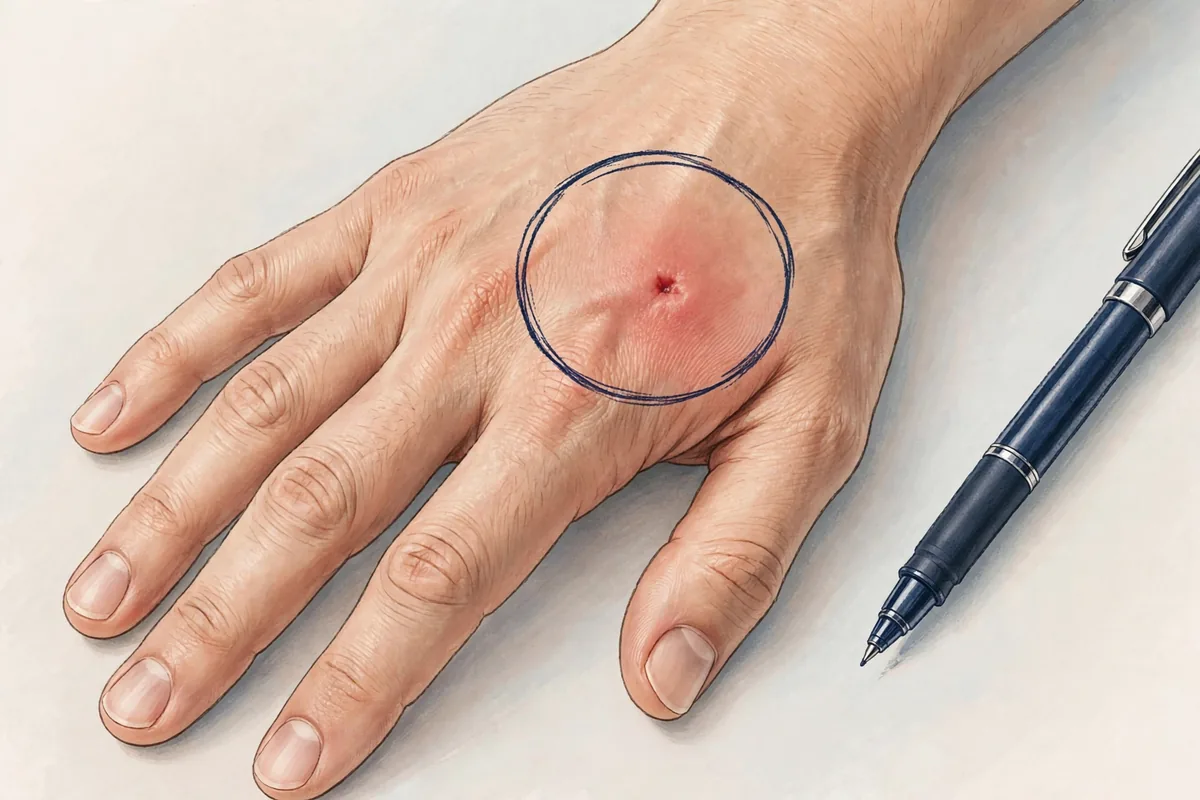
- Mark the redness. Draw a light pen line around the edge of the red area, or take a daily photo. If the red zone crosses the line, you have objective proof it is spreading — exactly the information a doctor needs.
- Watch for 48 hours. Most uninfected bites are clearly improving by day two or three. If yours is not, act.
What to avoid #
- Do not scratch or squeeze the bite. Scratching is the fastest route to infection; squeezing pushes bacteria deeper and can damage tissue.
- Do not apply toothpaste, bleach, meat tenderizer, or other internet remedies. None of these prevent or treat infection, and harsh substances can burn or irritate broken skin.
- Do not take leftover antibiotics “just in case.” Antibiotics only work when prescribed for a confirmed infection, and misuse fuels resistance.
- Do not ignore worsening pain or new fever. These are the body’s alarms. Silencing them with painkillers while skipping care lets an infection advance.
- Do not wait a week “to be sure.” Cellulitis can spread fast. Getting checked a day early beats getting treated a day late.
Warning signs: when to seek care #
Call 911 immediately if you develop trouble breathing or swallowing, swelling of the face, lips, tongue, or throat, widespread hives, dizziness or fainting, or a racing heartbeat after a bite or sting. Use epinephrine right away if it has been prescribed, then call 911 even if you feel better.
Outside of anaphylaxis, see a doctor or urgent care promptly if you notice red streaks from the bite, rapidly spreading redness, pus or drainage, fever or chills, pain that is getting worse after 48 hours, or swelling that keeps growing. People with diabetes, circulation problems, or weakened immunity should call earlier rather than later. A bite on the face, eye, or genitals, or any bite that has not improved after a week, also deserves professional evaluation.
Frequently asked questions #
How long after a horse fly bite can infection start? #
Usually within 24–72 hours. The first day is dominated by the bite’s own pain and swelling, which makes it hard to judge. The key window is days two to four: if redness, warmth, swelling, or pain are increasing instead of fading by then, suspect infection and get checked.
Is a horse fly bite that still hurts after two days infected? #
Not necessarily. Horse fly bites are notoriously painful because of the slash-like wound, and tenderness can linger for days without any infection. The distinction is direction: steady or slowly improving pain is normal; pain that is clearly getting worse, or new pain appearing days later, is not.
Can a horse fly bite cause a blood infection? #
Severe bloodstream infection from a simple bite is rare, but red streaks, fever, and rapidly spreading redness can signal cellulitis, which can become serious if ignored. That is why those specific signs mean prompt medical care, not watchful waiting.
Do horse flies spread diseases? #
In the US, horse fly bites are primarily a painful nuisance rather than a disease vector. The main medical concern is local bacterial infection of the wound, which is what this guide covers. Protective clothing and repellent remain the best prevention near water and livestock.
Medical and editorial note #
This article is general health information, not medical advice. It cannot diagnose your bite or prescribe treatment. If you notice infection warning signs or are worried for any reason, see a doctor, urgent care, or your pharmacist for guidance.


