
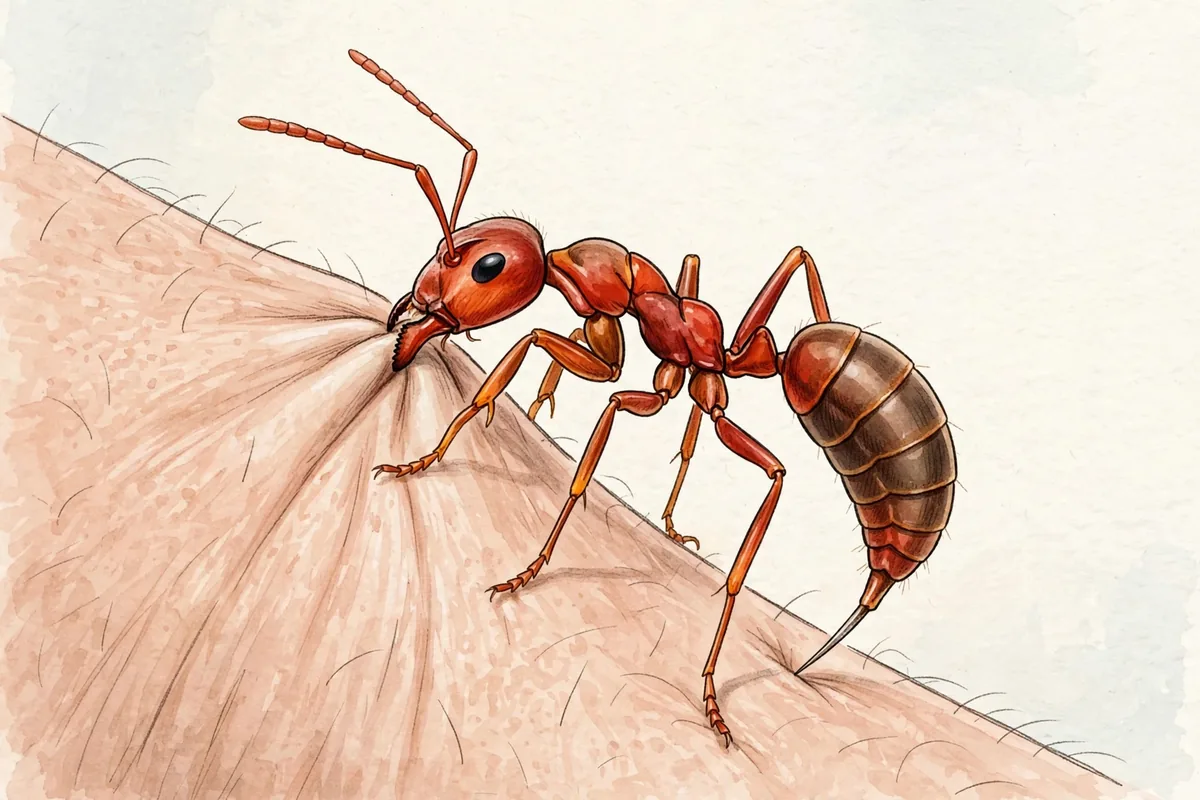
Do fire ants bite or sting? Both — and the combination is what makes them so painful. A fire ant first bites to grip your skin with its jaws, then curls its abdomen underneath and stings, injecting a venom called solenopsin. The bite is just the anchor; the sting is what burns. Understanding this two-step attack explains the symptoms, the clustered pattern of the welts, and the right way to respond.
The attack sequence: bite first, sting second #
Fire ants do not simply bite you and move on. Each ant performs the same rapid sequence:
- Grip. The ant seizes your skin with its mandibles (jaws) and locks on. This bite alone is minor — its purpose is to hold the ant steady.
- Curl. With its jaws anchored, the ant arches its body and tucks its abdomen underneath, positioning its stinger against your skin.
- Sting. The stinger — located at the tip of the abdomen, not in the jaws — pierces the skin and injects venom. Then the ant may pivot around its anchored jaws and sting again, sometimes several times in a row.
A single ant can sting repeatedly while attached, and a disturbed mound can send hundreds of ants onto your skin in seconds. That is why fire ant encounters so often produce dozens of stings at once: it is not one ant being dramatic, it is a colony defending its home with every member following the same attack program.
Why fire ant stings burn like fire #
The sting earns its name. Fire ant venom is unusual among insect venoms: instead of being mostly protein-based, it is largely made of alkaloid compounds called solenopsins (piperidine alkaloids), plus smaller amounts of allergenic proteins.
- The burning sensation comes from the solenopsin venom itself, which is toxic to skin cells at the injection site. People describe it as feeling like a burn or a hot needle — hence “fire” ant.
- The venom kills skin cells locally, which is what produces the signature white pustule a day or so later. Those pustules are sterile collections of dead cells, not pus from infection — an important distinction, because it means you should not treat them like infected pimples.
- The allergenic proteins are what trigger true allergic reactions in sensitive people. The alkaloids cause the pain and pustules; the proteins cause the rare but dangerous systemic allergy.
This is fundamentally different from how most other ants operate. Many ant species bite and then spray formic acid into the wound. Fire ants skip the acid and go straight to venom injection through a true stinger.
What fire ant stings look like: the classic cluster #
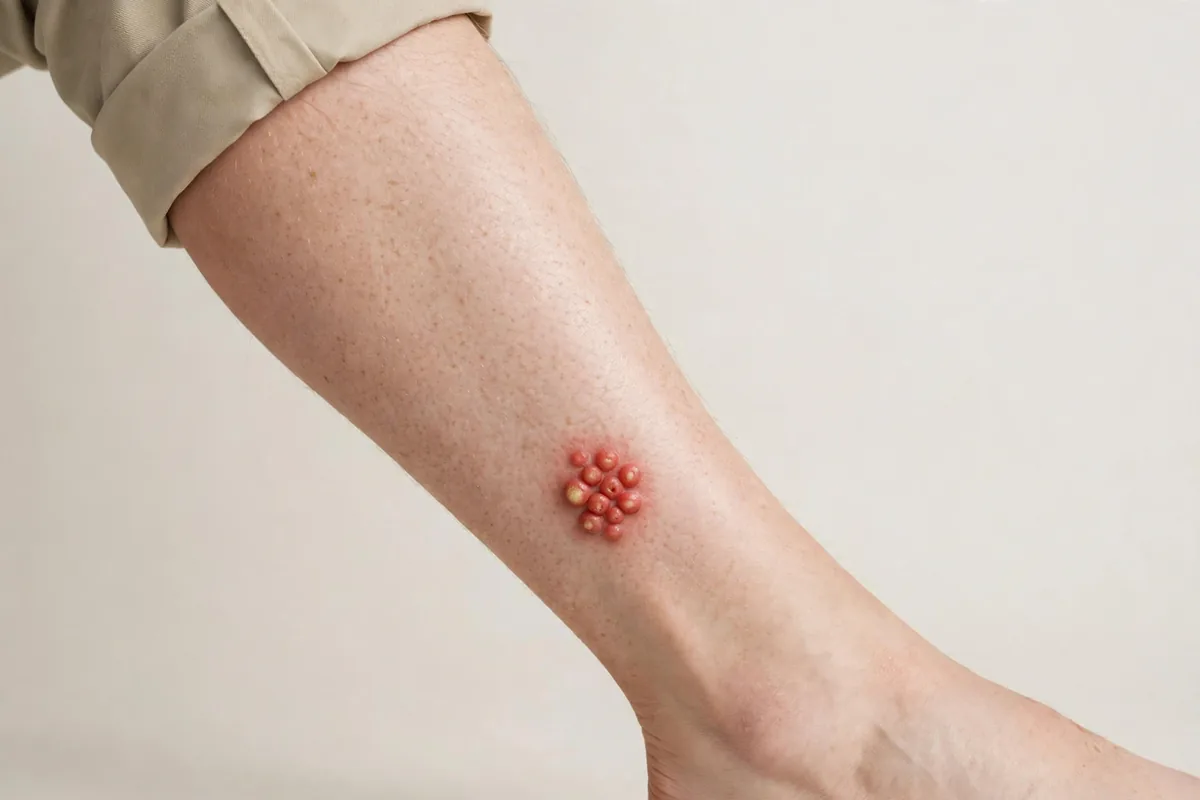
Because each ant grips, pivots, and stings multiple times, fire ant stings appear in a recognizable pattern:
- Minutes: Intense burning pain at each sting site, with redness developing quickly.
- Hours: Each site becomes a raised, red, itchy wheal. The stings often form rough circles or clusters where ants walked across the skin.
- 24 hours: Small white or yellowish pustules form at the center of the welts. This is the hallmark of a fire ant sting — few other insects produce pustules so reliably.
- Days: Itching continues; pustules dry and scab over. Scratching them open risks secondary infection, so leave them intact.
The pustules look alarming but are a normal part of the reaction. Do not pop or squeeze them — breaking them open invites bacteria into damaged skin and can lead to infection or scarring.
First aid after fire ant stings #
Speed matters most in the first minute, because ants keep stinging as long as they are on you:
- Get the ants off fast. Brush them off with your hand or a cloth — do not try to pick them off one by one. If many are on your clothing, remove the clothing. Some people jump in water, but ants can cling on, so brushing is more reliable.
- Wash the skin with soap and water once the ants are off.
- Cool the stings. A cold compress or cool water reduces pain and swelling.
- Ease itching. Calamine lotion, a low-strength hydrocortisone cream, or an oral antihistamine per label directions can help with the itch. Avoid home remedies that involve breaking the skin.
- Leave pustules alone. Let them dry and scab naturally. Keep the area clean and covered if clothing rubs against it.
- Watch for allergy signs. Trouble breathing, swelling of the face or throat, widespread hives, dizziness, or fainting after fire ant stings are emergency signs — call 911.
The clean a bite or sting safely guide covers the washing step in more detail, and the bite vs. sting differences guide explains how to categorize what happened to you.
Fire ants vs. other ants: quick identification #
Not every red ant is a fire ant, but the imported fire ant (Solenopsis invicta) has a recognizable profile in the southeastern and south-central US:
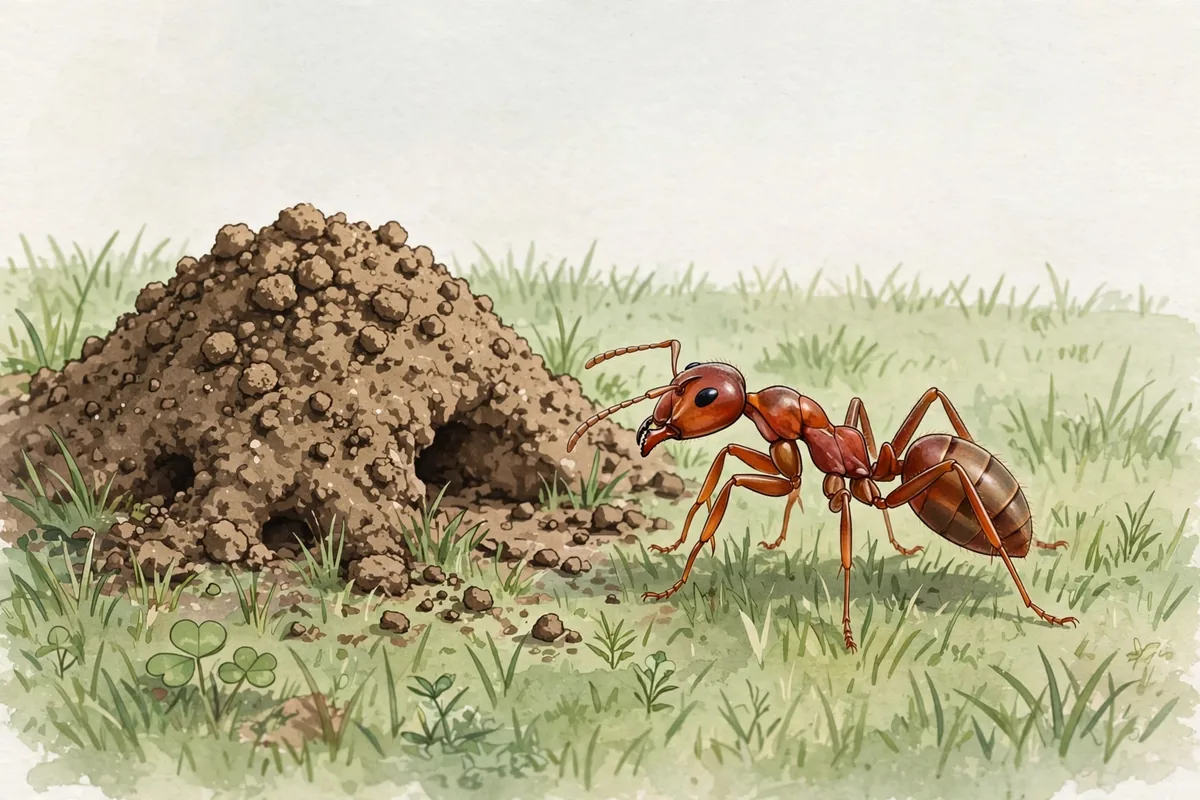
- Size and color: Workers are 2 to 6 millimeters long, reddish-brown to dark red-brown.
- Mounds: Dome-shaped mounds of loose soil in open, sunny areas — lawns, fields, parks. No visible entrance hole on top; ants enter through underground tunnels.
- Behavior: Disturb the mound and ants boil out within seconds, swarming aggressively. Most native ants scatter or retreat instead.
- The sting test: Clustered burning stings that form pustules within a day are near-diagnostic. Most other ants bite without producing pustules.
If you find mounds in a yard, mark their locations and keep children and pets away until the colony is treated. Professional or labeled bait treatments applied per instructions are the reliable route — pouring random chemicals on mounds usually just relocates the colony.
Warning signs: when to seek care #
Call 911 immediately for trouble breathing or swallowing, swelling of the face, lips, tongue, or throat, widespread hives, dizziness or fainting, a racing heartbeat, or nausea or vomiting after fire ant stings. These signal a severe allergic reaction. If you carry an epinephrine auto-injector, use it first, then call 911.
Also seek medical care if you sustain a very large number of stings at once (especially in a small child, older adult, or anyone who could not get away quickly), or if sting sites develop spreading redness, increasing pain, pus beyond the normal sterile pustules, red streaks, or fever — signs of secondary infection.
Frequently asked questions #
Do fire ants bite or sting? #
Both. They bite with their jaws to grip the skin, then sting with a stinger on the abdomen, injecting solenopsin venom. The bite is just the anchor — the sting causes the burning pain and the pustules that follow.
Why do fire ant stings form white pustules? #
The solenopsin venom kills skin cells at the sting site, and the body’s cleanup response forms a small sterile pustule, usually within 24 hours. These are not infected pimples — the fluid is dead cells, not bacterial pus — so do not pop them.
How many times can one fire ant sting? #
A single fire ant can sting multiple times while anchored by its jaws, pivoting to place several stings in a small area. Combined with hundreds of ants from a disturbed mound, this is why victims often end up with dozens of stings.
Are fire ant stings dangerous? #
For most people they are painful but not dangerous, healing over days to a couple of weeks. They become dangerous with a venom allergy (anaphylaxis risk) or with a very large number of stings at once, which can overwhelm small children, older adults, or anyone unable to escape quickly.
Medical and editorial note #
This guide provides general information about fire ant behavior and sting reactions and is not medical advice. Fire ant stings that trigger breathing difficulty, facial or throat swelling, widespread hives, or dizziness are emergencies — call 911. Any sting site that worsens after the first day or two, or any reaction that concerns you, should be evaluated by a qualified healthcare professional.


