
Here is the rule: in a black fly bite vs mosquito bite comparison, the black fly bite usually bleeds a little at the moment it happens and heals into a crusty scab, while the mosquito bite becomes a smooth, puffy, intensely itchy wheal with no bleeding and no scab. Once you know that one visual difference, telling them apart is straightforward.
The Key Difference at a Glance #
| Feature | Black fly bite | Mosquito bite | |—|—|—| | At the moment of the bite | Often a small drop of blood; the bite stings or burns | Usually painless; you may not notice it | | Center of the mark | Tiny puncture point, sometimes a dark dot | Smooth, no central puncture visible | | Healing | Forms a crusty scab over a few days | Stays a smooth bump, then fades | | Itch | Itchy, but pain and tenderness often dominate at first | Itch is the main symptom, often intense | | Common locations | Neckline, hairline, ears, ankles, waistband | Any exposed skin | | Typical size | Small, sometimes with surrounding redness | Pea-sized puffy wheal, larger in sensitive people |
The bleeding test is the fastest clue. If you remember a pinprick of blood when it happened — or you find a small scab a day or two later — you are almost certainly looking at a black fly bite. Mosquito bites do not bleed at the bite site and do not scab over in normal healing.
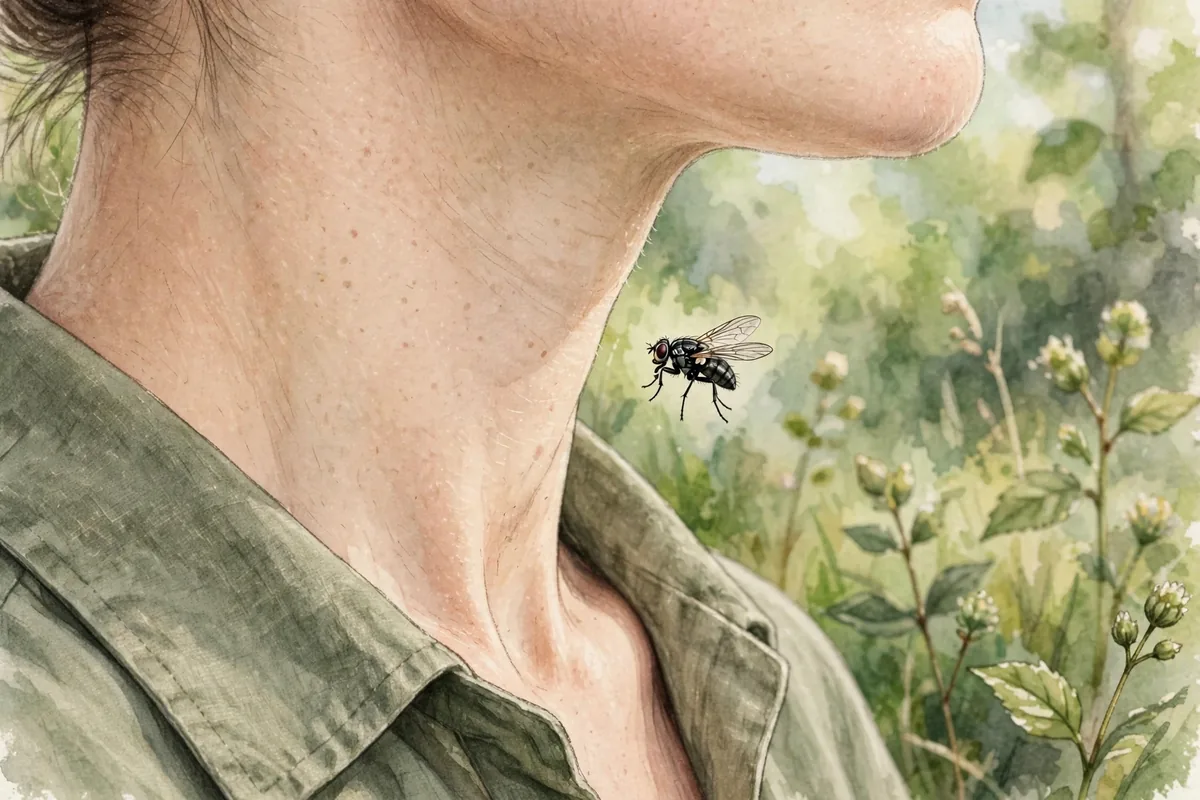
Location adds context. Black flies swarm around the head and neck, especially near running water, and they crawl under collars and cuffs. A cluster of painful, scabbed spots along the hairline or neckline after a riverside walk is a classic black fly pattern. Mosquito bites are more scattered and show up wherever skin was bare.
Both can swell. Do not let swelling confuse you — sensitive people can develop large, dramatic swelling from either insect. The deciding features are the puncture-and-scab pattern (black fly) versus the smooth wheal (mosquito). Understanding the broader differences between bites and stings can sharpen your identification skills further.
Why Black Fly Bites Bleed and Scab #
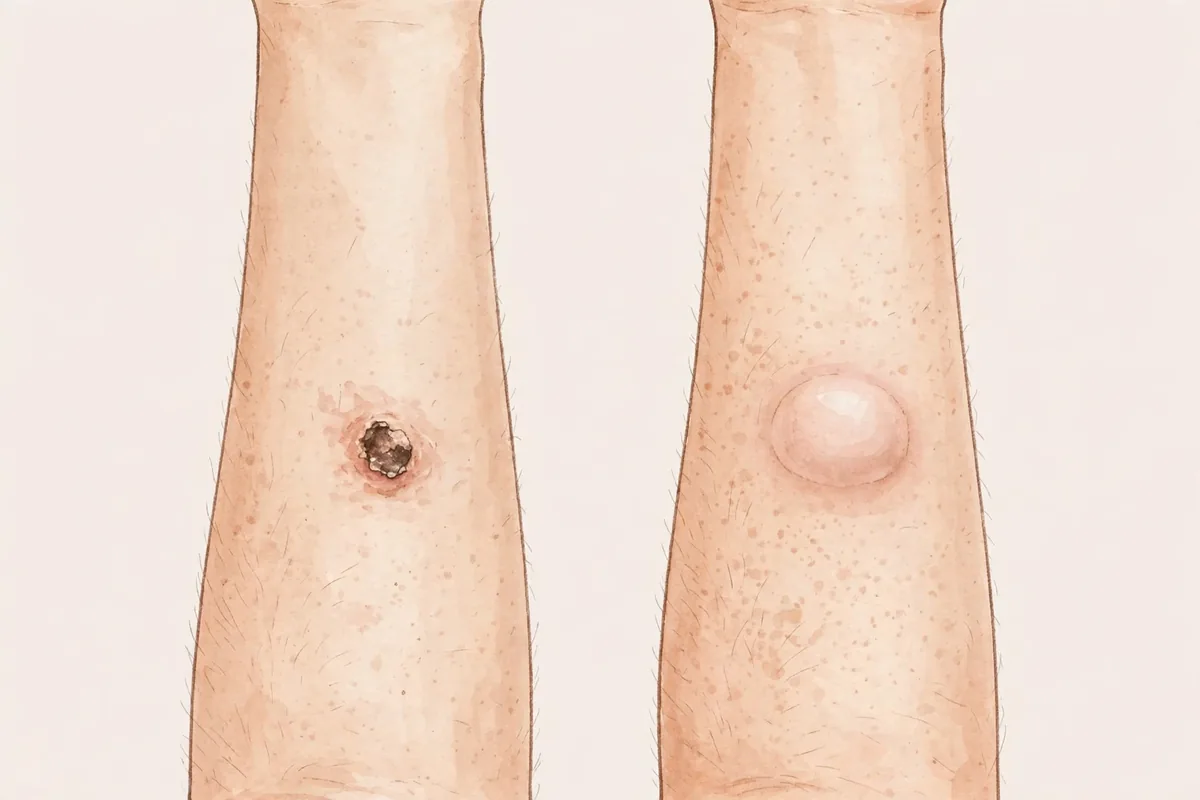
Black flies cut the skin open. Unlike mosquitoes, which pierce the skin with needle-like mouthparts, black flies use blade-like mouthparts to slash a tiny opening and then lap up the pooling blood. That small wound is why you often see a drop of blood at the moment of the bite.
The saliva keeps blood flowing. Black fly saliva contains compounds that prevent clotting, which helps the fly feed but also means the little wound oozes briefly. This same saliva triggers a strong local reaction — pain, burning, redness, and swelling around the bite.
A puncture wound has to scab. Because the skin surface is actually broken, the body heals it like any small cut: a crust forms over the puncture within a day or two. Picking at that scab restarts the process and invites infection, so leave it alone.
Reactions vary by person. Some people get a small dot that fades in days; others develop a swollen, tender lump the size of a coin. Both are within the range of normal local reactions. Black flies in the US are generally a painful nuisance rather than a disease threat — they are not known to transmit human diseases domestically the way mosquitoes can.
Why Mosquito Bites Itch but Rarely Scab #
Mosquitoes pierce, not slash. A mosquito’s mouthparts work like a tiny syringe: they slide between skin cells to reach a blood vessel. The entry wound is microscopic, so there is no visible bleeding and nothing that needs to scab over.
The itch comes from saliva proteins. As it feeds, the mosquito injects saliva to keep blood flowing. Your immune system recognizes those foreign proteins and releases histamine, which causes the redness, swelling, and itch. The wheal — that puffy, raised bump — is the visible sign of that histamine response.
Scratching is what causes most damage. An untouched mosquito bite heals smoothly on its own. The crusts and sores people associate with mosquito bites almost always come from scratching the skin open, not from the bite itself.
Disease risk is the real difference. While black flies are mostly a painful annoyance in the US, mosquitoes can transmit viruses such as West Nile. That does not mean every bite is dangerous — most are not — but it is one more reason to take mosquito prevention seriously during peak season.
Care That Helps Both Heal Faster #
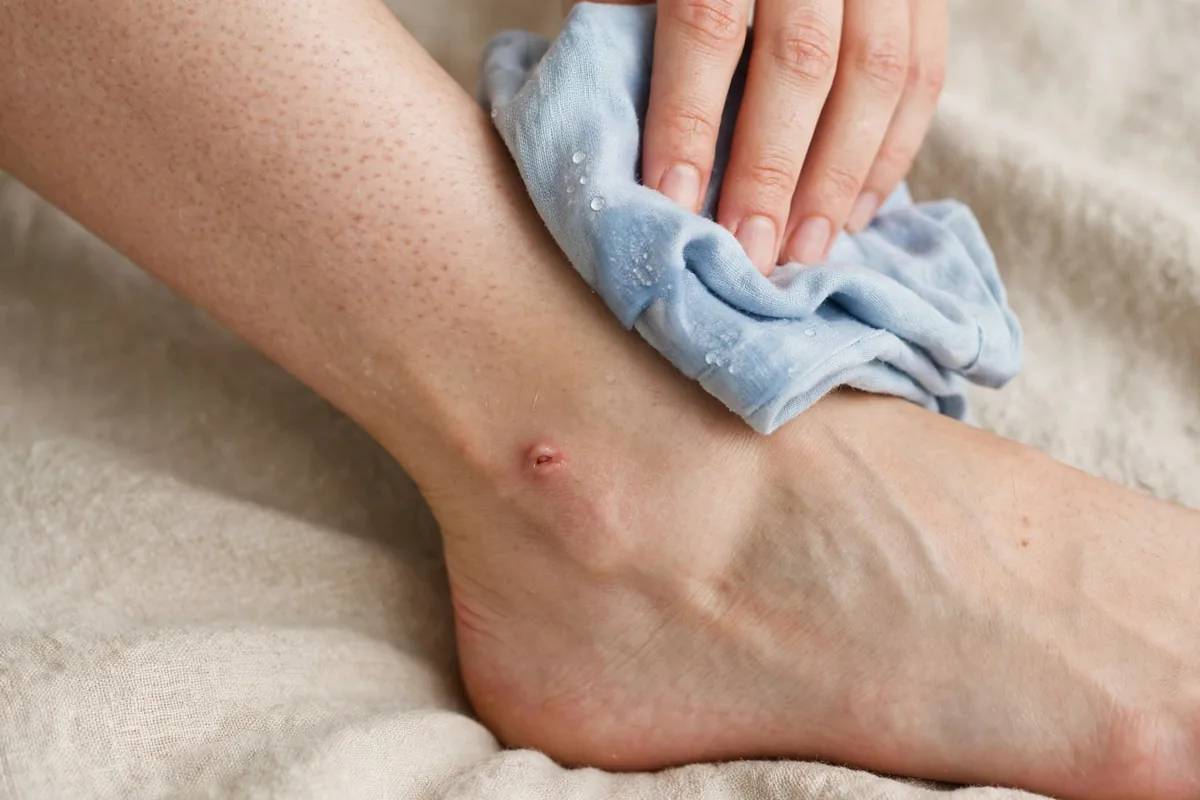
Clean the area. Wash any bite with soap and water, especially a black fly bite where the skin is broken. Clean skin heals faster and resists infection.
Leave scabs alone. A black fly scab is doing its job. Do not pick, squeeze, or peel it. Cover it with a small bandage if you cannot stop touching it.
Cool it down. A cool compress or a cool damp cloth for 10 to 15 minutes eases both pain and itching. Repeat as needed during the first day or two.
Calm the itch without scratching. An oral antihistamine per label directions can reduce itching and swelling for adults. For children, ask your pediatrician or pharmacist before giving any medicine. Cold, distraction, and keeping nails short work for all ages.
Watch healing, not just symptoms. Normal healing means the redness shrinks, the itch fades, and the scab (if any) dries and falls off on its own. Learning to distinguish normal healing from infection helps you know when a bite is on track and when it needs a clinician’s eyes.
Prevent the next round. For black flies, cover the neckline and wear light-colored clothing near rivers and streams, especially in late spring and early summer. For mosquitoes, use a repellent per the label directions and empty standing water around your home.
Warning signs: when to seek care #
Call 911 immediately if you have trouble breathing or swallowing, swelling of the face, lips, tongue, or throat, widespread hives, dizziness or fainting, or a racing heartbeat. These are signs of a severe allergic reaction. If you have been prescribed an epinephrine auto-injector, use it first, then call 911 — do not wait to see if symptoms improve.
Seek urgent care or call your doctor if a bite shows spreading redness, red streaks moving outward, increasing warmth, pus or yellow crusting, or if you develop a fever. See a clinician if swelling keeps growing after 48 hours, if a black fly scab becomes very painful or oozes, if bites are near the eyes, or if you develop flu-like symptoms — fever, headache, body aches — in the one to two weeks after many mosquito bites, since those can signal a mosquito-borne illness worth evaluating.
Frequently asked questions #
Do black fly bites always bleed? #
Not every single one, but bleeding or a small blood spot at the time of the bite is very common — it is one of their hallmarks. Even when you do not see blood in the moment, the tiny puncture usually forms a small crust or scab within a day or two, which mosquito bites do not.
Can you tell them apart just by looking at the bump? #
Usually, yes. Look at the center: a black fly bite has a tiny puncture point or dark dot and often a crust, while a mosquito bite is a smooth, raised wheal with no central mark. Surrounding redness can look similar in both, so focus on the center of the lesion.
How long does each type take to heal? #
A typical mosquito wheal fades within a few days. A black fly bite often takes longer — the scab may need a week or more to fall off, and a small dark mark can linger for a while after. Large local swelling from either insect can take up to a week to fully settle.
Are black fly bites more dangerous than mosquito bites? #
In the US, no. Black fly bites hurt more and look worse, but black flies here are not known to transmit human diseases. Mosquitoes, while often less painful, can carry viruses like West Nile, so mosquito prevention matters more from a health standpoint even though the bites seem milder.
Medical and editorial note #
This guide is general information about identifying and caring for black fly and mosquito bites and is not medical advice. Reactions vary from person to person, so if a bite looks infected, swelling is severe, or you develop fever or flu-like symptoms afterward, contact a healthcare professional promptly.


