
The body of the tick came off, but something’s still in there. Tick head stuck in skin — what to do? First, the reassuring part: what’s left behind is almost always the tick’s tiny mouthparts, not a living “head” that can keep feeding or regrow a body. The CDC’s guidance is straightforward: if the mouthparts break off and remain in the skin, remove them with tweezers if you can — and if you can’t remove them easily, leave them alone and let the skin heal. Whatever you do, don’t dig.
What’s actually left behind #
Ticks anchor themselves with barbed mouthparts called hypostome structures that work like tiny harpoons. When you pull with steady upward pressure, the whole apparatus usually comes out — but if the tick was deeply embedded, the grip was strong, or the pull was angled, the mouthparts can snap off and stay in the skin.
What they are not: a living head, a second tick, or something that can crawl deeper. They’re inert fragments of exoskeleton — essentially a splinter. Your body’s immune system treats them exactly like a splinter: it will either push them out on its own or wall them off harmlessly. The main risk from mouthparts isn’t ongoing disease transmission — it’s the minor skin irritation or infection you’d get from any retained foreign body.
Step-by-step: what to do right now #
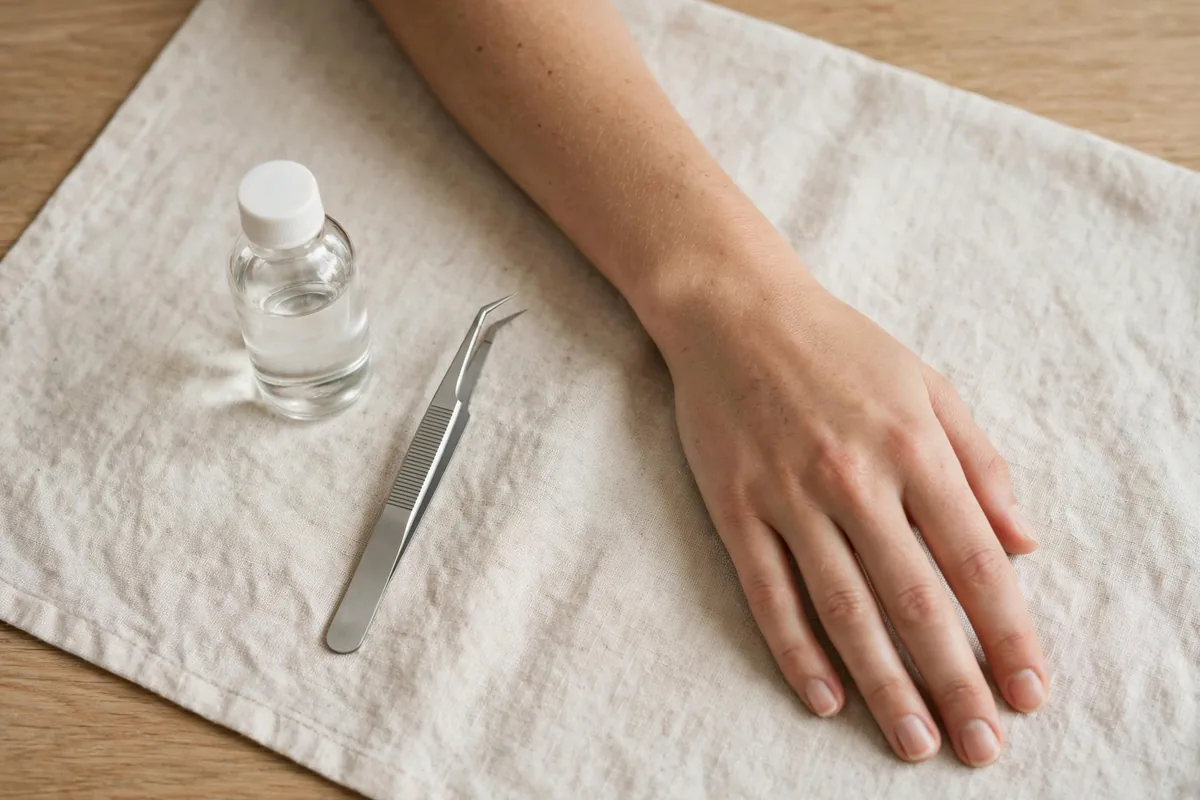
- Stop and look. Clean the area gently with rubbing alcohol or soap and water so you can see clearly. Don’t keep pulling or probing while the site is still irritated from removal.
- Try once with clean tweezers. Using fine-tipped tweezers disinfected with alcohol, grasp the visible fragment as close to the skin as possible and pull with the same slow, steady upward motion you’d use on a tick. If it comes out easily, great.
- If it resists, stop. This is the critical step most people skip. Digging with a needle, pinching hard, or gouging the skin causes more damage than the fragment ever will. A shallow scrape is worse than the mouthparts themselves.
- Clean and cover. Wash with soap and water, dab on rubbing alcohol if tolerated, and apply a clean bandage. Keep it clean and dry for the next few days.
- Let your body handle the rest. In most cases the fragment works its way out within a few days, exactly like a splinter, as the skin naturally sheds and renews.
If the initial removal itself was difficult, review how to remove an attached tick safely so the next encounter goes more smoothly — good technique makes breakage much less likely.
The myths that make it worse #
Panic drives people toward methods that sound decisive but backfire. All of these are discouraged by public-health guidance:
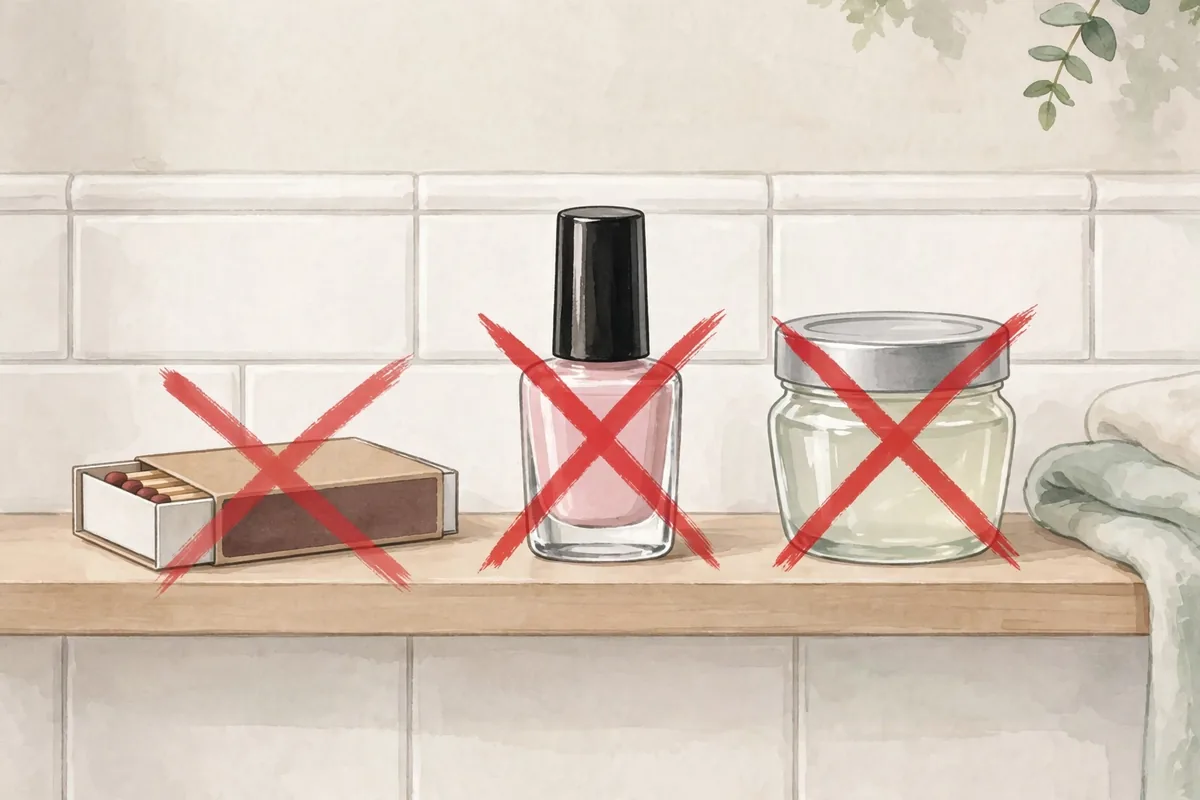
- Don’t use heat. Touching a lit match to the fragment or the skin causes burns without reliably removing anything. This applies during removal too — a stressed tick is more likely to regurgitate, and heat injures your skin.
- Don’t apply nail polish, petroleum jelly, or oils. The old theory was to “suffocate” the tick, but these substances don’t work quickly, and smothering an attached tick can provoke it to release more saliva — exactly what you don’t want.
- Don’t dig with needles or tweezers tips. Excavating a crater in your skin creates an open wound in the exact spot you’re worried about, inviting bacterial infection.
- Don’t squeeze the area hard. Aggressive squeezing around retained mouthparts inflames the tissue and can push irritants deeper.
- Don’t ignore it entirely either. “Leave it alone” means stop digging — it doesn’t mean stop watching. Monitor the spot for a few days like any minor skin injury.
How to watch the spot over the next days #
Treat retained mouthparts like a splinter with a higher stake: monitor, don’t meddle.
- Days 1-3: mild redness, itching, or a small bump is normal. This is local irritation, not necessarily infection or disease. Photograph the spot for comparison.
- Days 3-7: the fragment often surfaces and comes out on its own, or the redness fades. A tiny dark speck that disappears is usually the mouthparts being expelled.
- Ongoing: watch for the signs that apply to any tick bite — an expanding rash or flu-like symptoms within about 30 days. Retained mouthparts don’t change the disease-monitoring timeline; the tick’s feeding time is what matters for Lyme risk, as explained in what to watch for after a tick bite.
One caution: don’t confuse normal irritation with infection. A small, stable, mildly itchy bump that slowly improves is fine. A spot that gets bigger, more painful, warmer, or starts draining after day two or three is not — that’s infection territory regardless of what caused it.
Warning signs: when to seek care #
Call 911 immediately if you have trouble breathing or swallowing, swelling of the face, lips, tongue, or throat, widespread hives, dizziness or fainting, or a racing heartbeat. If you carry an epinephrine auto-injector, use it as prescribed and still call 911.
See a doctor or urgent care if: you can’t tell whether the whole tick came out and the area is worsening; the site develops increasing pain, spreading redness, warmth, swelling, pus, or red streaks; you develop fever, chills, or an expanding rash within 30 days of the bite; the fragment area forms a persistent hard lump that doesn’t improve after a week or two; or the bite is in a sensitive location (eye area, genitals) where you don’t want to attempt removal yourself.
Frequently asked questions #
Can the tick’s head stay alive in my skin? #
No. What’s left behind is dead exoskeleton — mouthpart fragments, not living tissue. It can’t feed, can’t transmit disease on an ongoing basis, and certainly can’t grow a new body. The disease risk from a tick bite comes from the feeding that already happened, not from retained fragments.
Will the mouthparts come out on their own? #
Almost always, yes. Your skin constantly renews itself, and foreign fragments get pushed out like splinters — usually within a few days. If a tiny bump lingers longer but isn’t worsening, it’s typically just the body walling off the fragment harmlessly.
Should I see a doctor just for leftover mouthparts? #
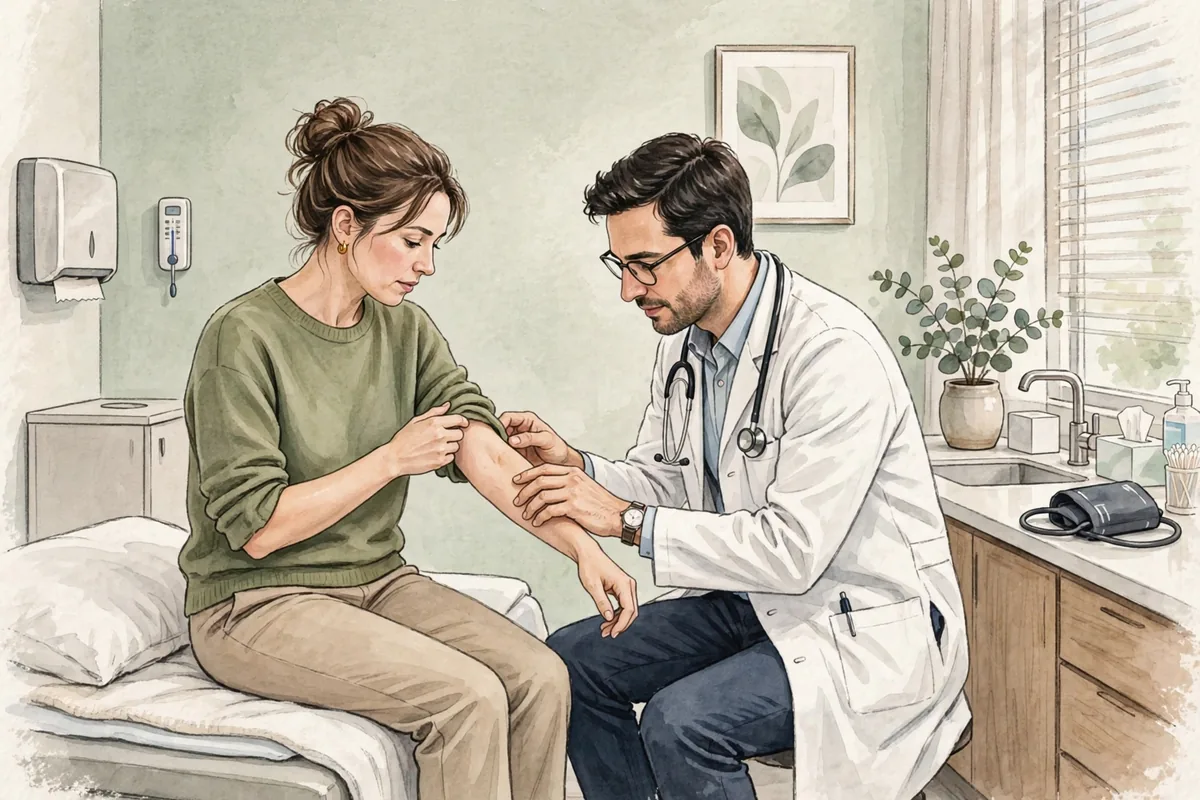
Not usually, if the site is calm and improving. See a doctor if you can’t get a clear look at what remains, if the area is worsening, or if any tick-bite warning symptoms develop. A clinician can remove fragments safely under magnification if needed.
Does a broken-off head mean the tick fed longer and my Lyme risk is higher? #
Not necessarily. Breakage is about removal mechanics — angle, grip, how deeply it was anchored — not feeding duration. Your risk estimate should be based on how engorged the tick’s body was and how long it may have been attached, not on whether the mouthparts snapped.
Medical and editorial note #
This page is general information about handling retained tick mouthparts and is not medical advice. Every bite is different, and if you’re unsure what remains in the skin or the area is worsening, have a healthcare professional take a look rather than continuing to work on it yourself.


