
The tick is in a tissue on the counter, and you’re wondering whether to toss it or keep it. Should you save a tick after a bite? Usually, yes — keeping it costs you nothing and gives your doctor one useful piece of evidence: the species. But a saved tick is not a diagnosis machine, and commercial tick testing is far less decisive than the companies selling it suggest. Here’s the honest breakdown.
The case for keeping it #
A saved tick helps in three concrete ways:
Species identification. This is the big one. Different ticks carry different diseases — blacklegged ticks carry Lyme, lone star ticks carry ehrlichiosis, dog ticks carry Rocky Mountain spotted fever. Knowing the species tells your doctor which illnesses are even on the table and which aren’t. Identification can be done from a clear photograph, but the physical specimen removes all doubt.
Exposure documentation. If you develop symptoms weeks later, being able to show your doctor exactly what bit you — and having your dated notes about engorgement and attachment — sharpens the clinical picture considerably. Memory is unreliable; a labeled jar is not.
Peace of mind during the watch month. The 30 days after a bite involve some low-grade anxiety for most people. Having the tick stored away means you’re prepared if questions arise, which paradoxically makes it easier to stop worrying.
The cost of keeping one is essentially zero: a small container, some rubbing alcohol, a label, and a spot in a drawer.
The case for not bothering #
There are legitimate reasons to skip it:
- The tick is too damaged to identify. If it’s mangled beyond recognition, a lab or doctor can’t tell you much anyway — though a photo taken before destruction may still help.
- You’ve already documented everything. A sharp photo (top and underside, with a coin for scale) plus notes on engorgement, date, and bite location captures most of the value.
- It becomes a talisman of anxiety. Some people check the jar daily and spiral. If keeping the tick makes you more anxious rather than less, the photo-and-notes approach serves you better.
- You found it on a pet that’s on prevention. Lower stakes, though still worth a photo.
None of these are about the tick being useless — they’re about matching the effort to your situation.
How to store a tick properly #

If you keep it, do it right — a dried-out tick in a crumpled tissue is barely better than nothing:
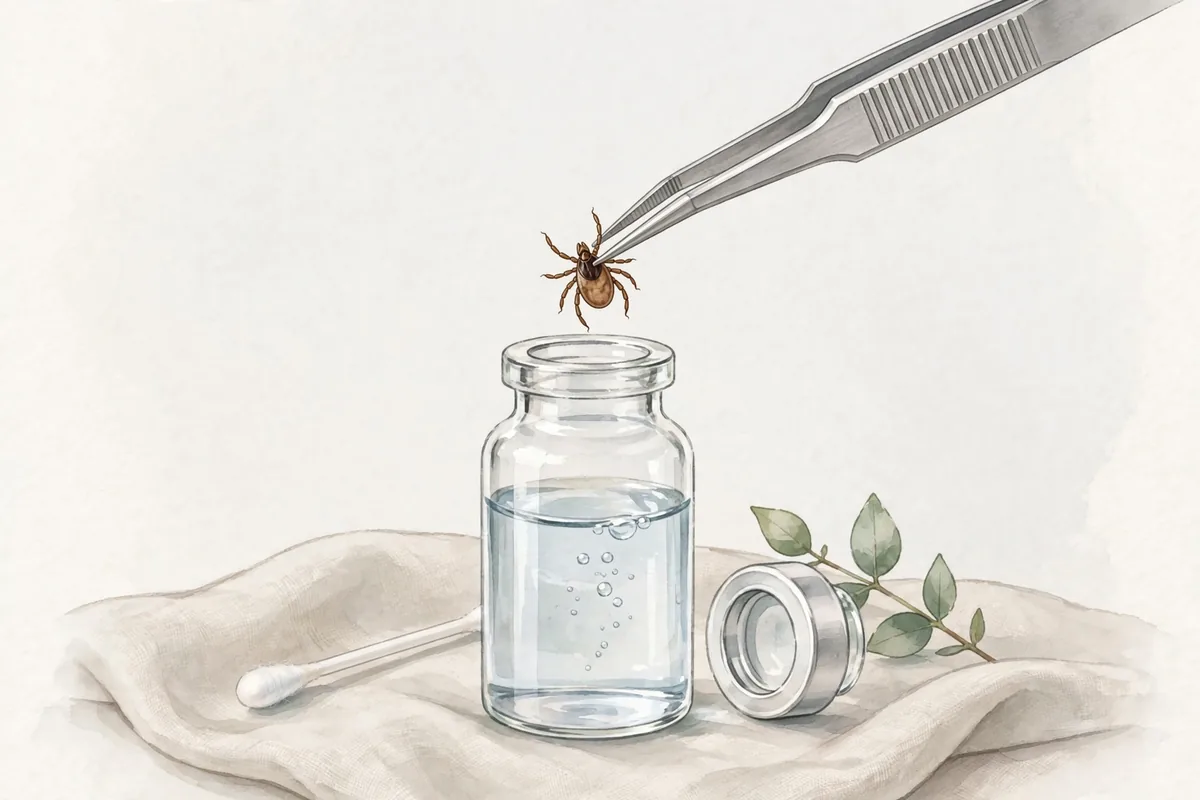
- Use a small, hard, sealed container. A pill bottle, small glass jar, or sturdy zip bag works. Soft containers get crushed; unsealed ones get lost.
- Add rubbing alcohol. Submerging the tick in rubbing alcohol kills it, preserves it, and keeps it identifiable for months. In a pinch, a slightly damp cotton ball in a sealed bag in the freezer also works.
- Label it immediately. Date found, bite location on the body, where you think you picked it up, and how engorged it looked. A label written today beats perfect recall next month.
- Store it where you’ll find it. A drawer, not the back of the freezer behind the peas. Tell someone in your household what it is so it doesn’t get thrown out.
- Never handle with bare fingers. Use tweezers or tissue. Ticks can carry pathogens in their fluids, and you don’t want tick contents on broken skin.
What tick testing can and can’t tell you #
This is where expectations need calibration. Commercial labs will test your tick for Lyme and other pathogens for a fee — and the results sound authoritative. But public-health guidance is clear: tick test results should not drive treatment decisions. Here’s why:
- A positive tick test doesn’t mean you were infected. Transmission depends on attachment time, the tick’s infection load, and other factors. An infected tick attached for a few hours is a very different exposure than one feeding for three days. A positive result can cause unnecessary alarm and even unnecessary treatment.
- A negative test doesn’t rule out illness. You might have been bitten by a second tick you never found. You might have removed this one before it transmitted anything while another did. Doctors can’t treat based on the absence of evidence from one specimen.
- Test quality varies. Commercial tick-testing labs aren’t held to the same regulatory standards as clinical diagnostic labs.
What doctors actually use: your symptoms, the exposure history (species, engorgement, geography, timing), and — when the timing is right — blood tests on you, interpreted alongside clinical findings. For the classic expanding Lyme rash, diagnosis is clinical; no tick test or blood test needed. If you want the full picture of what happens after the bite, tick bite aftercare over the next few weeks covers the monitoring routine, and how to tell a tick bite rash from local irritation helps you read the bite site itself.
The 30-day plan, tick or no tick #
Whether you save the specimen or not, the post-bite routine is the same: note the date, watch the bite site and your general health for about 30 days, and call your doctor if a rash, fever, or flu-like symptoms appear. Testing immediately after an asymptomatic bite isn’t generally recommended, since antibodies take weeks to develop. Bring your tick — or your photo and notes — to any appointment about the bite.
Warning signs: when to seek care #
Call 911 immediately if you have trouble breathing or swallowing, swelling of the face, lips, tongue, or throat, widespread hives, dizziness or fainting, or a racing heartbeat. If you carry an epinephrine auto-injector, use it as prescribed and still call 911.
Call your doctor promptly if: an expanding rash appears at the bite site or elsewhere within 30 days, you develop fever, chills, headache, fatigue, or muscle and joint aches, the bite site becomes increasingly painful with spreading redness or pus, or you develop new symptoms like joint swelling, facial droop, or heart palpitations in the weeks following the bite. Mention the tick species if you know it and bring the specimen or photo.
Frequently asked questions #

How long should I keep the tick? #
About 30 days, matching the symptom-watch window for Lyme disease. Label it with the date so you know when the window closes. After a symptom-free month, you can discard it.
My tick testing lab says positive for Lyme — do I need treatment? #
Not automatically. A positive tick test means the tick carried the bacteria, not that it transmitted them to you. Contact your doctor, describe the exposure (attachment time matters enormously), and let them decide based on clinical guidelines — not the lab report alone.
Can I identify the tick species myself? #
Often, yes, with a good photo and a reputable identification guide — blacklegged ticks, dog ticks, and lone star ticks look distinctly different, especially adult females. But when it matters medically, confirmation by a professional (your doctor, local health department, or university extension service) is more reliable than a guess.
What if the tick was on my dog, not me? #
Save it the same way and tell your vet at the next visit — or sooner if the dog shows symptoms like lethargy, appetite loss, or limping. Tick-borne diseases affect dogs too, and species identification helps the vet assess risk. This is also a good prompt to review your pet’s tick prevention.
Medical and editorial note #
This page is general information about preserving ticks after bites and the limits of tick testing, and is not medical advice. Decisions about testing, preventive treatment, or evaluation after a tick bite belong to you and your healthcare professional, who can weigh your specific exposure, region, and symptoms.


