
Learning how to find a wasp nest in your house or yard starts with one observation: wasps fly in straight lines. They commute between their nest and food or water sources on predictable flight paths, so instead of hunting blindly, you watch where the traffic goes — and the nest reveals itself. This checklist walks you through the right timing, the flight-path method, and every hiding spot wasps favor indoors and outdoors.
The flight-path method: let the wasps show you #
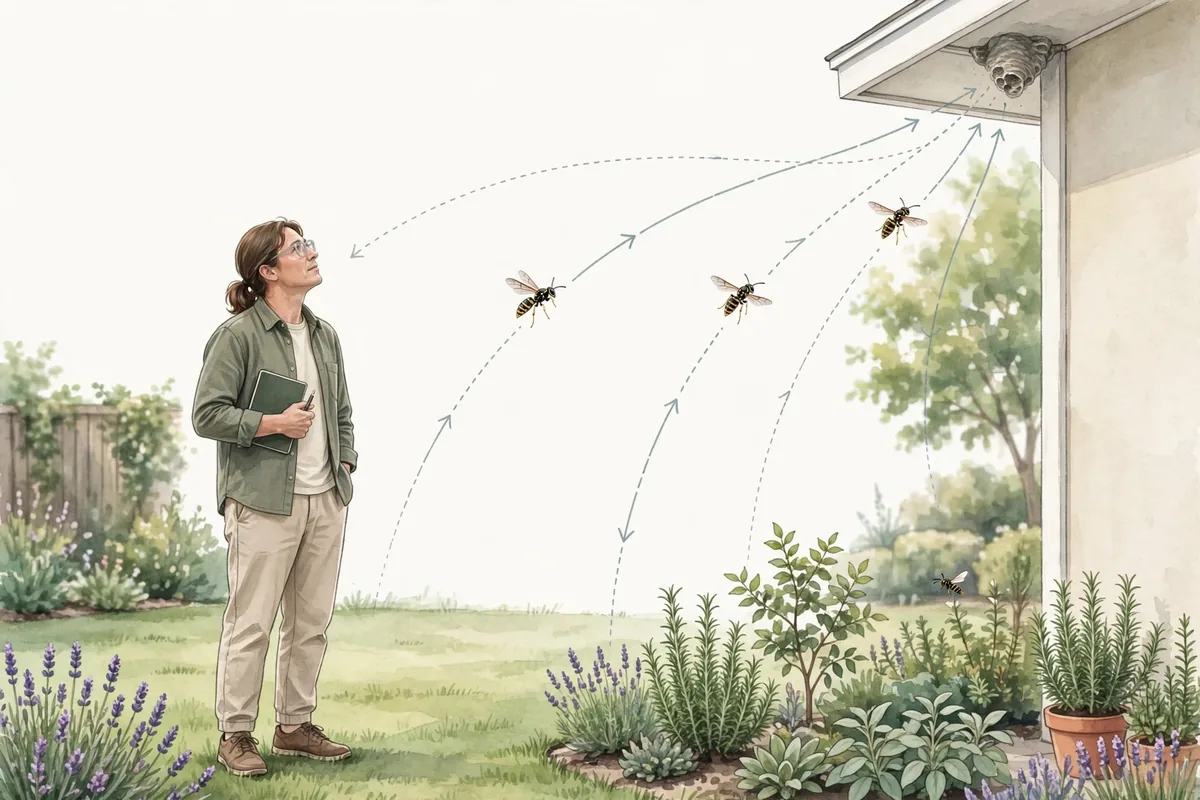
The most reliable technique is also the simplest. Pick a spot 10–20 feet from where you see wasps, stand still, and watch:
- Pick a time of day with steady traffic. Midday through mid-afternoon is when foragers are busiest, so flight lines are easiest to spot.
- Find one wasp and follow it with your eyes as it leaves a food or water source. It will fly a nearly straight line toward the nest.
- Walk in that direction in stages. Stop, re-acquire a wasp, follow its line, walk closer, repeat. The lines converge where the nest entrance is.
- Watch for the “traffic pattern.” A nest has constant two-way traffic — wasps arriving and departing through the same hole, gap, or corner. A single wasp hovering randomly means nothing; a stream of them means a nest.
Give yourself 15–30 minutes. Rushing this step is how people stumble directly into the colony’s defensive zone — which is exactly why understanding why wasps can sting more than once matters before you get close.
Timing and safety rules for nest hunting #
When to look: Late afternoon into early evening is ideal for inspection, because most foragers have returned and activity slows. Never probe a suspected nest at midday when traffic is heaviest. Nest hunting (watching from distance) works best at peak traffic; nest confirming works best when activity quiets.
How to look safely:
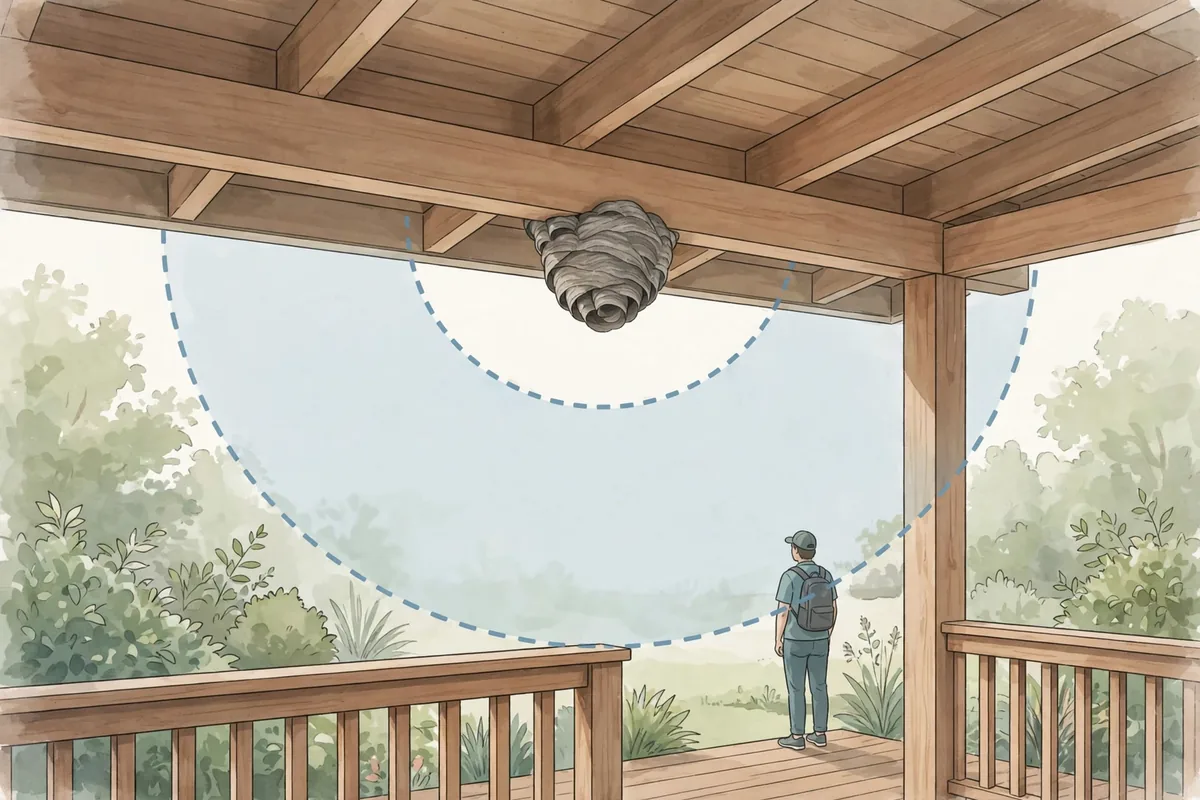
- Stay back. Keep at least 15–20 feet from any suspected nest while watching. Wasps defend a zone around the entrance, and paper wasps can pick up movement surprisingly far out.
- Move slowly and stay calm. Rapid arm movements read as a threat. If wasps start investigating you, freeze or walk away smoothly — do not swat.
- Wear plain, light clothing. Bright colors and floral prints attract foragers; dark colors can provoke defensive behavior. Cover arms and legs, skip the perfume and cologne.
- Never poke a hole to “check inside.” Tapping, poking, or shaking a suspected structure can trigger a full colony defense. Visual confirmation from a safe distance is enough.
- Do not use a flashlight at night to inspect closely. Wasps are drawn to light after dark, and close-range inspection at night can go wrong fast.
Room-by-room and yard-zone checklist #
Wasps choose sheltered, undisturbed spots. Check these in order of likelihood:
Inside the house:
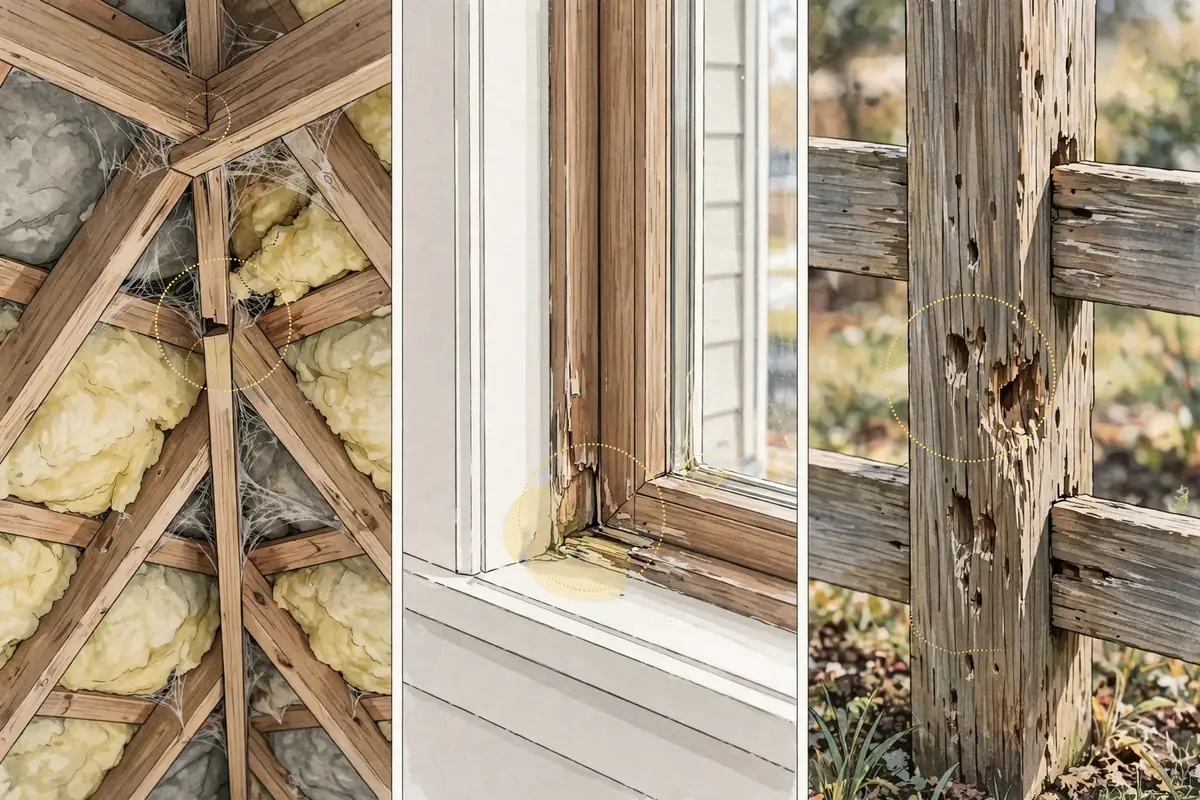
- Attic and roof voids — the single most common indoor site. Check around eaves, rafters, and where vents enter.
- Wall cavities — listen for a low buzzing hum through walls near windows, especially if you see wasps repeatedly entering one exterior gap.
- Window and door frames — wasps slip through deteriorated seals, torn screens, and gaps around frames, sometimes building small nests between the frame and wall.
- Chimneys and flues — unused chimneys are classic nesting sites. Check the cap area and listen inside.
- Garages, sheds, and crawl spaces — undisturbed corners, rafters, and stored-item tops.
Around the yard:
- Under eaves, porch roofs, and deck railings — paper wasp nests hang from these open structures like inverted umbrellas.
- Fence posts and hollow rails — cavities are ideal for several species.
- Wood piles, sheds, and play equipment — check undersides and interiors before reaching in.
- Tree hollows and dense shrubs — aerial nests of hornets hide in foliage.
- The ground — yellow jackets famously nest underground. Watch for wasps diving into a hole in the lawn, a garden bed, or a retaining wall. This is the nest people find by mowing over it.
- Water sources — wasps drink constantly in summer; heavy traffic at a hose bib, pet bowl, or pond edge may point toward a nearby nest.
Nest-type clues: what you’re looking at #
Once you spot the nest, the shape tells you the species — and how much caution you need:
| Nest description | Likely builder | Caution level | |—|—|—| | Gray papery ball with one small hole at the bottom, hanging in open air | Paper wasp | Moderate — defensive near nest | | Large football- or teardrop-shaped gray envelope in trees or shrubs | Bald-faced hornet | High — very defensive | | Gray-brown papery mass inside a wall void, hollow tree, or shed | European hornet | High — large colony, painful stings | | Papery comb inside a ground hole with constant in-and-out traffic | Yellow jacket | Very high — large colonies, aggressive |
For a closer comparison of the two biggest aerial nest-builders, see our guide on wasp sting first aid so you know exactly what to do if your inspection goes wrong.
Found the nest? What to do next #
Small paper wasp nests (tennis-ball size or smaller, low traffic): These can sometimes be handled by the homeowner in early season — at dusk or early morning when wasps are inactive, from a safe distance, using a labeled wasp spray designed for long-range application. But be honest with yourself about your comfort and allergy status.
Call a professional for any of these:
- A nest the size of a football or larger, or heavy two-way traffic
- A nest inside a wall void, chimney, or other structure (spraying the entrance can drive them deeper into the house)
- A ground nest you cannot see the full extent of
- Anyone in the household with a known sting allergy
- You are unsure what species built it
While you wait for help: mark the area, keep children and pets away, cover the area at night if it’s a ground nest (a simple visual marker), and reduce attractants — sealed trash, fallen fruit picked up, open food brought inside. Our broader outdoor bite prevention checklist covers the yard-level habits that make nests less likely next season.
Warning signs: when to seek care #
Call 911 immediately if anyone stung during nest hunting develops: trouble breathing or swallowing; swelling of the face, lips, tongue, or throat; widespread hives; dizziness, fainting, or collapse; or a racing heartbeat. Use prescribed epinephrine if available, then call 911.
See urgent care or your doctor the same day for: many stings at once (our multiple stings guide explains the threshold); swelling that keeps spreading after 48 hours; red streaks, pus, or fever; or stings on the face or near the eyes.
Frequently asked questions #
How can I find a wasp nest without getting stung? #
Watch flight paths from at least 15–20 feet away during midday traffic, then confirm from a distance in the early evening when activity slows. Never poke, tap, or shake anything to check. If traffic seems heavy or the nest is large, stop inspecting and call a pest professional.
Do wasps return to the same nest location every year? #
Paper wasps and hornets generally do not reuse old nests — colonies die off in winter except the fertilized queen, who founds a new nest elsewhere. However, queens often return to the same general areas (the same eave, the same attic), so a location that hosted a nest once deserves extra attention next spring.
What does a wasp nest inside a wall sound like? #
A low, steady buzzing or humming through the wall, often near windows or eaves — sometimes a scratching sound. If wasps are entering through one exterior gap and you hear activity inside, assume a wall-void nest and do not try to spray the entrance yourself.
Should I knock down an empty wasp nest in winter? #
Yes, removing old, inactive nests in winter is safe and can deter new queens from settling in the same spot. Just confirm it is truly abandoned — no traffic on a warm day — before touching it.
Medical and editorial note #
This guide is general information for educational purposes and is not medical advice. Sting allergies can be life-threatening; if anyone in your household has a known allergy, discuss an emergency action plan and epinephrine with their healthcare provider before doing any nest hunting.


