
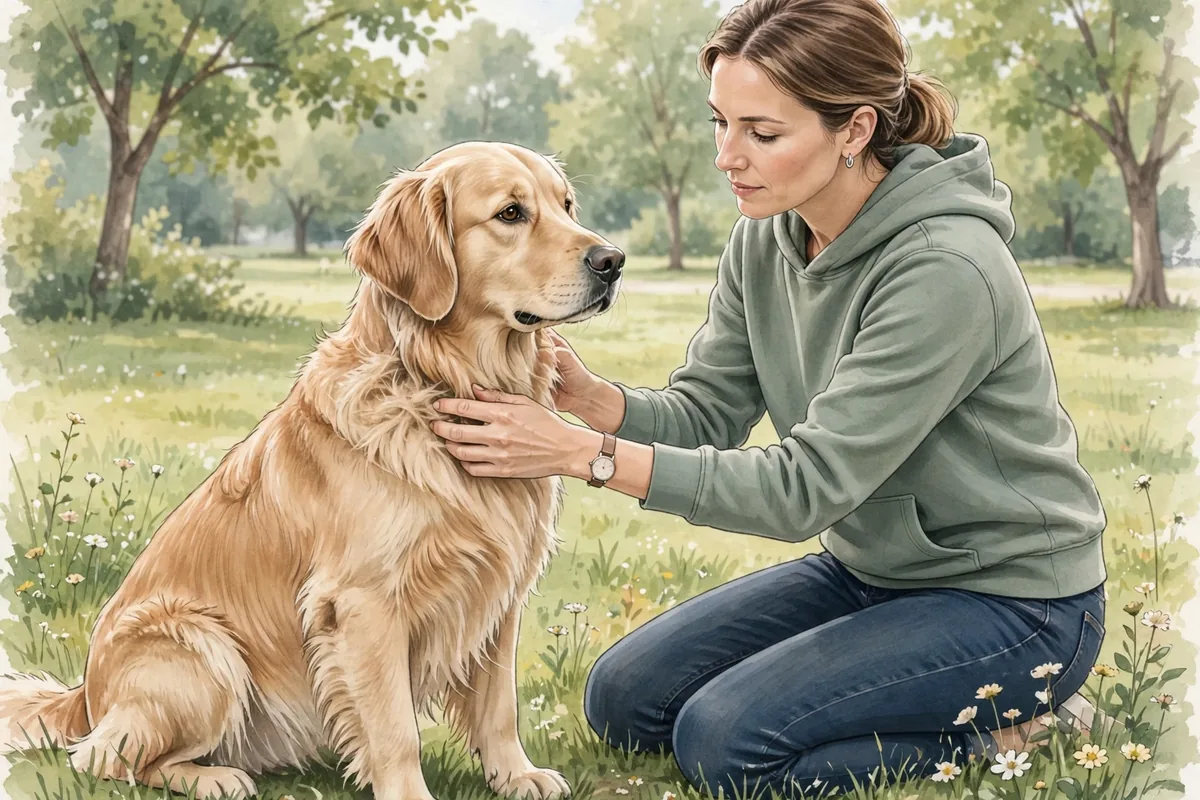
Learning how to check your dog for ticks after a walk takes about ten minutes and can prevent weeks of worry: run your hands over your dog’s entire body against the fur, paying special attention to the ears, armpits, groin, and between the toes. Ticks climb on during walks through grass, brush, and leaf litter — and the sooner you find them, the lower the risk of tick-borne illness. This checklist gives you the full routine, the hiding spots most owners miss, and safe removal steps.
When and why to check #
Check after every walk through grass, woods, trails, or brush — and do it the same day, ideally right when you get home. Ticks typically need to be attached for many hours before they can transmit most diseases, so a prompt daily check is genuinely protective, not just tidy.
Peak seasons are spring and early summer plus fall, but ticks are active year-round in warmer climates — in much of the southern US, there is no true tick off-season. Even winter walks in mild weather deserve a check.
Know what you are feeling for: an unattached tick feels like a tiny hard bump or seed; an attached, feeding tick feels like a small smooth lump, sometimes with a grayish or engorged body. Ticks range from poppy-seed size (nymphs, the hardest to find) to pea size (engorged adults).
The head-to-tail check: your 10-minute routine #
Work in the same order every time so nothing gets skipped:
- Nose and muzzle. Run your fingers over the muzzle, lips, and chin. Ticks attach around the mouth from sniffing through brush.
- Eyes and eyebrows. Check the eyelids and the skin folds around the eyes gently.
- Ears — inside and out. Lift each ear flap and feel the inner surface, the base, and behind the ears. This is the number-one hot spot.
- Neck and collar area. Remove the collar and check underneath — ticks love the warm, hidden skin under collars and harnesses.
- Shoulders and chest. Run hands against the grain of the fur over the shoulders, down the front legs, and across the chest.
- Armpits (front leg pits). Feel deep into the skin folds where the front legs meet the body — dark, warm, and frequently missed.
- Belly and groin. Check the underside, the inner thighs, and the groin area. Lift and look; do not just pat.
- Back and sides. Sweep both hands along the back from neck to tail, pressing through the coat to the skin.
- Tail and rear. Lift the tail and check underneath and around the base.
- Paws and toes. Spread each toe and check between them and around the nail beds. Ticks wedge between toes on trail walks constantly.
Technique tips: use fingertips, not just palms — fingertips detect small bumps better. On long-haired dogs, part the fur in sections. Good lighting helps; some owners do the check on a light-colored towel or sheet so a dislodged tick is visible.
Tick hot spots: where they hide on dogs #
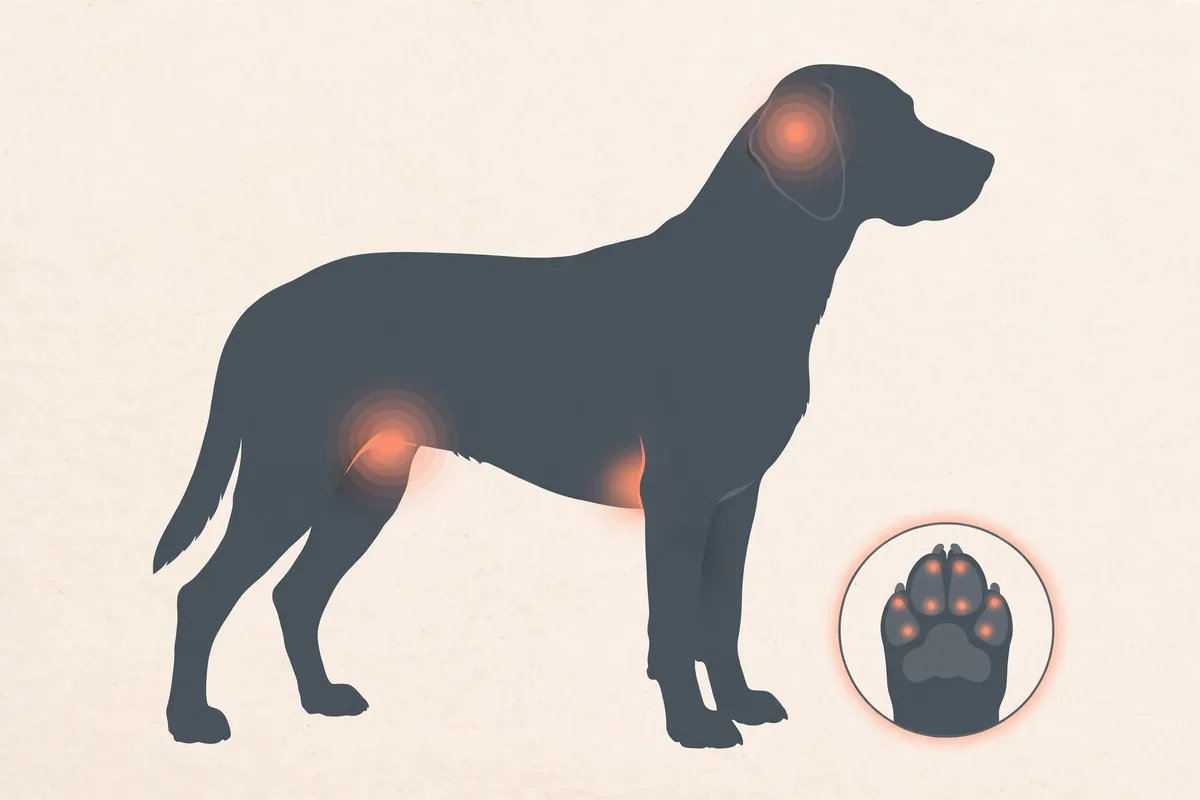
If you are short on time, prioritize these — they account for the large majority of attached ticks:
- Inside and around the ears — the single most common site.
- Between the toes — picked up directly from the ground on every step.
- Armpits and groin — warm, thin-skinned, hidden.
- Under the collar — constant contact area owners forget to lift.
- Eyelids and lips — from pushing through vegetation face-first.
- Around the tail base — especially in thick-coated breeds.
For the equivalent human routine after the same hike, see our tick check routine after hiking — the principles are the same, the anatomy differs.
Found a tick: safe removal step by step #
Act promptly but calmly. The tick has likely been there a while; a few more careful minutes will not change the outcome, but tearing the tick will.
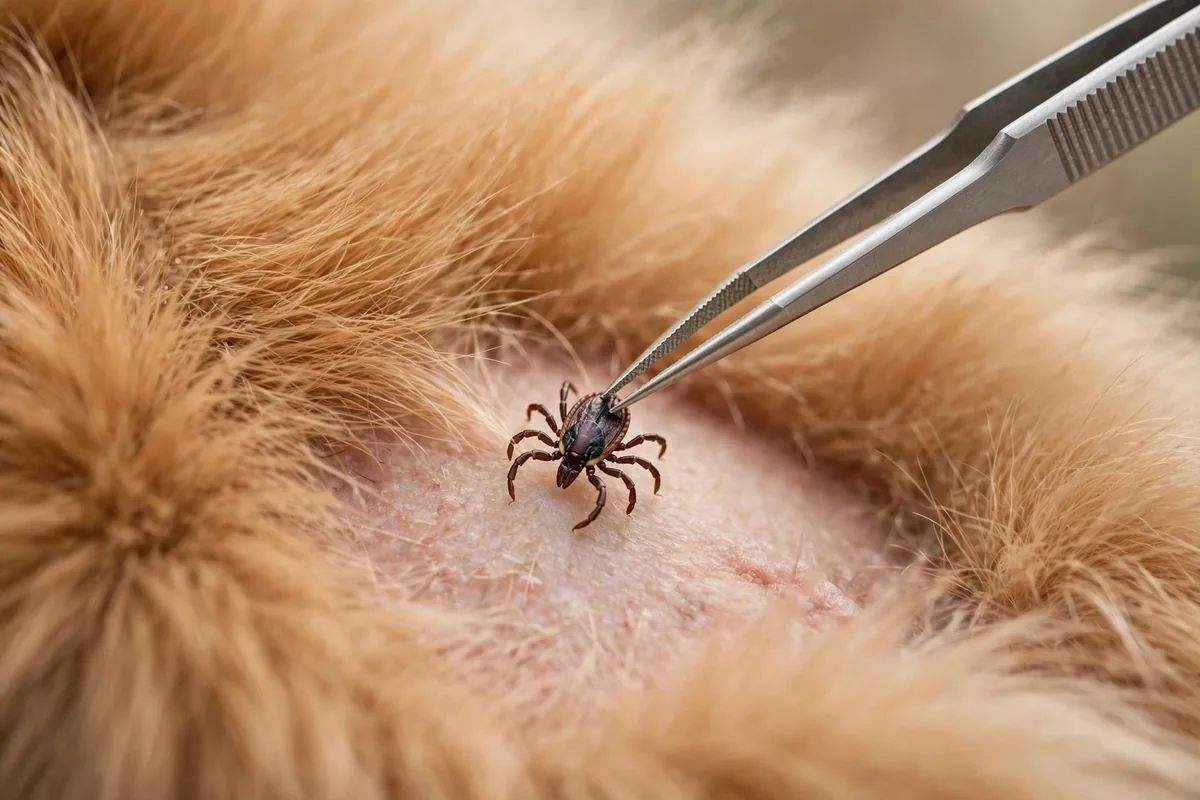
- Get fine-tipped tweezers (or a dedicated tick-removal tool). Household blunt tweezers crush more than they grip — fine tips are worth owning.
- Grasp the tick as close to your dog’s skin as possible — at the mouthparts, not the swollen body.
- Pull straight up with steady, even pressure. Do not twist, jerk, or yank. The goal is intact removal.
- If the mouthparts break off, try once more with the tweezers; if they will not come out easily, leave them — the skin will usually expel the fragment on its own. Do not dig with a needle.
- Clean the bite area with mild soap and water or an antiseptic wipe, and wash your hands.
- Save the tick in a sealed bag or container with the date. If your dog develops symptoms later, identification helps your vet.
- Never burn the tick, smother it with oil or nail polish, or squeeze its body — these methods can cause the tick to release more saliva into the bite and increase infection risk.
Our detailed guide on removing an attached tick safely covers the same technique with additional detail.
After removal: what to watch for #
Mark your calendar with the removal date. Then watch your dog for the next few weeks:
- At the bite site: mild redness for a few days is normal. Call your vet if you see expanding redness, swelling, discharge, or if your dog keeps scratching at the spot.
- General symptoms (days to weeks later): lethargy, loss of appetite, fever, limping or joint stiffness (especially shifting-leg lameness), or swollen lymph nodes. These can signal tick-borne illness such as Lyme disease, ehrlichiosis, or anaplasmosis.
- Routine screening: ask your vet about annual tick-borne disease screening (the common 4Dx-style blood test) and whether your area warrants it.
A note on prevention products: collars, topicals, and oral preventives are a conversation for your veterinarian — products, dosing, and safety vary by your dog’s age, weight, health, and region. Never use dog tick products on cats, and never apply human insect repellent to your dog. No drug names or doses here — ask your vet what fits your dog.
Warning signs: when to seek care #
Call your vet promptly or seek emergency veterinary care for: difficulty breathing; facial swelling or hives after a tick bite or tick-product application; collapse, severe lethargy, or inability to stand; uncontrolled bleeding from a bite site; or a tick bite followed within days by fever, profound lethargy, or loss of appetite.
Contact your vet (non-emergency, same day or next) for: a bite site with expanding redness, swelling, or discharge; shifting-leg lameness or joint stiffness in the weeks after tick exposure; or any tick-borne illness symptoms listed above.
Frequently asked questions #
How soon after a walk should I check my dog? #
Right away is best — make it part of the coming-home routine, like wiping paws. Ticks usually need many hours of attachment to transmit most diseases, so same-day checks genuinely reduce risk. A check the next morning is far better than none.
I found a tick but my dog is on prevention — should I still worry? #
Yes, still remove it and still watch. No preventive is 100%, and some products kill ticks only after they bite. Keep using the preventive as your vet directed, keep checking, and save any ticks you find.
Can ticks from my dog get on me? #
Yes. Ticks can drop off or crawl from dog to human, especially during cuddling or shared bedding. Checking your dog protects you too — and run the human version of the check on yourself after the same walks.
What if I can’t get the whole tick out? #
If the body comes away but tiny mouthparts remain, try once more with fine-tipped tweezers. If they will not release, stop — do not dig. Clean the area and let your vet know at your next visit; the skin typically expels fragments on its own. Watch the spot for signs of local infection.
Medical and editorial note #
This guide is general information for educational purposes and is not veterinary advice. Tick-borne diseases are serious and regional — talk to your veterinarian about prevention products, vaccination, and screening schedules appropriate for your dog and your area. Never give your dog human medications or tick products meant for other species without veterinary guidance.


