
You’ve got a suspicious bite, you looked it up, and now the only question that matters is timing. How long does a brown recluse bite take to heal? The short answer: most bites resolve in about three weeks, but severe bites that develop tissue damage can take six to twelve weeks — and in rare cases up to three months. Because the range is so wide, knowing the healing stages helps you judge whether yours is on track or veering off course.
Healing time at a glance #
Not every suspected brown recluse bite behaves the same way. In fact, most bites attributed to brown recluses never become serious at all. Here’s the typical range clinicians describe:
- Mild bites (no tissue damage): mostly healed within a few weeks, with discomfort fading after the first several days.
- Moderate bites (blistering, limited skin breakdown): roughly three to eight weeks, with a scab forming and slow closure underneath.
- Severe bites (necrosis, open ulcer): six to twelve weeks or longer. One published case series found lesions with significant tissue damage took an average of about 74 days to heal, while most brown recluse bites in medical sources are described as fully healed within three months.
- Very rare cases: healing beyond three months with large tissue damage or secondary infection.
Two things skew these numbers. First, brown recluse bites are overdiagnosed — studies have found that when the actual spider is caught and identified, only a small fraction of suspected bites involve tissue necrosis. Second, individual factors — age, circulation, diabetes, and whether the bite gets infected — matter as much as the venom itself. If you want to understand what’s typical for ordinary bite healing versus warning signs of trouble, how normal healing differs from possible infection walks through the visual clues.
Week-by-week healing timeline #
Days 1-3: quiet start, then swelling #
Brown recluse bites are famous for being painless at first. The spider’s fangs are small, so many people never feel the bite happen. Pain, when it comes, usually peaks around 24 hours after the bite. Within the first day the area often turns a reddish-blue color, with swelling and sometimes a blister.
Days 4-7: the wound declares itself #
If the bite is going to worsen, this is typically when it happens. The blister may darken as tissue breaks down, and a central area of damage can appear with surrounding redness — the sometimes-described “red, white, and blue” pattern (red outer ring, pale ring, dark center). Between roughly day five and seven, dead tissue may form a dark eschar — a thick, black scab-like covering. Pain tends to be at its worst during this window.
Weeks 2-4: scab and slow repair #
For mild bites, this phase is uneventful: inflammation fades, the scab shrinks, and new skin fills in underneath. For necrotic bites, the eschar remains while the body works around and under it. New tissue (granulation) forms slowly at the wound edges.
Weeks 4-8: closure #
Mild bites are done by now. Moderate wounds close and the scab separates, revealing pink new skin. Severe ulcers are usually smaller than before but may still be open. Medical wound care — regular cleaning, dressing changes, sometimes debridement (removal of dead tissue) — continues here.
Months 2-3: scar maturation #
New skin is pink and fragile; over the following weeks it flattens, fades, and strengthens. Areas that lost deeper tissue may leave a depressed or discolored scar. If dark marks linger, what to expect while dark bite marks fade covers realistic timelines and protection during this phase.
The 4 wound stages, explained #
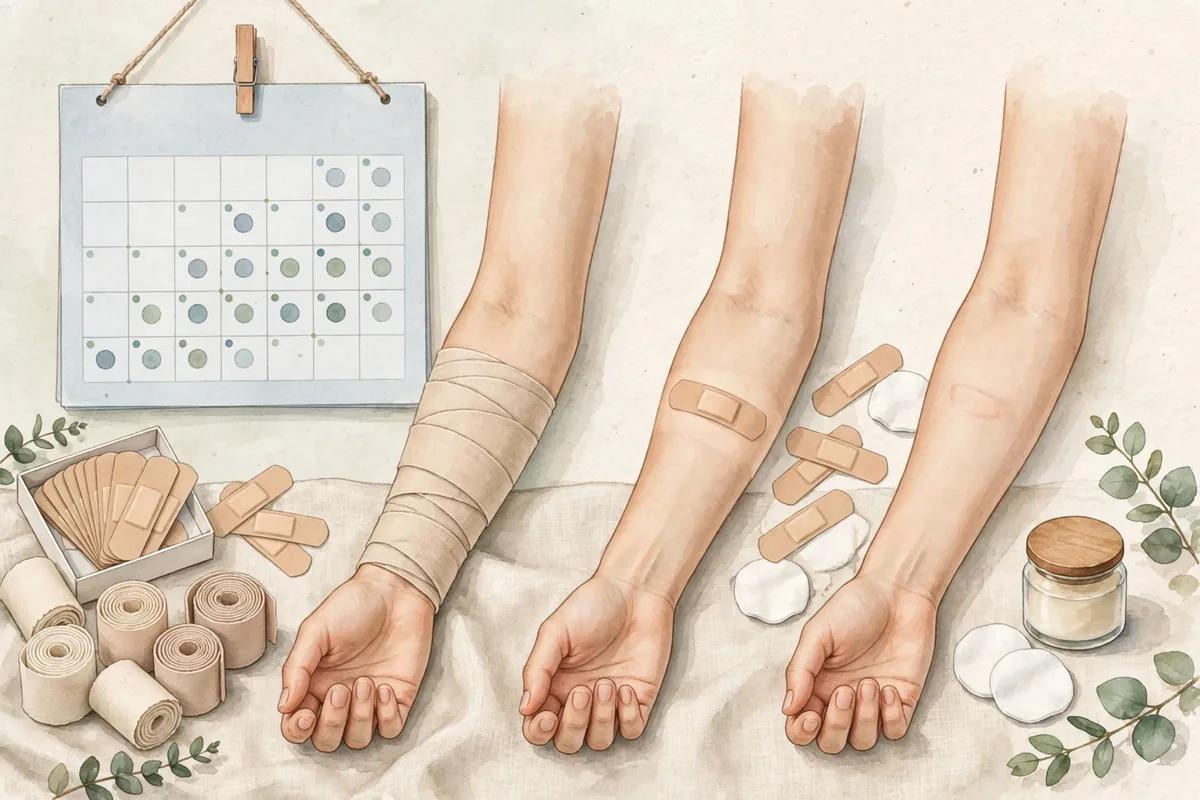
It helps to think of brown recluse healing as four stages rather than a straight line:
Stage 1 — Inflammatory (days 1-3). The body’s alarm response: redness, swelling, warmth, and sometimes a blister. Many bites never go past this stage, and that’s the best possible outcome.
Stage 2 — Tissue damage (days 3-14). In bites with significant venom effect, skin cells in the center begin dying. The area may look bluish, dark, or sunken. This is necrosis — dead tissue, not infection, though infection can join in later.
Stage 3 — Eschar and repair (weeks 2-8). The dark scab-like eschar forms over the dead tissue. Underneath it, the body slowly builds new tissue. Picking or prematurely removing the eschar resets the clock, because it exposes fragile new tissue to damage and germs.
Stage 4 — Remodeling (months). The scar matures: it softens, flattens, and slowly lightens. This phase can’t be rushed; collagen remodeling genuinely takes months.
One important nuance: most suspected bites never develop stage 2. Necrosis is far less common than people assume: a wound that’s simply red and itchy for a few days, then fades, fits a mild bite — or a different cause altogether.
Home care that supports healing #
These steps support healing for any suspicious bite while you arrange medical evaluation. They don’t replace it — a bite that looks like a brown recluse bite deserves a clinician’s eyes early.
- Get medical evaluation promptly — ideally within a day or two, sooner if the bite worsens.
- Keep the area clean. Wash gently with soap and water, then cover with a clean, dry bandage. Change the dressing daily or whenever it gets wet or dirty.
- Use a cold compress. Fifteen minutes on, fifteen off, with a cloth barrier between ice and skin. This eases pain and swelling during the first days. A calm guide to doing it right is how to use a cold compress on bites and stings.
- Don’t pick or pop. Leave blisters intact — they protect the tissue underneath. Let the eschar separate on its own.
- Watch and document. Take a photo each day with something for scale (a coin works). Growth over days, rather than your memory of size, is what doctors need to see.
- Support your general health. Sleep, hydration, and not smoking all genuinely affect wound healing; keep the wound protected from friction.
- Ask about tetanus. If you haven’t had a tetanus booster in the last several years, mention it to your clinician — this is routine guidance for skin wounds.
For itching, an oral antihistamine per label directions or a cool compress can help.
What NOT to do to a suspected brown recluse bite #
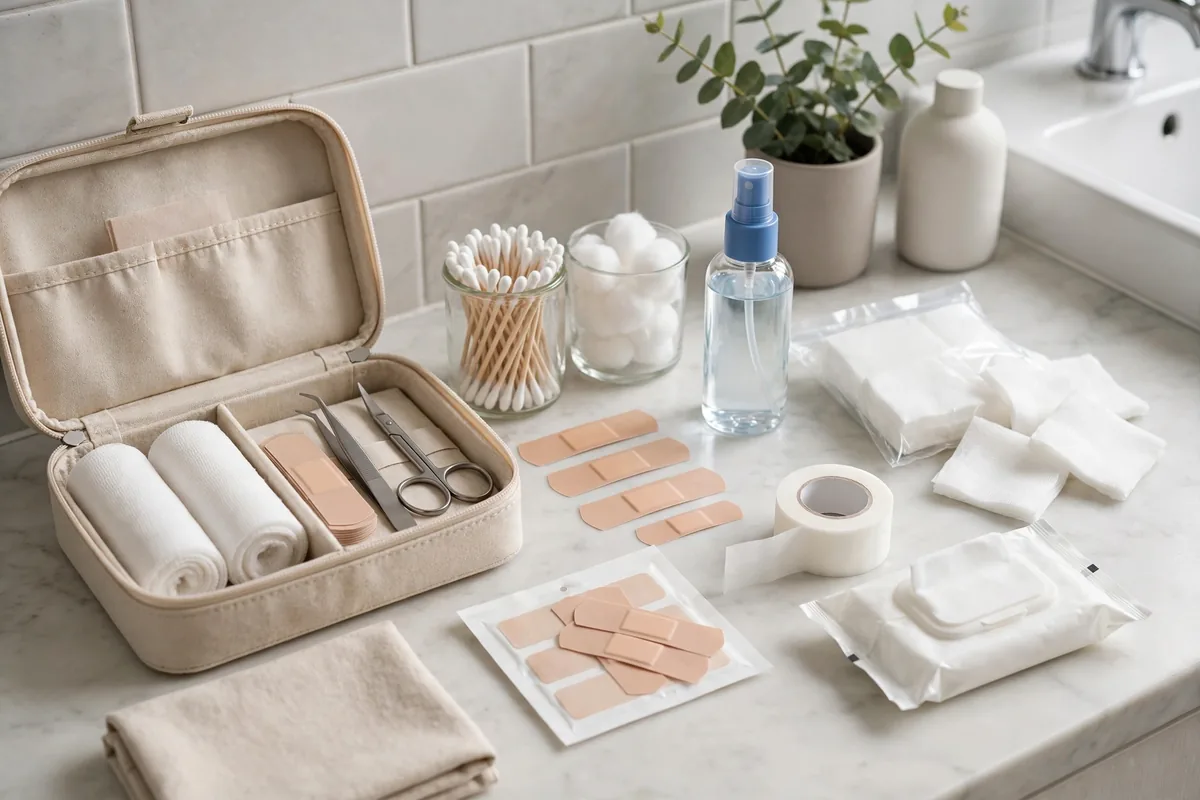
Fear drives bad decisions. Every item below has been tried by real people, and each one makes things worse:
- Don’t cut the bite to “drain the venom.” Cutting converts a contained wound into an open one and nearly guarantees infection.
- Don’t apply a tourniquet. Restricting blood flow to a limb damages healthy tissue and doesn’t remove venom.
- Don’t try electric shock devices. There’s no evidence they help; they can cause burns.
- Don’t squeeze or dig at it. Pressing on damaged tissue spreads inflammation and forces bacteria inward.
- Don’t apply raw garlic, tobacco, or other caustic home remedies. They chemically burn already-injured skin.
- Don’t wait weeks “to see what happens” with a worsening wound — early evaluation gives the best outcomes.
Warning signs: when to seek care #
Call 911 immediately if you have trouble breathing or swallowing, swelling of the face, lips, tongue, or throat, widespread hives or itching, dizziness or fainting, or a racing heartbeat. If you carry an epinephrine auto-injector, use it as prescribed and still call 911 — symptoms can return.
Seek urgent care or see a doctor promptly for any suspected brown recluse bite, and go sooner if: the wound grows rapidly or turns black; you develop fever, chills, nausea, vomiting, or body aches; red streaks spread from the wound; there is pus or a foul odor; the pain is severe or increasing after the first days; dark urine or unusual bruising appears (rare but serious systemic signs); or the bite hasn’t improved at all after a week. Children, older adults, and people with diabetes or immune conditions should be evaluated early even for mild-appearing bites.
Frequently asked questions #
Can a brown recluse bite heal on its own? #
Mild ones often do, within a few weeks, especially with basic wound care — but you can’t reliably tell “mild” from “about to worsen” in the first 24 hours, which is why early evaluation matters even if you feel fine.
Why does the healing take so long? #
The venom damages blood vessels and tissue, so the body must clear dead tissue and rebuild from the edges inward — a process that simply takes weeks for anything beyond surface damage.
Will it leave a scar? #
Small, mild bites often heal without a visible mark. Bites that formed an eschar or ulcer frequently leave scarring that fades over months; deeper tissue loss can leave a pitted scar. Keeping the closed wound protected and moisturized supports the best outcome.
How do I know it’s actually a brown recluse bite and not something else? #
Usually you can’t — not even doctors can be certain from the wound alone. Confirmed bites involve seeing the spider and having it identified. Staph/MRSA infections, shingles, allergic reactions, and other bites are commonly mistaken for recluse bites; a clinician can sort out the possibilities.
Medical and editorial note #
This page is general information about wound healing timelines and is not medical advice. Brown recluse bites vary widely, and any bite you suspect may be from one deserves evaluation by a healthcare professional who can assess your specific wound. If you are ever worried about a bite’s appearance, pain level, or progress, seek care rather than waiting.


