
Blood spots on your dog’s ear tips, scabs that won’t heal, flies hovering no matter how often you shoo them — that’s classic fly strike, and fly bites on dogs ears treatment works best when you act fast and break the bite-rebite cycle. This guide walks you through why ears are the target, how to treat the bites, and how to keep flies off for good.
Why Flies Target Your Dog’s Ears #
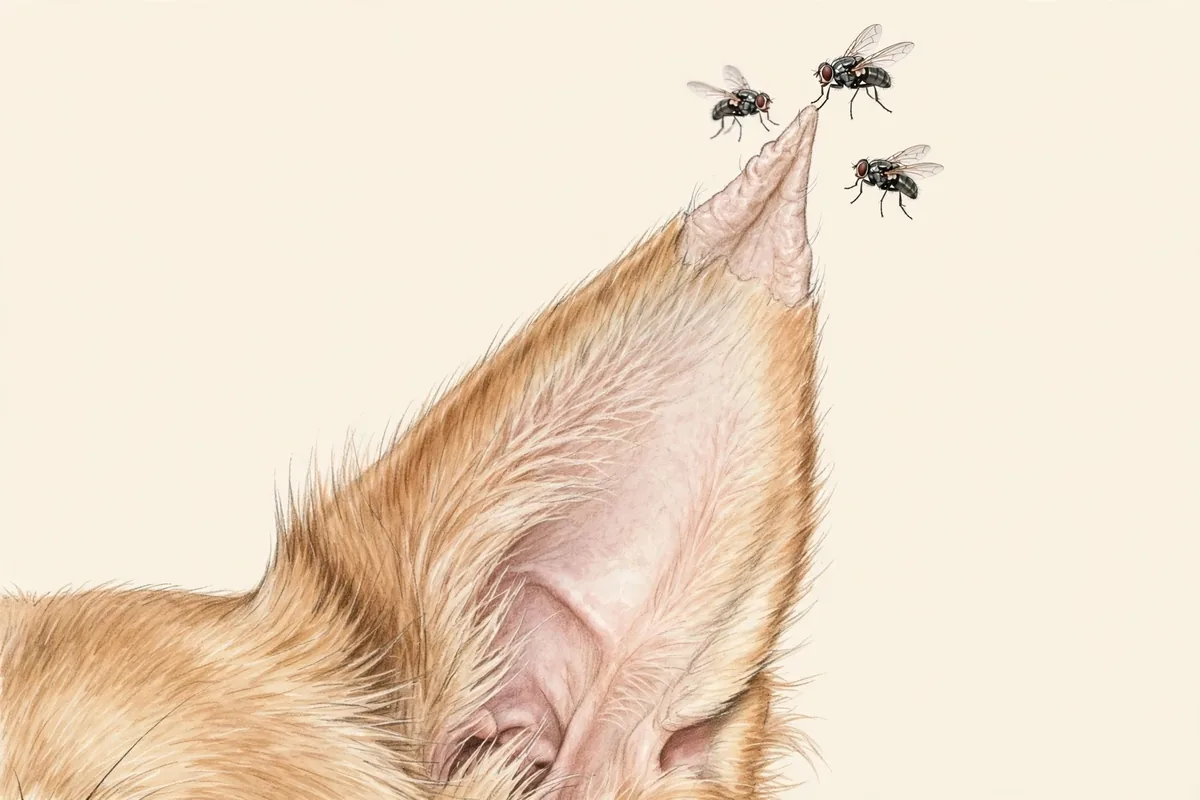
The main culprit is the stable fly (Stomoxys calcitrans), sometimes called the biting house fly. Unlike common house flies, stable flies of both sexes feed on blood — and anyone who has been bitten by one knows how painful the bite is. Dogs with upright, pointed ears (German Shepherds are the classic example) are hit hardest, for three reasons:
- Thin skin, little hair. Ear tips and the top surface of the ear have almost no protective fur, so flies can bite easily.
- The dog can’t defend its ears. Dogs can snap at flies on their legs or body, but ear tips are nearly impossible for them to protect — so flies return to the same spot again and again. Some outdoor dogs endure hundreds of bites a day for weeks.
- Wounds attract more flies. Each bite leaves a small blood spot, and the smell of blood and damaged tissue draws still more flies. It becomes a self-reinforcing cycle: bite, bleed, attract, repeat.
Fly strike is most common in dogs that live outdoors, especially near farms, stables, kennels, or anywhere manure, wet straw, or decaying organic matter accumulates — the breeding grounds stable flies love. Summer and early fall are peak season, but in warm climates it can be a year-round problem.
Signs of Fly Bites on Dogs’ Ears #
Catching fly strike early makes treatment much easier. Look for:
- Tiny blood spots or pinprick scabs along the ear margins and tips — often the very first sign.
- Flies congregating on or around the ears, even when the dog is indoors briefly or resting.
- Dark crusts or blackened scabs on the ear edges where repeated bites have accumulated.
- Bleeding when scabs are knocked off — dogs shake their heads, scratch, and fling blood onto walls and furniture, which is often how owners first notice the problem.
- Raw, moist, or oozing areas where the skin barrier has broken down from constant biting.
- Thickened, leathery ear edges in chronic cases, from months of repeated injury and healing.
Don’t confuse fly bites with ear infections: infections usually involve the inner ear canal (odor, discharge, head tilting), while fly strike affects the outer ear margins and tips. That said, the two can coexist — and what looks like “just scabs” deserves a closer look if it doesn’t improve with basic care.
First-Aid Steps for Bitten Ears #
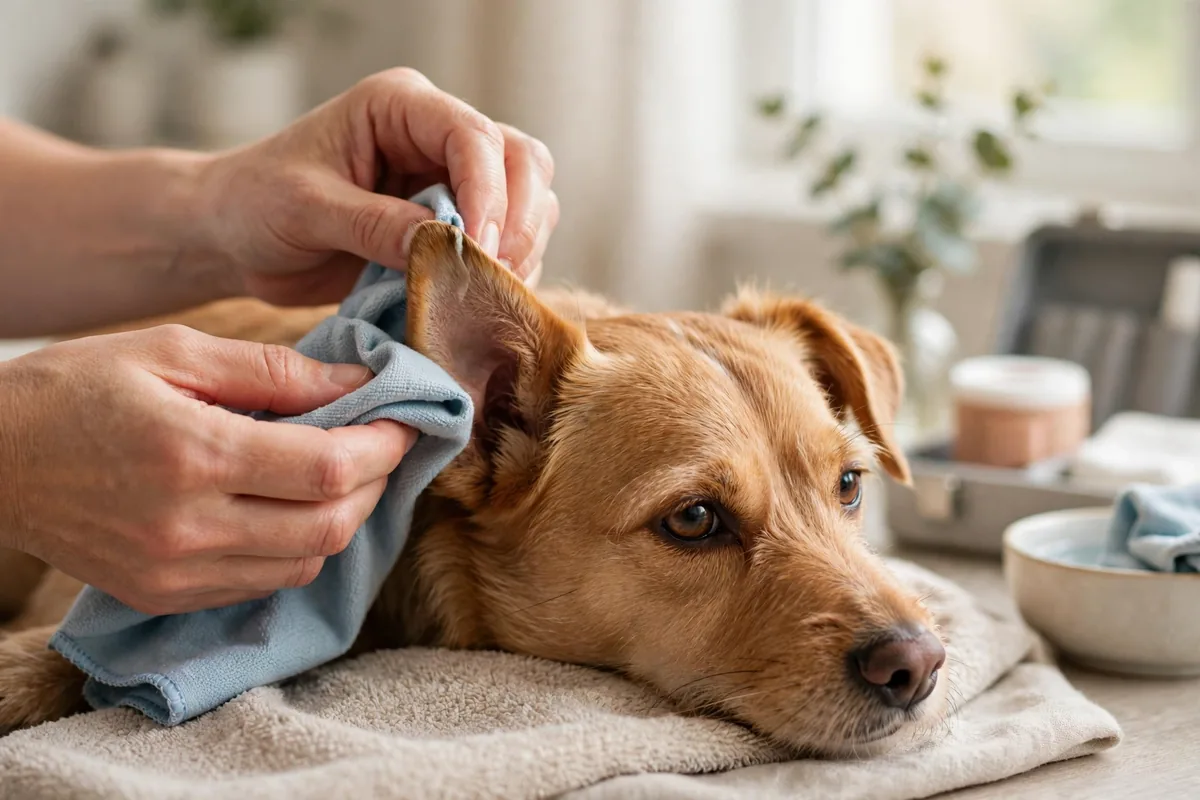
Start treatment at the first sign of bites — the longer the cycle runs, the harder it is to break. Work gently; sore ears are painful.
- Bring the dog indoors. The single most effective first step. Every hour the dog spends outside is another round of bites. Keep outdoor time short and supervised until the ears heal.
- Cleanse the ears gently. Wash the ear margins with warm water and a mild antiseptic soap, softening and lifting crusts patiently — don’t rip scabs off aggressively, as that restarts bleeding. Rinse thoroughly. (The same gentle-cleaning principles in our guide to cleaning a bite or sting safely apply here.)
- Apply a protective barrier. After cleaning, apply a thin layer of petroleum jelly or a vet-approved fly-repellent ointment to the ear tips. The barrier does two jobs: it helps existing bites heal and makes the skin less attractive (and less accessible) to biting flies. Reapply before any outdoor time.
- Use a fly repellent made for dogs. Pet stores carry fly-repellent sprays and ointments formulated for dogs — never use horse or livestock fly sprays unless your vet confirms they’re dog-safe, and never use products containing ingredients your vet hasn’t approved for your dog.
- Prevent scratching. An e-collar (cone) for a few days can be the difference between healing and a setback if your dog keeps reopening the wounds by scratching.
- Keep the environment clean. Wash bedding, pick up droppings promptly, and remove any decaying matter near where the dog rests — fewer breeding sites means fewer flies.
Check the ears daily during treatment. You should see new bites stop appearing within a few days of consistent protection, with scabs gradually resolving over 1–2 weeks.
Keeping Flies Off Ears: Prevention That Works #
Treating bites without fixing the fly problem is bailing water with a hole in the bucket. Layer these prevention steps:
- Sanitation first. Stable flies breed in moist, decaying organic matter — manure, wet straw, spilled feed, grass clippings, garbage. Veterinary sources note that good sanitation alone can cut stable fly populations by up to 90%. Clean kennels and runs daily, compost manure away from the dog’s area, and keep feed areas dry.
- Bring dogs in during peak fly hours. Stable flies are daytime feeders, most active in warm, calm weather. If your dog must be outside, provide a shaded, screened, or indoor resting spot.
- Use vet-approved repellents routinely. During fly season, apply a dog-safe fly repellent to the ear tips before the dog goes out — make it as routine as the walk itself. Monthly parasite preventives containing ingredients your vet recommends for flies add another layer.
- Manage the yard. Mow tall grass, remove brush piles, fix drainage so no soggy spots persist, and keep garbage cans sealed. Every breeding site you eliminate is hundreds of future flies prevented.
- Consider physical barriers. For severely affected dogs, lightweight fly masks or ear covers designed for dogs can protect ear tips during outdoor time.
If you live near livestock or a stable, talk to the property manager about area-wide fly control — your dog’s ears will benefit from every reduction in the local fly population.
When to See the Vet #
Most mild fly strike resolves with cleaning, protection, and keeping the dog indoors. Call your veterinarian if:
- The ears aren’t improving after a week of consistent home care.
- You see maggots in or around the wounds — flies can lay eggs in damaged tissue, and this needs professional treatment promptly.
- Bites look infected: spreading redness, swelling, warmth, pus, or a foul odor — learn to recognize a warm, painful, draining bite that needs prompt care.
- Bleeding won’t stop or scabs keep reforming despite protection.
- Your dog is in obvious pain, stops eating, or develops a fever.
- Large areas of the ear are raw or the ear edges are becoming deformed.
Your vet may prescribe topical or oral medications for infection or inflammation and can recommend the most effective fly-control products for your specific situation. Never apply random insecticides, essential oils, or livestock chemicals to your dog’s ears without veterinary guidance — the thin skin of the ear absorbs chemicals readily, and some fly products safe for horses are toxic to dogs.
Warning signs: when to seek care #
Call your veterinarian promptly — or an emergency animal clinic after hours — if your dog shows sudden collapse, trouble breathing, pale or white gums, uncontrolled bleeding from the ears, or signs of severe pain such as crying, panting heavily at rest, or refusing to move. These are emergencies regardless of cause.
For non-emergencies, book a vet visit if bitten ears show spreading redness, swelling, pus, or odor (possible infection), if maggots appear in wounds, or if the condition worsens despite a week of home care. Bring notes on what you’ve tried and any products you’ve applied — it helps your vet choose the right next step quickly.
Frequently asked questions #

What kind of flies bite dogs’ ears? #
Almost always stable flies (Stomoxys calcitrans), the “biting house fly.” They’re about the size of a house fly but feed on blood, and they especially target the thin-skinned tips of dogs’ ears. Good sanitation around kennels and yards is the most effective long-term control.
Can I use Vaseline on my dog’s ears for fly bites? #
Yes — a thin layer of plain petroleum jelly on the ear tips is a widely used, vet-accepted barrier that helps bites heal and deters new ones. Reapply before outdoor time. For added protection, ask your vet about dog-safe fly-repellent ointments.
Why do my dog’s ear tips keep bleeding? #
Ear tips have very little tissue and a rich blood supply near the surface, so even small bites bleed — and head-shaking flings the blood around, which looks dramatic. The bleeding itself is usually minor; the real problem is the bite-rebite cycle. Break the cycle (indoors + barrier + repellent) and the bleeding stops.
Will fly bites on ears heal on their own? #
Mild cases can heal if the dog is kept away from flies, but “on their own” rarely happens for outdoor dogs because new bites keep reopening the wounds. Active treatment — cleaning, barrier protection, and fly control — heals ears far faster and prevents the chronic thickening that repeated seasons cause.
Medical and editorial note #
This guide is general information about fly bite treatment for dogs’ ears, not veterinary advice. Skin conditions can have multiple causes, and products safe for one dog may not suit another — if you’re unsure what’s affecting your dog’s ears, or if home care isn’t working, consult your veterinarian.


