
Every fall, shield-shaped brown bugs march into American homes by the dozens — and the first question is always “do stink bugs bite humans?” The answer is no. Stink bugs don’t bite, don’t sting, and aren’t venomous. Their mouthparts are built for sipping plant sap, not piercing skin. What they DO do — stink up your curtains, stain your walls, and invite themselves to overwinter in your attic — is annoying enough without inventing dangers. Here’s the full picture.
The Direct Answer: Stink Bugs Don’t Bite #
The brown marmorated stink bug (Halyomorpha halys) — the species invading US homes — belongs to the true-bug family Pentatomidae. Like all true bugs, it feeds with piercing-sucking mouthparts: a slender, straw-like beak called a proboscis (or rostrum) that it inserts into plant stems, fruit, and seeds to suck out sap.
That beak is the source of all the confusion. Key facts:
- The proboscis is designed for plants, not skin. It’s a delicate tube for sipping plant juices — not fangs, not mandibles, not a stinger. Stink bugs have no teeth and no venom glands.
- They can’t pierce human skin. On the rare occasion a trapped stink bug presses its rostrum against skin (if roughly handled or caught in clothing), it can’t penetrate — at most you might feel a faint prickly sensation, and many people feel nothing at all.
- They don’t want to bite you. Stink bugs are strict herbivores. You are not food, not prey, and not a threat worth attacking — their entire defense strategy is chemical (the infamous stink), not physical.
- No disease transmission. Stink bugs are not vectors for any human illness. Unlike ticks or mosquitoes, they don’t feed on blood and don’t carry human pathogens.
In short: the worst a stink bug can do to your body is startle you and smell bad doing it.
Why People Think Stink Bugs Bite #
If they don’t bite, why does this question come up every autumn? Several honest reasons:
- The needle-like mouthparts look scary. When you see that sharp beak tucked under the body, “it could stab me” is a natural thought. It can’t — but the thought is understandable.
- Chemical irritation gets mislabeled as bites. When a stink bug is crushed or threatened, it releases defensive fluid from scent glands on its abdomen. If that fluid contacts sensitive skin, it can cause temporary redness, itching, or a rash-like irritation — which people naturally describe as a “bite.” It’s a chemical irritation, not a bite wound: there’s no puncture, and it fades within hours after washing.
- Allergic reactions confuse the picture. Some sensitive individuals react to stink bug secretions, saliva proteins, or even airborne particles from large indoor aggregations with sneezing, itchy eyes, skin redness, or (rarely) respiratory irritation. These are allergic responses to the bug’s chemistry, not bite injuries.
- Guilt by association. Fall brings multiple home invaders at once — and some of them (like certain predatory true bugs, e.g., assassin bugs) CAN bite. People lump them together. If something actually bit you indoors in fall, look at other suspects before blaming the stink bug on your curtain.
The tell: a true bite leaves a puncture or feeding mark. Stink bug “bites” never do — just transient redness from their defensive chemicals.
What Stink Bugs Actually Do (Besides Smell) #
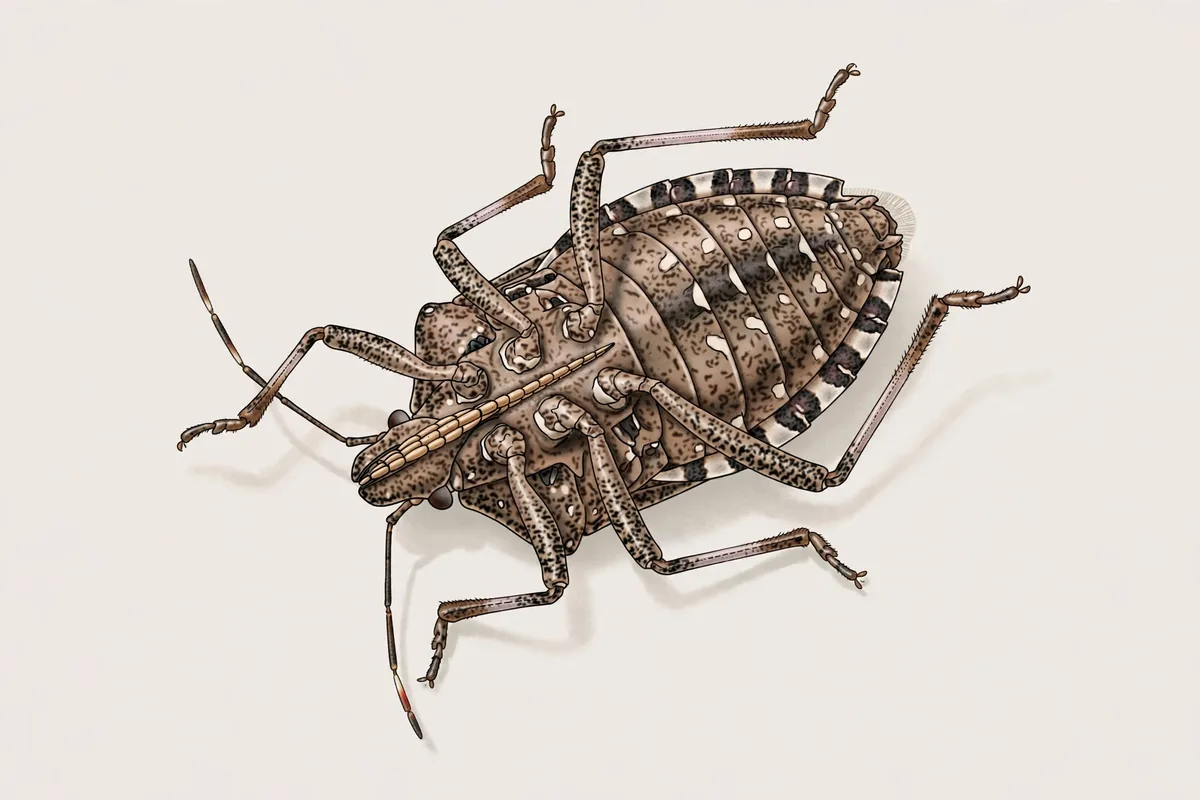
Since biting is off the table, here’s their actual rap sheet:
- Invade homes in fall. As temperatures drop, brown marmorated stink bugs seek warm overwintering shelter — your attic, wall voids, and sunny-sided siding. They gather in the hundreds or thousands on south- and west-facing walls, then slip inside through tiny gaps. Indoors they go dormant (a state called diapause), but warm winter days can wake them, sending groggy bugs buzzing around light fixtures.
- Stink when disturbed. Their signature defense: a pungent, cilantro-gone-wrong odor released from abdominal glands when threatened — or crushed, or vacuumed, or dying. The smell lingers on fabrics and in vacuum cleaners.
- Stain surfaces. Their excretions can leave brownish stains on walls, curtains, and upholstery where large numbers aggregate.
- Devastate gardens and orchards. Outdoors they’re a serious agricultural pest — that same sap-sucking beak damages apples, peaches, tomatoes, peppers, and ornamental plants. Homeowners with fruit trees notice deformed, pitted fruit.
- Trigger allergies in sensitive people. Large indoor populations shed enough material to bother people with insect allergies — another reason to keep numbers down.
What they DON’T do: reproduce indoors (they need plants for that), eat your food, damage your home’s structure, or harm people and pets. They’re a nuisance pest, not a health pest.
Safe Removal: Catch, Don’t Crush #
The golden rule of stink bug removal: don’t crush them. Crushing releases the defensive odor — and the smell can actually attract more stink bugs, since their aggregation pheromones say “good shelter here” to their friends. Instead:
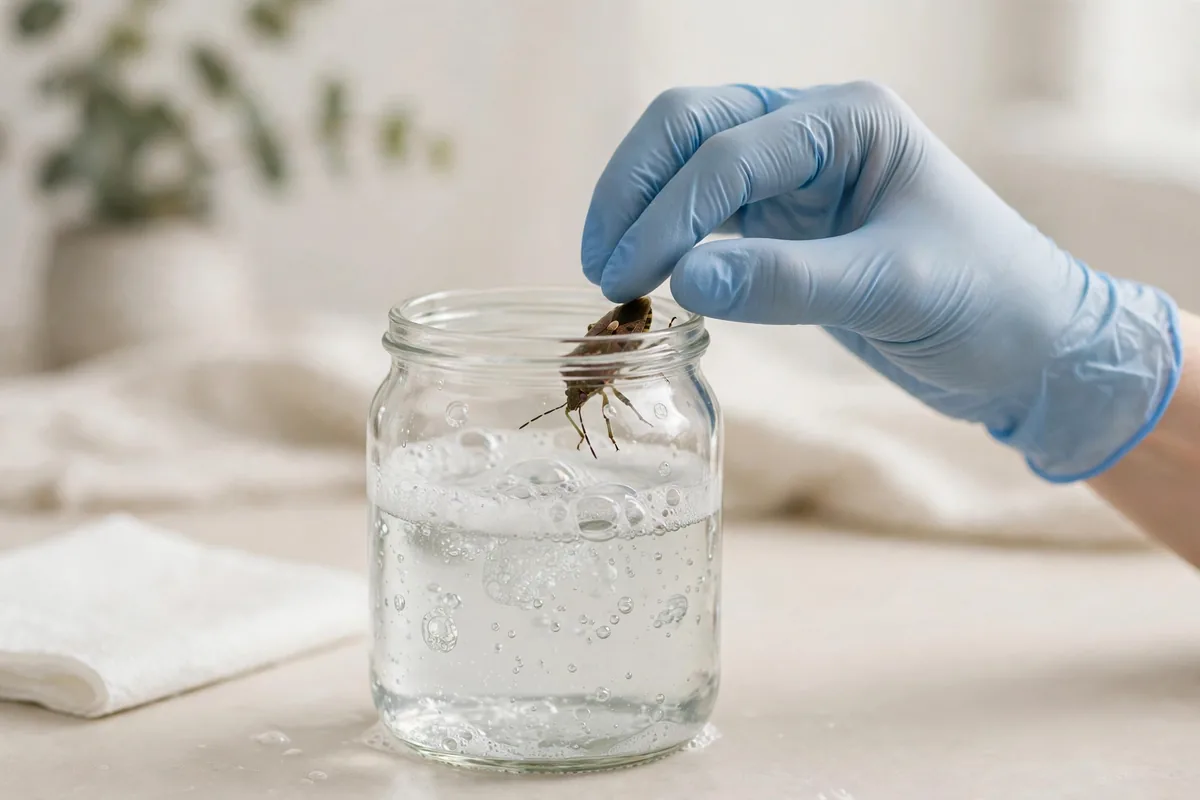
- The soapy-water jar. The classic method: hold a wide-mouth jar with a few inches of soapy water under the bug and gently nudge it in with a piece of cardboard. The soap breaks the water’s surface tension so they can’t climb out. Empty outside far from the house.
- Hand-pick with tissue. For a lone bug on a wall, grab gently with tissue and flush or drop in soapy water. Gentle handling = no stink released.
- Vacuum with a stocking trick. For large numbers, stretch an old stocking or knee-high over the vacuum hose (secured with a rubber band) to catch bugs in the stocking rather than the bag — then tie it off and discard outside. This keeps the smell out of your vacuum.
- Light traps. At night, a pan of soapy water under a desk lamp in an infested room lures and drowns them.
- Don’t use bug bombs indoors. They scatter the bugs deeper into wall voids without solving anything, and they don’t prevent re-entry.
After removal, wipe down aggregation spots — residual pheromones can draw next year’s invaders to the same locations.
Keeping Fall Invaders Out #
Stink bugs get in through gaps you’d never notice. Late summer — before the fall invasion — is the time to exclude them:
- Seal the envelope. Caulk cracks around windows, doors, siding, and utility entry points. Repair torn screens and add fine-mesh screening over attic and crawl-space vents.
- Check the sunny side. They congregate on warm south- and west-facing walls first — inspect those sides carefully for gaps around trim, shutters, and chimneys.
- Weatherstrip doors. Install or replace door sweeps; gaps under exterior doors are a superhighway for fall invaders.
- Exterior perimeter treatment. If invasions are severe year after year, a professional can apply an exterior barrier treatment in late summer per label directions. This is a job for timing and technique — DIY spraying in October, after they’re already inside your walls, accomplishes little.
- Remove attractants. Keep outdoor lights near entryways off or switch to yellow “bug lights” during peak invasion weeks; stink bugs are drawn to light and warmth.
Expect some stragglers even with good exclusion — but the difference between five bugs and five hundred is a sealed house.
Warning signs: when to seek care #
Call 911 immediately if you develop trouble breathing or swallowing, swelling of the face, lips, tongue, or throat, widespread hives, dizziness or fainting, or a racing heartbeat after any insect encounter — these are signs of a severe allergic reaction (anaphylaxis). If you carry an epinephrine auto-injector, use it first, then call 911.
Stink bugs don’t cause these emergencies — this is the universal safety baseline for any insect-related concern. For non-emergencies, see your doctor if skin contact with stink bug secretions causes a rash that spreads, blisters, or doesn’t fade within a day of washing, or if you develop persistent respiratory symptoms around large indoor aggregations. If you have unexplained itchy bumps and suspect “bites,” compare your marks with our guide to single vs. multiple bites to narrow down the real culprit — it almost certainly isn’t the stink bug.
Frequently asked questions #

Do stink bugs bite dogs or cats? #
No. The same biology applies to pets — stink bugs can’t bite animals either. A curious dog that eats one may drool or vomit from the foul taste and defensive chemicals, but that’s a taste reaction, not poisoning or a bite. Discourage pets from eating them, but don’t panic if one gets sampled.
Why do stink bugs come inside in the fall? #
They’re seeking a warm, sheltered place to spend the winter in dormancy (diapause). Your home’s wall voids and attic mimic the natural crevices they’d use outdoors — except yours are heated. They don’t eat, breed, or cause structural damage while dormant; they’re just waiting for spring.
Does killing one stink bug attract more? #
Crushing releases aggregation pheromones along with the stink, which can signal other stink bugs that the spot is good shelter. That’s why catch-and-remove (soapy water, vacuum with stocking) beats squashing — and why wiping down aggregation areas helps prevent encore invasions.
Are stink bugs and boxelder bugs the same thing? #
No, though they’re often confused — both are fall home-invaders. Stink bugs are shield-shaped, mottled brown-gray, and famous for their odor. Boxelder bugs are flatter, black with red-orange markings, and feed on maple/boxelder seeds. Neither bites people, and both are handled with similar exclusion tactics.
Medical and editorial note #
This guide is general information about stink bugs and household pest management, not medical advice. Stink bugs don’t bite or sting humans — if you have skin marks you’re attributing to them, the cause is likely a different insect or a chemical irritation from their defensive secretions, and a healthcare professional can help if any skin condition concerns you.


