
You’ve probably heard that heartworm is serious — and you’re wondering “do mosquito bites give dogs heartworm?” The answer is yes: a mosquito bite is the ONLY way dogs get heartworm disease. No mosquito, no heartworm. Understanding that single fact makes every prevention decision that follows much simpler.
The Short Answer: Heartworm Travels Through Mosquito Bites #
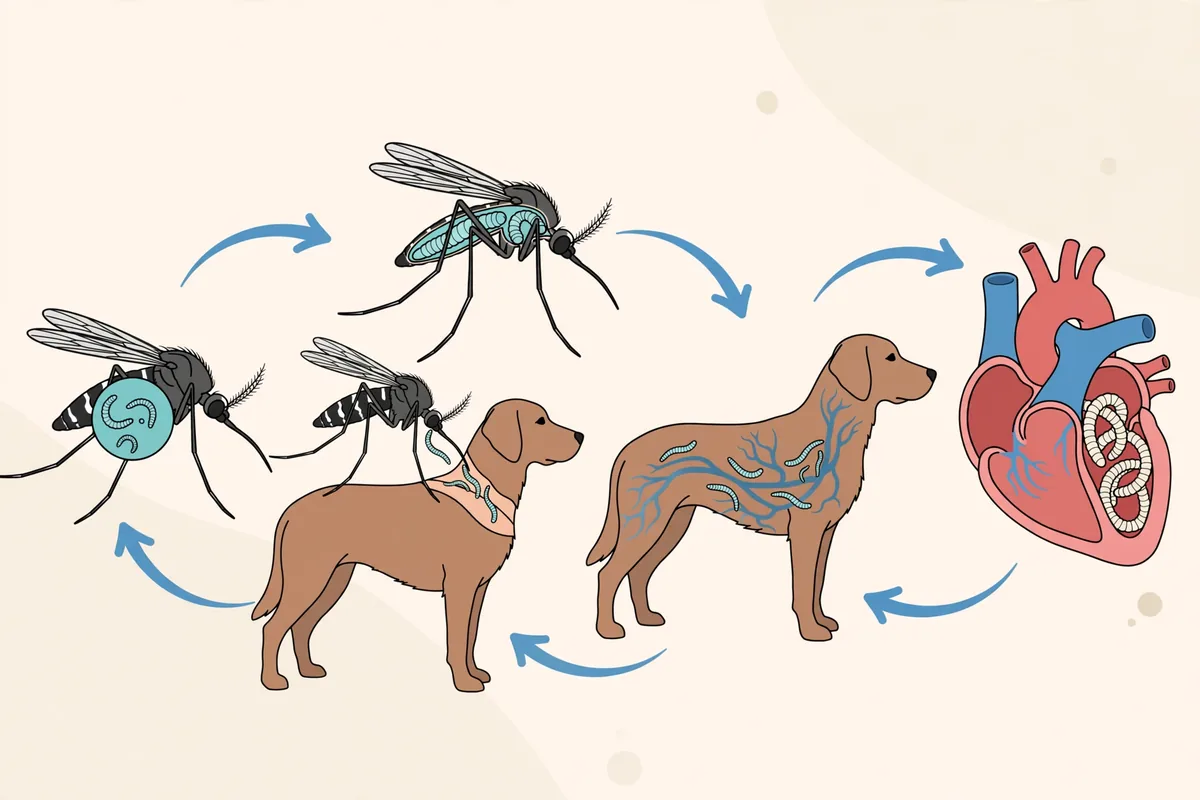
Heartworm disease is caused by a parasitic worm, Dirofilaria immitis, and mosquitoes are its only delivery vehicle. Here’s the plain version of the cycle:
- A mosquito bites an infected dog (or coyote, fox, or other wild host) and picks up microscopic baby worms called microfilariae in the blood meal.
- Inside the mosquito, those microfilariae develop into infective larvae over 10–14 days — but only in warm enough weather.
- When that mosquito bites your dog, the infective larvae enter through the bite wound and migrate through the body toward the heart and lungs.
Two facts that surprise most owners: a single infected mosquito bite is all it takes, and heartworm is not contagious dog-to-dog — your healthy dog cannot catch it from an infected housemate through play, bowls, or contact. The mosquito is a mandatory middleman.
Heartworm has been reported in dogs in all 50 states. It is most common along the Atlantic and Gulf coasts and the Mississippi River basin, but no region is risk-free — including yours, if mosquitoes live there.
The Heartworm Life Cycle, Step by Step #
Knowing the timeline explains why vets are so insistent about year-round prevention and annual testing:
- Day 0 — the bite. Infective larvae (L3) are deposited on your dog’s skin and enter through the mosquito bite wound. Your dog feels nothing; there is no itch, bump, or sign.
- Months 1–3 — silent migration. The larvae molt and migrate through muscle and tissue. Still no symptoms, and no test can detect the infection yet.
- Months 6–7 — adults arrive. The larvae reach the heart and pulmonary arteries and mature into adult worms. Adults can grow 6–12 inches long — females up to about a foot — and live 5–7 years inside a dog. An average infection carries around 15 worms, though counts from 1 to 250 have been documented.
- Month 7+ — detectable. Only now do antigen tests turn positive, because they detect proteins from adult female worms. This 6–7 month “blind window” is why vets test annually: an infection picked up this summer may not show on a test until next spring.
- Ongoing — the cycle continues. Adult females release microfilariae into the bloodstream, and any mosquito that bites your dog can carry the infection onward.
The slow timeline is exactly what makes heartworm dangerous: by the time symptoms appear, the worms have been damaging the heart, lungs, and blood vessels for months.
Symptoms of Heartworm Disease in Dogs #
Early infections are usually silent — which is why testing matters more than watching for symptoms. As worm numbers grow and damage accumulates, signs appear in stages:
- Persistent soft cough. One of the earliest clues: a dry cough that lingers, especially after exercise or excitement. Worms in the lungs and surrounding blood vessels irritate airways.
- Fatigue and exercise intolerance. A dog that used to love long walks now tires halfway, lags behind, or wants to rest after mild play.
- Decreased appetite and weight loss. Subtle at first, then more obvious as the disease advances.
- Difficulty breathing. As lung damage and fluid accumulation progress, breathing becomes labored even at rest.
- Distended belly. In advanced disease, fluid builds up in the abdomen (ascites) from heart failure — the belly looks swollen and tight.
In the most severe cases, worms physically block blood flow through the heart (caval syndrome), a sudden, life-threatening emergency requiring surgery with low survival odds. Don’t let the word “worm” fool you into thinking this is a mild parasite problem: untreated heartworm causes lasting damage to the heart and lungs and can be fatal.
Prevention: Year-Round Protection Your Vet Recommends #
Prevention is one of the clearest wins in all of pet care: it is inexpensive, simple, and nearly 100% effective when given on schedule. Here’s the standard playbook:
- Give a preventive every month, all year. Preventives come as monthly chewables, topical spot-ons, or a long-acting injection your vet administers. They don’t “repel” mosquitoes — they kill the larvae deposited by bites before the larvae can mature. Missing doses opens a window for infection, so set a phone reminder.
- Test annually. A quick blood test at your dog’s yearly checkup catches infections acquired during the blind window. Puppies typically get their first test around 6–7 months of age.
- Keep up mosquito control around the home. Dump standing water (saucers, buckets, clogged gutters), change birdbath water weekly, and keep dogs indoors during peak mosquito hours at dawn and dusk — our outdoor bite prevention checklist covers the full routine. Reducing mosquito contact lowers the number of chances the parasite gets — but it is NOT a substitute for preventive medication. Even the best yard can’t keep every mosquito out.
- Don’t skip winter. Mosquitoes survive indoors and in mild winter spells, and larvae already deposited need consistent monthly dosing to be killed. “My dog is indoors in winter” is one of the most common — and most costly — prevention gaps. (If they’re biting you too, our guide to mosquito bite itching covers relief.)
Talk to your vet about which preventive format fits your dog; the best preventive is the one you’ll actually give on time, every time.
Myths That Put Dogs at Risk #

Heartworm myths are stubborn, and some are dangerous. Let’s clear the worst ones:
- “Indoor dogs don’t need prevention.” Mosquitoes get indoors easily, and it takes only one infected bite. Indoor dogs get heartworm every year.
- “My area doesn’t have heartworm.” Reported in all 50 states. Wildlife reservoirs (coyotes, foxes) carry it almost everywhere mosquitoes live.
- “I’ll just test every year instead of preventing.” Testing finds infections 6–7 months late, after months of organ damage — and treatment is expensive, lengthy, and hard on the dog. Prevention costs a fraction of treatment.
- “Natural remedies keep heartworm away.” No supplement, essential oil, or diet has been shown to prevent heartworm. Only vet-approved preventives do.
- “Treatment is no big deal.” Treatment requires months of strict exercise restriction (a bored, crated dog for weeks), carries real risks, and costs far more than a year of prevention. Ask your vet — they’ll tell you they’d rather prevent it.
If your dog is already on prevention but you missed a dose or two, tell your vet honestly rather than quietly restarting — they may want to test sooner or adjust the plan.
Warning signs: when to seek care #
Call your veterinarian promptly — or an emergency animal clinic after hours — if your dog shows sudden collapse, severe difficulty breathing, a hugely distended belly, coughing up blood, or pale gums. These can signal advanced heartworm complications and are emergencies regardless of cause.
For non-emergency concerns — a new persistent cough, tiring easily on walks, or appetite changes in a dog not on regular prevention — schedule a vet visit and a heartworm test. Mention any missed preventive doses honestly. If your dog is already diagnosed and on a treatment plan, follow your vet’s exercise-restriction instructions exactly; the restricted-activity period is when complications are most likely.
Frequently asked questions #

Can I catch heartworm from my dog? #
No. Humans are not natural hosts for heartworm — the parasite rarely establishes itself in people, and you cannot catch it from contact with your dog. The infection moves only through mosquito bites.
My dog missed two months of prevention. What should I do? #
Restart the preventive and call your vet. Because of the 6–7 month blind window, your vet will likely recommend testing 6–7 months after the gap to make sure no infection slipped through. Don’t double up doses to “catch up” — ask your vet for the correct restart plan.
Does heartworm prevention also kill adult worms? #
No. Monthly preventives kill the immature larvae deposited by recent mosquito bites — they do not reliably clear established adult worms. That’s why an infected dog needs a separate, vet-supervised treatment protocol, not just a return to monthly prevention.
Are some dogs more at risk than others? #
Outdoor dogs in warm, mosquito-heavy regions face the most bites, but every unprotected dog is at risk — including indoor dogs and dogs in northern states. Age, breed, and size don’t grant immunity. Year-round prevention is the universal recommendation.
Medical and editorial note #
This guide is general information about heartworm disease in dogs, not veterinary advice. Prevention products, testing schedules, and treatment decisions should be made with your veterinarian, who knows your dog’s health history and your region’s risk level.


