
If you’re asking “can dogs get Lyme disease from tick bites” — the answer is yes. Lyme disease is one of the most common tick-borne infections in US dogs, passed through the bite of an infected black-legged (deer) tick. The reassuring part: most exposed dogs never become ill, and dogs that do develop symptoms usually recover fully once a veterinarian starts treatment.
How Dogs Contract Lyme Disease From Tick Bites #
Lyme disease in dogs is caused by the bacterium Borrelia burgdorferi. Dogs pick it up the same way people do: an infected black-legged tick (also called a deer tick — Ixodes scapularis in the East and Midwest, Ixodes pacificus on the West Coast) feeds on the dog long enough to pass bacteria through its saliva.
Key facts about transmission:
- A tick usually needs to stay attached 24–48 hours to transmit the bacteria. This is why same-day tick checks matter — a tick removed the same evening rarely had time to infect.
- Most infected dogs never show symptoms. Veterinary sources estimate that only about 5–10% of infected dogs develop clinical illness. Many dogs test positive on routine bloodwork while feeling completely fine.
- Dogs cannot give Lyme disease to you or to other dogs. It is not contagious through contact, saliva, or shared bowls. The only route is an infected tick bite. Dogs can, however, carry unattached ticks indoors on their fur — one more reason for post-walk tick checks for the whole household.
- Symptoms take weeks to appear. When illness does develop, it usually shows up 2–5 months after the bite, so a limp in October can trace back to a summer tick.
Lyme risk is highest in the Northeast, upper Midwest, and Pacific coast, but cases have been reported in all 50 states.
Symptoms of Lyme Disease in Dogs #
Because most infected dogs feel fine, the symptoms below matter mainly for the minority that develop clinical Lyme disease. Watch for:
- Shifting-leg lameness. The classic sign: your dog limps on one leg, improves, then starts limping on a different leg days later. This reflects inflammation that moves between joints.
- Fever and lethargy. A normally energetic dog becomes unusually tired, reluctant to play, or sleeps far more than usual.
- Swollen, warm joints. You may notice puffiness around the knees or elbows, or your dog may flinch when you touch a joint.
- Loss of appetite. Turning away from meals for more than a day, especially combined with lethargy, deserves a vet call.
- Swollen lymph nodes. Small, firm lumps under the jaw or in front of the shoulders can accompany the infection.
In rare, severe cases, Lyme disease can affect a dog’s kidneys, heart, or nervous system. Kidney involvement is the most serious complication, and it is a key reason vets take even “mild” Lyme cases seriously: early treatment dramatically improves outcomes.
One complicating factor: these symptoms overlap with many other conditions, from simple sprains to other tick-borne diseases like anaplasmosis. Never try to diagnose at home — the blood test described below is the only reliable route.
How Vets Diagnose and Treat Lyme Disease #
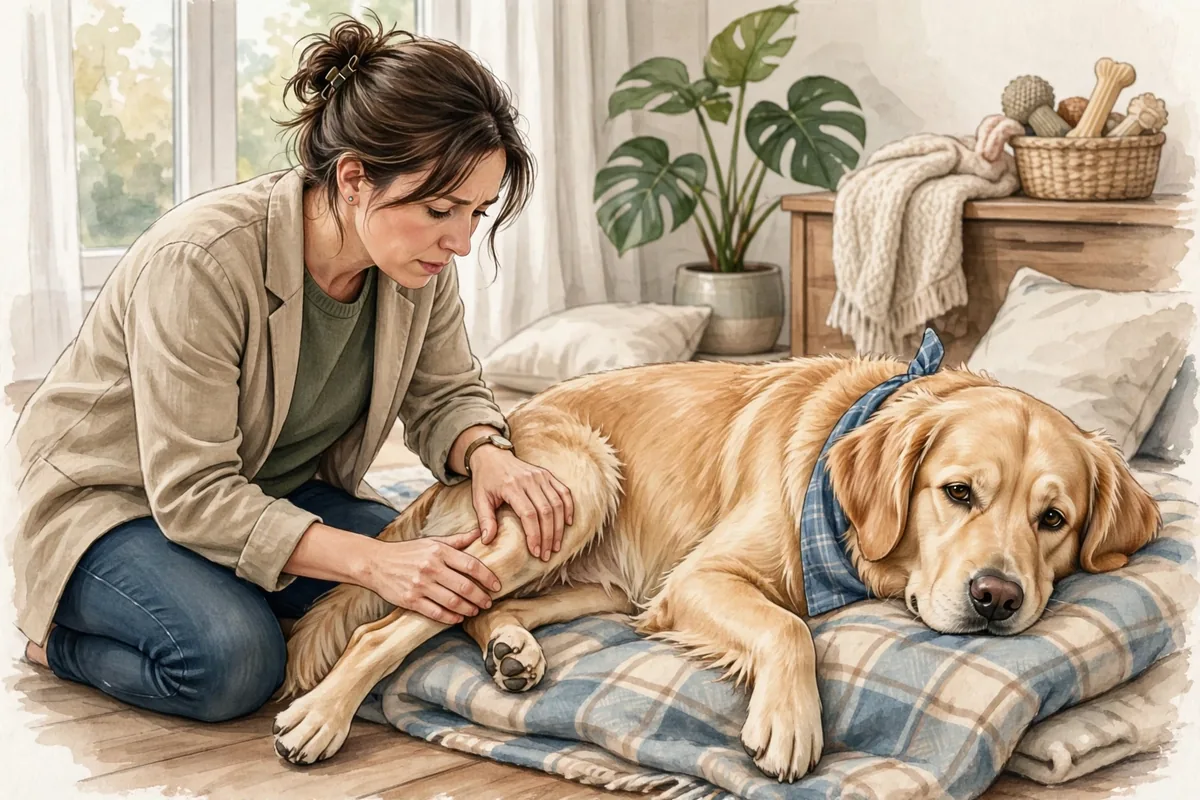
Diagnosis starts with your observations and a physical exam, then moves to testing:
- Blood test. Vets typically run a quick in-clinic test that detects antibodies to the Lyme bacteria (the C6 antibody test). It can take several weeks after exposure for antibodies to appear, so a test done the day after a tick bite may be too early to be meaningful.
- Urinalysis and follow-up tests. If the screening is positive, your vet may check kidney function and sometimes measure antibody levels to decide whether treatment is warranted — remember, many positive dogs need no treatment at all.
- Antibiotics. Dogs with clinical symptoms are usually prescribed a course of antibiotics by their vet. Treatment often brings visible improvement within a few days, though the full course must be finished. Some dogs remain carriers afterward, so your vet may recheck bloodwork months later.
What you should NOT do: start leftover human antibiotics, adjust doses yourself, or buy antibiotics online. Treatment decisions depend on symptoms, kidney status, and test results — all things only your vet can evaluate. Stick to the plan your vet prescribes and complete every dose.
Prevention: Tick Checks and Year-Round Protection #
Prevention is simpler, cheaper, and far less stressful than treatment. Layer these steps:
- Use a vet-recommended tick preventive year-round. Options include monthly oral or topical products and tick collars. Ticks are active whenever temperatures climb above freezing, so “winter is safe” is outdated thinking in most of the US. Ask your vet which product fits your dog’s lifestyle — a couch-loving apartment dog and a field-hunting spaniel have different risk profiles.
- Check your dog after every outdoor outing. Run your hands against the grain of the fur, feeling for small bumps. Focus on the ears (inside and out), between the toes, under the collar, in the armpits and groin, and around the tail base — ticks favor warm, thin-skinned spots.
- Keep your yard less tick-friendly. Mow grass short, rake up leaf litter, clear brush at lawn edges, and create a wood-chip or gravel buffer between lawn and woods. These steps cut tick habitat dramatically.
- Consider the Lyme vaccine in high-risk areas. A Lyme disease vaccine exists for dogs and is worth discussing with your vet if you live in or travel to endemic regions. It complements — not replaces — tick preventives and tick checks.
- Check yourself, too. Dogs can ferry ticks indoors on their coats. After hikes, check both your dog and yourself; a tick that never attaches can’t transmit anything.
Consistency beats intensity: a single missed month of prevention during tick season can undo a year’s protection.
What to Do After Finding a Tick on Your Dog #
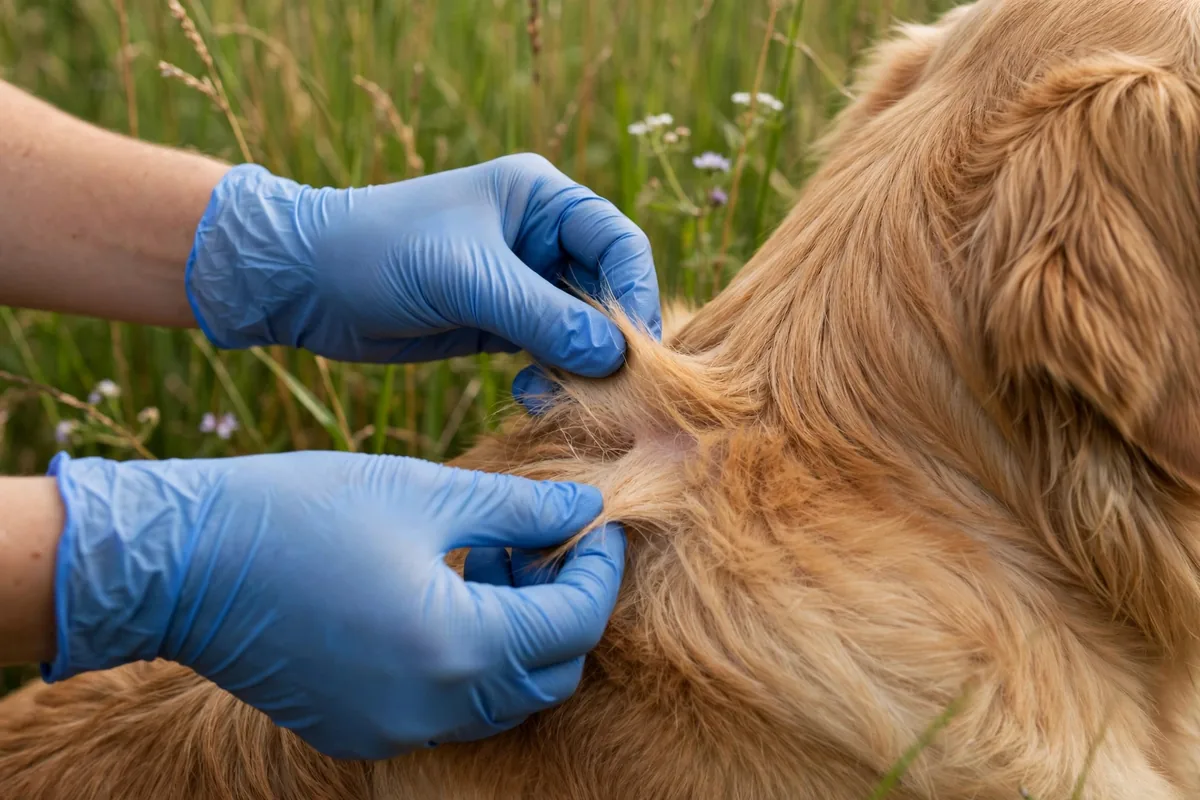
Finding a tick is unsettling but manageable. Work through these steps calmly:
- Stay calm and gather tools. You need fine-tipped tweezers or a tick-removal tool, rubbing alcohol or soap and water, and a small container of alcohol to kill the tick.
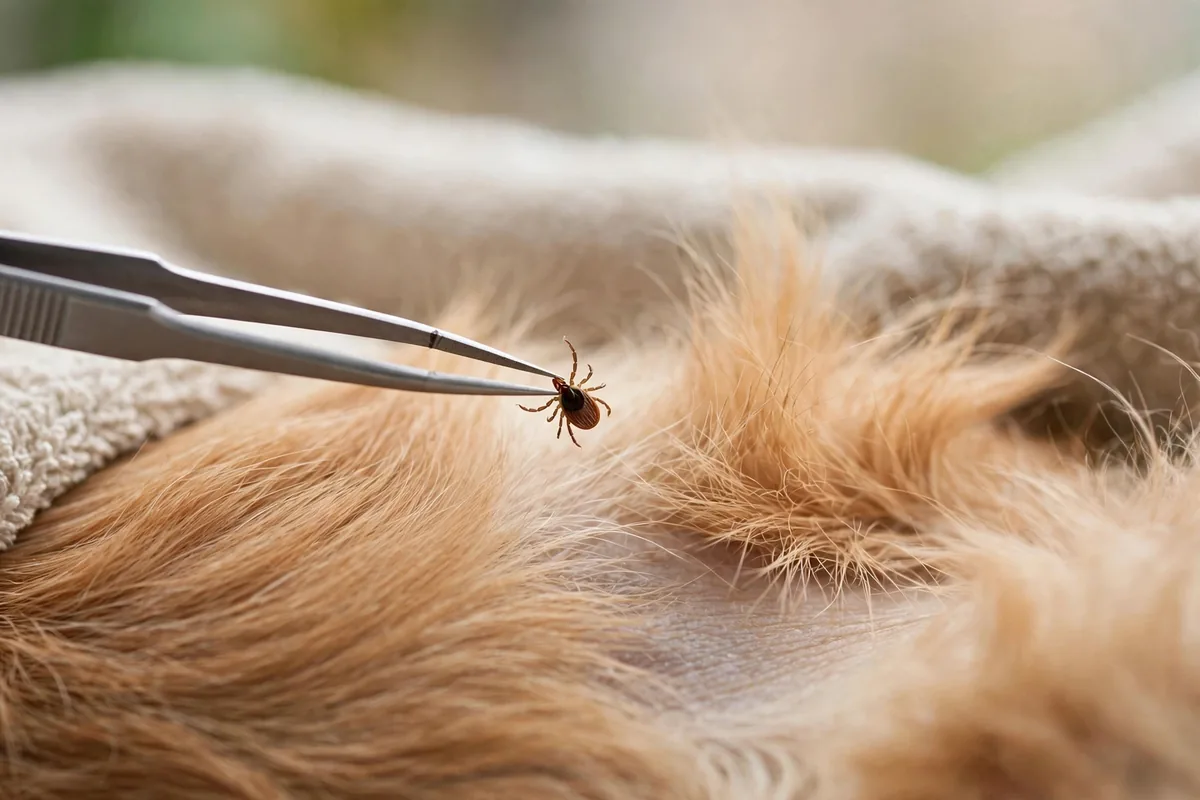
- Grasp the tick as close to the skin as possible and pull straight out with steady, even pressure. Don’t twist, jerk, or squeeze the body — that can leave mouthparts behind. Our step-by-step guide on how to remove an attached tick safely walks through the technique in detail.
- Clean the bite area with soap and water or rubbing alcohol, then wash your hands.
- Save the tick in a sealed container with a date label. If your dog develops symptoms later, identification helps your vet.
- Note the calendar. Write down the date you found the tick. Since symptoms can appear 2–5 months later, that date becomes valuable context at a future vet visit.
- Watch your dog over the coming weeks. Learn what tick bite aftercare over the next few weeks looks like — what normal healing looks like versus signs worth calling your vet about.
Skip the folk remedies: burning the tick with a match, coating it in petroleum jelly or nail polish, and other “back-out” tricks don’t work and can make the tick release more saliva.
Warning signs: when to seek care #
Call your veterinarian promptly — or an emergency animal clinic after hours — if your dog shows sudden collapse or extreme weakness, trouble breathing, pale or white gums, facial or muzzle swelling, widespread hives, repeated vomiting, or inability to stand. These signs are emergencies regardless of cause.
Even without emergency signs, call your vet if your dog develops limping that shifts between legs, a fever, or appetite loss within a few months of a tick bite — and always mention any tick exposure you’ve noted. If your dog seems stable but you’re unsure whether a symptom is tick-related, an exam plus a blood test settles the question quickly. Never wait out worsening symptoms: kidney complications from Lyme disease are rare but serious, and early treatment is the difference-maker.
Frequently asked questions #
Can my dog give Lyme disease to me or my other pets? #
No. Lyme disease is not contagious through contact, saliva, or shared food bowls — it spreads only through the bite of an infected tick. The one shared risk: a dog can carry unattached ticks into the house on its fur, which could then bite a person or another pet. Regular tick checks protect the whole household.
Does every tick bite give a dog Lyme disease? #
No. Only black-legged (deer) ticks carry the Lyme bacterium, and only a fraction of those are infected — infection rates vary widely by region. The tick also needs to feed for roughly 24–48 hours to transmit the bacteria. Prompt removal is genuinely protective.
My dog tested positive for Lyme but seems fine. Does he need treatment? #
Not necessarily. Many dogs test positive without ever developing symptoms, and vets often monitor rather than treat these cases. Your vet may check kidney values and discuss whether treatment or watchful waiting is right — this is a judgment call that depends on your individual dog, not a one-size rule.
Is the Lyme vaccine enough on its own? #
No. The vaccine reduces risk but doesn’t guarantee protection, and it does nothing against the many other diseases ticks carry, such as anaplasmosis and ehrlichiosis. Think of vaccination as one layer: tick preventives, tick checks, and prompt removal are the other layers.
Medical and editorial note #
This guide is general information about Lyme disease in dogs, not veterinary advice. Every dog’s risk, symptoms, and treatment plan differ — if you’re worried about a tick bite or your dog seems unwell, contact your veterinarian for guidance tailored to your pet.


