
Waking up itchy and wondering if something is living in your hair is an awful feeling. Can bed bugs live in your hair? No. Bed bugs do not live in hair, nest on the human body, or lay eggs on people — that’s not how they’re built and not how they behave. If something is truly living in your hair, it’s almost certainly head lice, not bed bugs. But the full picture has a few nuances worth knowing, because bed bugs and hair do cross paths in one specific way.
Why bed bugs can’t live in hair #
It comes down to anatomy and behavior:
- They can’t grip hair. Head lice have specialized claws designed to grasp hair shafts. Bed bugs have no such equipment — their legs are built for crawling across flat surfaces, not clinging to strands. A bed bug on a head of hair is like a person trying to climb a rope with greased hands.
- They don’t live on bodies, period. Bed bugs are nest parasites. They hide in cracks and crevices near where you sleep, emerge to feed for a few minutes, then retreat. They don’t burrow, don’t attach, and don’t set up residence on skin or hair the way lice, scabies mites, or ticks do.
- Hair is exposed and disturbed. People touch, wash, brush, and move their hair constantly. It’s a terrible hiding place for an insect that survives by staying perfectly still in tight, undisturbed cracks during daylight.
So the idea of a colony of bed bugs living in someone’s hair is a myth — full stop.
The one real exception: the overnight crawl #
Here’s the nuance. Bed bugs feed at night, usually between roughly midnight and 5 a.m., and they’re attracted to the warmth and carbon dioxide you exhale. A hungry bed bug can absolutely crawl across your scalp or through your hair to reach exposed skin — the neck, ears, forehead, or scalp itself. You might even find one tangled in your hair in the morning.
But that’s a visitor, not a resident. It fed (or tried to) and was heading back to its harborage when you woke up. Finding a single bed bug in your hair means there’s an infestation nearby — in the mattress, headboard, or nightstand — not an infestation of your head. The correct response is to inspect the bed, not to treat your hair.
Myth vs facts: the comparison table #
| Claim | Verdict | |—|—| | Bed bugs nest and lay eggs in hair | Myth. They lay eggs in cracks and crevices near the bed, never on the body. | | Bed bugs can crawl through hair at night | Fact. They cross hair to reach skin, then leave. | | Finding one in your hair means they’re living there | Myth. It means they’re living near your bed. | | Bed bugs prefer dirty hair or certain hair types | Myth. They’re attracted to warmth and CO2, not hair cleanliness, texture, or length. | | Washing your hair kills bed bugs | Mostly irrelevant. Shampooing may dislodge a stray crawler, but it does nothing about the infestation in the room. | | You need lice-style treatment for bed bugs in hair | Myth. No nit-combing or pediculicide needed — inspect the bedroom instead. |
If not bed bugs, what’s making your scalp itch? #
An itchy scalp with a bed bug problem in the house still needs an explanation. The usual suspects:
- Head lice. The actual hair-dwelling parasite. Look for nits (tiny white eggs cemented to hair shafts near the scalp) and intense itching, especially behind the ears and at the nape. Lice don’t jump or fly — they spread through head-to-head contact and shared items.
- Bed bug bites on the scalp and neck. Bed bugs do bite exposed skin wherever they find it, including the hairline, neck, and ears. Bites here can itch for days and be mistaken for a scalp condition.
- Dry scalp, eczema, or seborrheic dermatitis. Flaking and itching with no bites or nits is usually dermatological, not parasitic.
- Scabies. Intense itching that’s worse at night, with burrow-like lines — but scabies favors wrists, waistline, and between fingers, not the scalp (except in infants and the elderly).
- Allergic reaction or contact dermatitis. New shampoo, hair dye, or pillowcase detergent can cause sudden scalp itching.
If you’re getting bitten at night and want to understand the marks, how to identify bed bug bites covers the key clues, and how long bed bug bites last explains the healing timeline so you know what to expect.
Lice vs bed bugs: how to tell them apart #
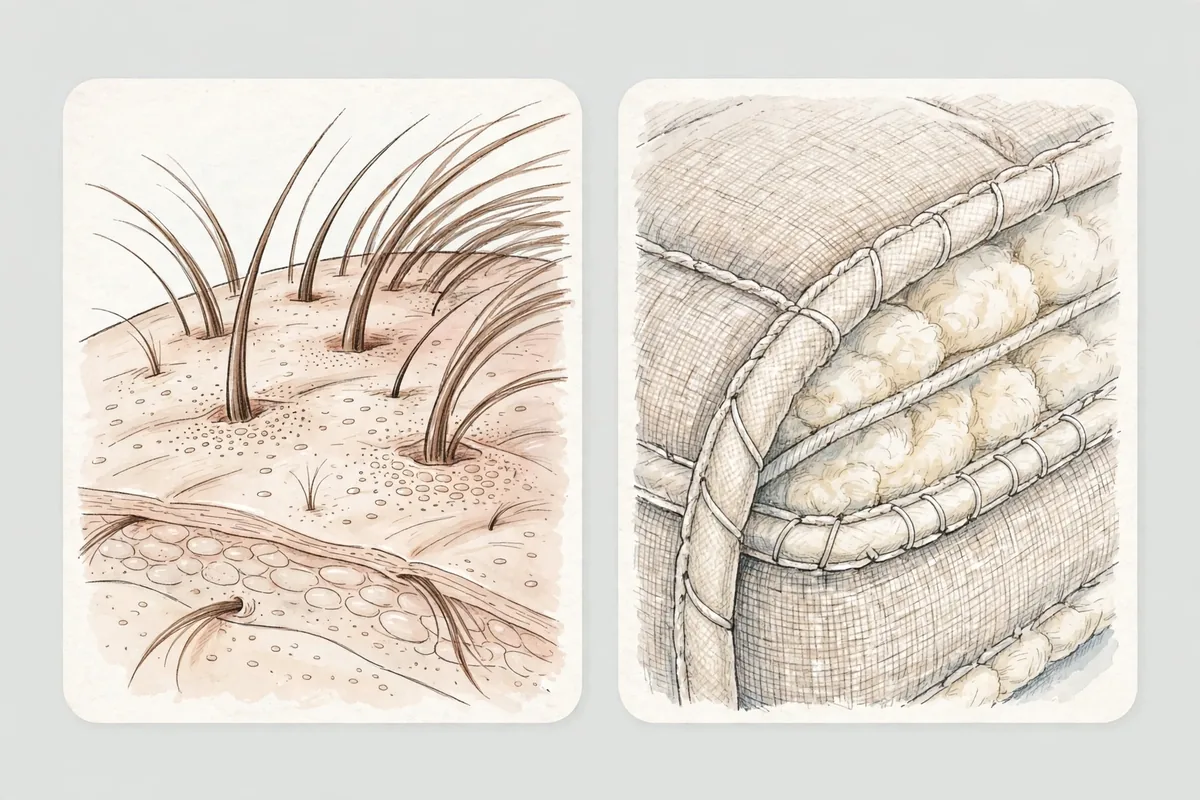
| | Head lice | Bed bugs | |—|—|—| | Size | Sesame-seed sized (2-3 mm) | Apple-seed sized (4-5 mm) | | Where they live | On the scalp, in hair | In mattress seams, furniture cracks | | Eggs | Nits glued to hair shafts | Eggs hidden in crevices, never on body | | Signs | Nits, itching, visible lice at scalp | Bites on exposed skin, fecal spots on bedding | | Treatment target | The hair and scalp | The room and furniture |
If you find nits cemented to hair shafts, that’s lice — treat for lice. If you find bites but a clean scalp, inspect the bed. The two problems have completely different solutions, so getting the diagnosis right matters.
What to do if you find a bed bug in your hair #
- Don’t panic and don’t shave your head. It won’t help — they were never living there.
- Remove the bug. Pick it off, trap it in tissue, and dispose of it (alcohol, flushing, or sealed tape).
- Inspect the bed immediately. Pull back sheets, check mattress seams and piping, look behind the headboard, and check the nightstand. Use a flashlight. Look for live bugs, shed skins, and black fecal spots.
- Wash bedding hot. Sheets, pillowcases, and blankets in hot water, then the dryer on high heat for at least 30 minutes.
- Don’t treat your hair with pesticides. Lice treatments don’t work on bed bugs (they’re not there to treat), and insecticides on the scalp are a bad idea. Regular shampooing is fine.
Warning signs: when to seek care #

Call 911 immediately if you have trouble breathing or swallowing, swelling of the face, lips, tongue, or throat, widespread hives, dizziness or fainting, or a racing heartbeat after bites. If you carry an epinephrine auto-injector, use it as prescribed and still call 911.
See a doctor, dermatologist, or pharmacist if: you can’t tell whether you have lice or something else (a professional can confirm in seconds); scalp itching comes with sores, crusting, or hair loss; bites show spreading redness, warmth, pus, or red streaks; or itching is severe and not improving. Most bed bug bites heal on their own within one to two weeks.
Frequently asked questions #
Can bed bugs lay eggs in my hair? #
No. Female bed bugs lay their tiny white eggs in sheltered cracks and crevices — mattress seams, furniture joints, behind baseboards. They don’t lay eggs on people, in hair, or on skin. If you find small white objects attached to hair shafts, those are lice nits.
I feel crawling in my hair at night but find nothing. What is it? #
This is common and usually has a mundane explanation: dry skin, static, anxiety-heightened awareness during an infestation scare, or actual bites elsewhere drawing your attention to the scalp. True formication (the sensation of insects crawling with nothing there) can also accompany stress. If the feeling persists, a dermatologist can evaluate it — but an invisible bed bug colony in hair isn’t the cause.
Do bed bugs prefer certain hair types? #
No. Bed bugs don’t interact with hair as a habitat at all, so length, texture, thickness, and cleanliness are all irrelevant to them. They care about one thing: a sleeping, breathing, warm-blooded host nearby.
Should I bag my pillows or buy a special pillowcase? #
Encase the mattress and box spring in bed-bug-proof encasements — that’s the high-value move, since it traps bugs inside and removes their harborage. Pillow encasements help marginally. The priority is always the mattress seams, bed frame, and headboard where they actually live.
Medical and editorial note #
This page is general information about bed bugs and hair and is not medical advice. Persistent scalp itching, visible nits, sores, or hair loss deserve evaluation by a healthcare professional or dermatologist, who can distinguish lice, skin conditions, and bite reactions quickly and accurately.


