
You woke up itching, pulled back the sheets, and your stomach dropped. Woke up with bed bug bites in a hotel — what to do now? Act in this order: confirm what you’re dealing with, protect your belongings from hitchhikers, document everything for the hotel, and make a re-entry plan so you don’t import the problem home. Speed matters, but so does sequence — doing the right things in the wrong order is how bed bugs end up in your suitcase.
Tonight: your first 30 minutes #
1. Don’t panic-move your stuff around the room. The instinct is to throw everything into bags and flee. But tossing luggage onto the other bed, the floor, or the armchair just gives bugs new places to hide in your belongings. Leave bags where they are for now — ideally already on the luggage rack or in the bathroom, the two safest spots.
2. Confirm before you accuse. New red marks in the morning aren’t proof of bed bugs — mosquitoes, allergies, and contact irritation all mimic them. But combined with evidence in the room, the picture clarifies fast. Do the inspection below before deciding.
3. Contain your belongings. Move luggage and bags into the bathroom (tile floors, few hiding spots, and bed bugs dislike the moisture and lack of harborage) or onto the metal luggage rack — never on the bed, upholstered chair, or carpet. Seal dirty laundry in plastic bags; you’ll hot-wash everything later.
4. Photograph everything. The bites on your skin, any bugs or signs you find, the room number, even the general state of the room. Photos are your evidence for the hotel and, if needed, for any compensation claim.
5. Call the front desk. Report calmly and factually: what you found, where, and when. Ask for a room change — and specifically request one not adjacent to the current room (not next door, not directly above or below), since infestations can spread through wall voids. Ask them to inspect, and note the name of the person you spoke with and the time.
How to inspect the room (10-minute method) #
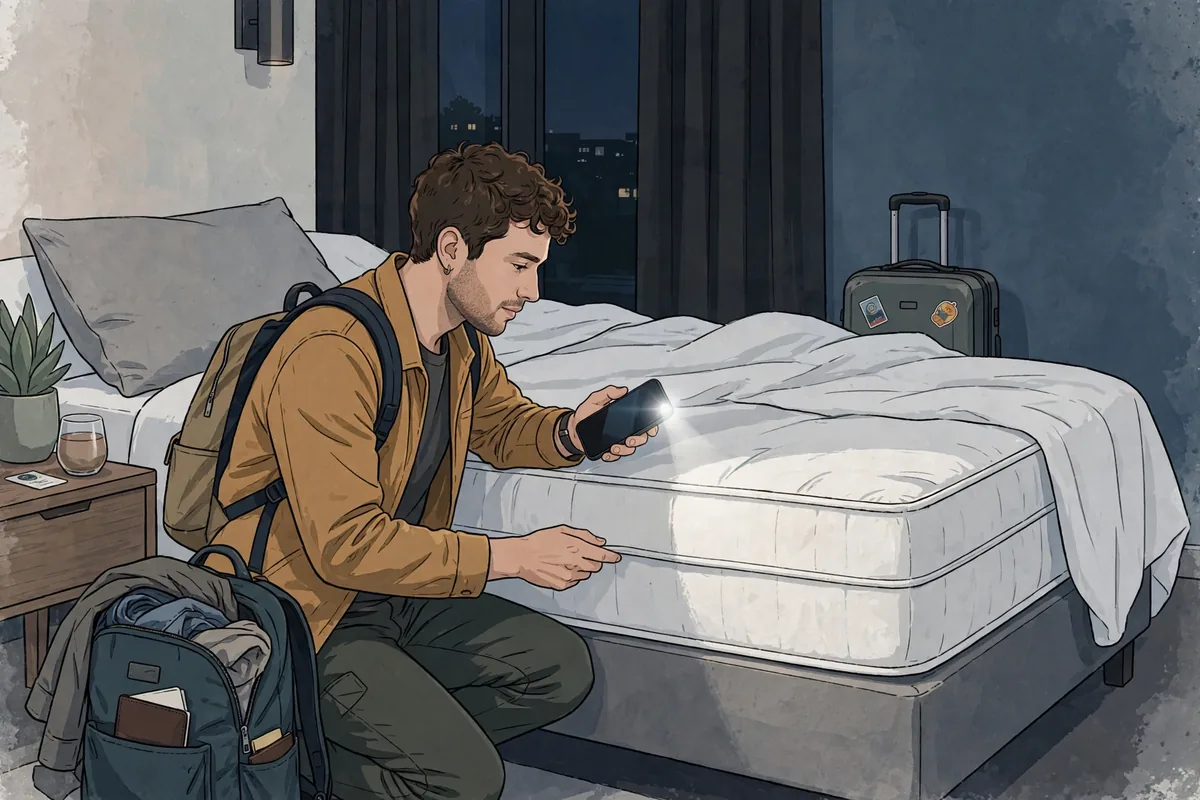
Use your phone flashlight. You’re looking for live bugs (apple-seed-sized, reddish-brown, oval), shed skins, tiny white eggs, and black ink-like fecal spots. Work this order:
- Mattress seams and piping. Pull back all bedding and run your eyes and fingers along every seam, especially at the head of the bed. Check both sides of the mattress.
- Box spring and bed frame. Lift the mattress edge; check the box spring’s underside seams and the joints of the frame. Headboards are prime real estate — pull the bed away from the wall if you can and inspect behind and underneath it.
- Nightstands. Empty the drawer, check its joints and underside, and look behind the nightstand.
- Upholstered furniture. Armchairs and headboards’ fabric seams. Press along seams and watch for movement.
- Where wall meets floor. Baseboard edges near the bed, and any peeling wallpaper or loose carpet edges.
Finding even one live bug or clear fecal spotting confirms it. Finding nothing after a thorough check doesn’t fully clear the room — but combined with no bites on subsequent nights, it’s reassuring. Travelers who want a pre-sleep routine for future trips can use how to check an Airbnb for bed bugs — the same method works in hotels.
Talking to the hotel: what to ask, what to document #
Stay factual and polite — you’ll get further, and you need them cooperative:
- State what you found, not what you conclude. “I found live insects matching bed bugs in the mattress seam and I have new bites” beats “your hotel is infested.”
- Ask for a different room, non-adjacent, and inspect the new room before moving your (contained) belongings into it.
- Ask what they’ll do about the room — professional inspection and treatment, not just a sheet change.
- Document the response. Names, times, room numbers, what was promised. Email yourself a summary while it’s fresh.
- Ask about laundry. Some hotels will hot-wash your clothes on request — worth asking, since heat is the most reliable kill method you have access to right now.
- Know your rights loosely. Policies vary by state and country, but hotels generally have a duty to provide a habitable room. If the response is dismissive and you paid by card, your card’s travel protections and a calm, documented complaint are your leverage. Don’t threaten; document.
Keep every receipt — the room charge, any replacement clothing, laundry costs. If you pursue compensation later, contemporaneous documentation wins.
Treating the bites #
Hotel bed bug bites get the same care as any bed bug bites: wash gently, avoid scratching, and use cool compresses for itching. An oral antihistamine per label directions can help with itch and swelling. The marks typically fade within one to two weeks — for the full picture, how long bed bug bites last covers the healing stages. The bites themselves are a nuisance; the real emergency is what might be in your luggage.
Coming home: do not bring them with you #
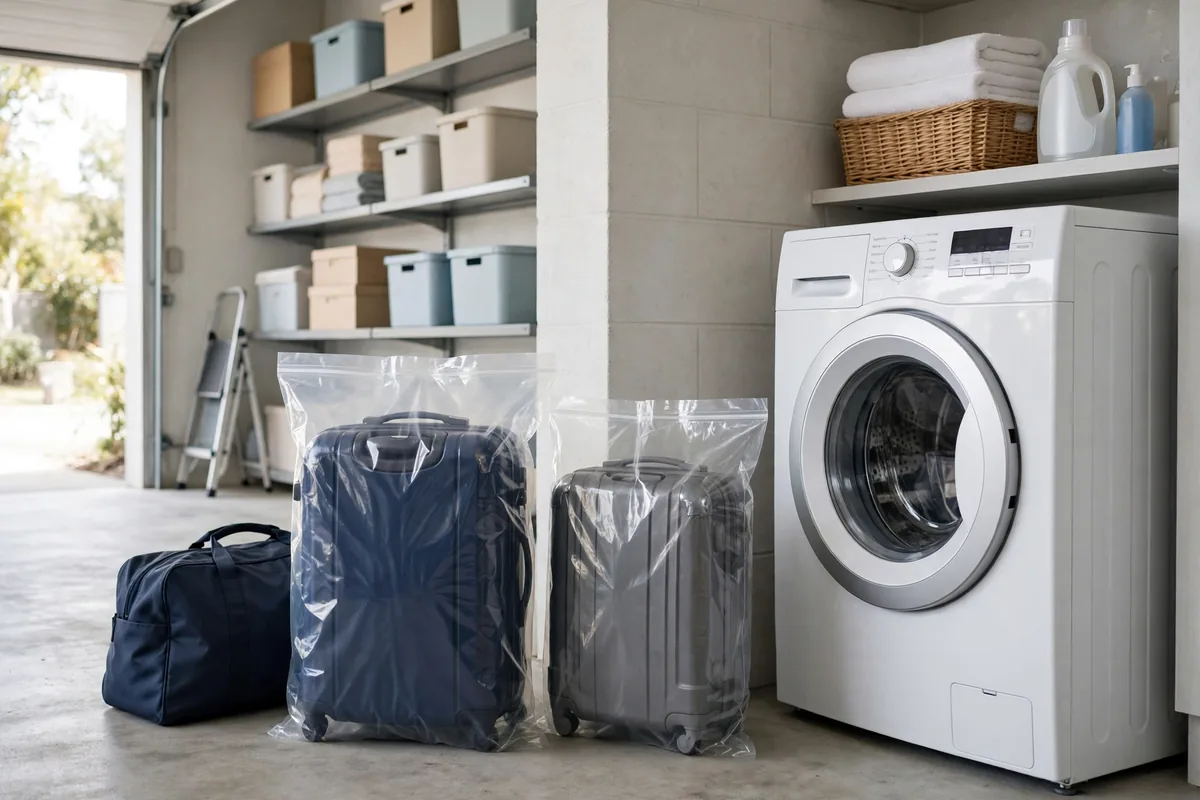
This is where most hotel infestations become home infestations. Treat your return like a decontamination protocol:
- Garage first, bedroom never. Bring luggage into the garage, laundry room, or another hard-floor area — not the bedroom, not the closet.
- Inspect before unpacking. Open bags outside or in the garage. Check seams, pockets, and folds with a flashlight. Shake items out over a white sheet or into the bathtub (bugs are easy to spot on white porcelain).
- Hot-wash and hot-dry everything fabric. Clothes, including clean ones from the trip, go through the hottest wash and at least 30 minutes in the dryer on high heat. Heat kills all life stages, including eggs. Items that can’t be washed go through the dryer alone on high heat if the fabric tolerates it.
- Quarantine what you can’t heat. Bag non-washable items in sealed plastic for several weeks, or inspect them meticulously piece by piece.
- Vacuum the suitcase. Inside, outside, seams, pockets. Then seal the vacuum bag and dispose of it outdoors. Consider storing luggage in sealed bags or the garage rather than bedroom closets going forward.
- Watch your bedroom for 2-3 weeks. A few interceptor traps under bed legs or simple vigilance for new bites will catch a straggler before it becomes a population.
For the longer game — keeping your home protected after travel becomes routine — how to prevent bed bugs at home lays out the travel and everyday habits that make re-infestation unlikely.
Warning signs: when to seek care #
Call 911 immediately if you have trouble breathing or swallowing, swelling of the face, lips, tongue, or throat, widespread hives, dizziness or fainting, or a racing heartbeat after bites. If you carry an epinephrine auto-injector, use it as prescribed and still call 911.
See a doctor or urgent care if: bites show spreading redness, increasing pain, warmth, pus, or red streaks (infection); you develop fever; a reaction is unusually large or severe; or itching is unmanageable. Most bed bug bites heal without medical treatment within one to two weeks.
Frequently asked questions #
Should I demand a refund? #
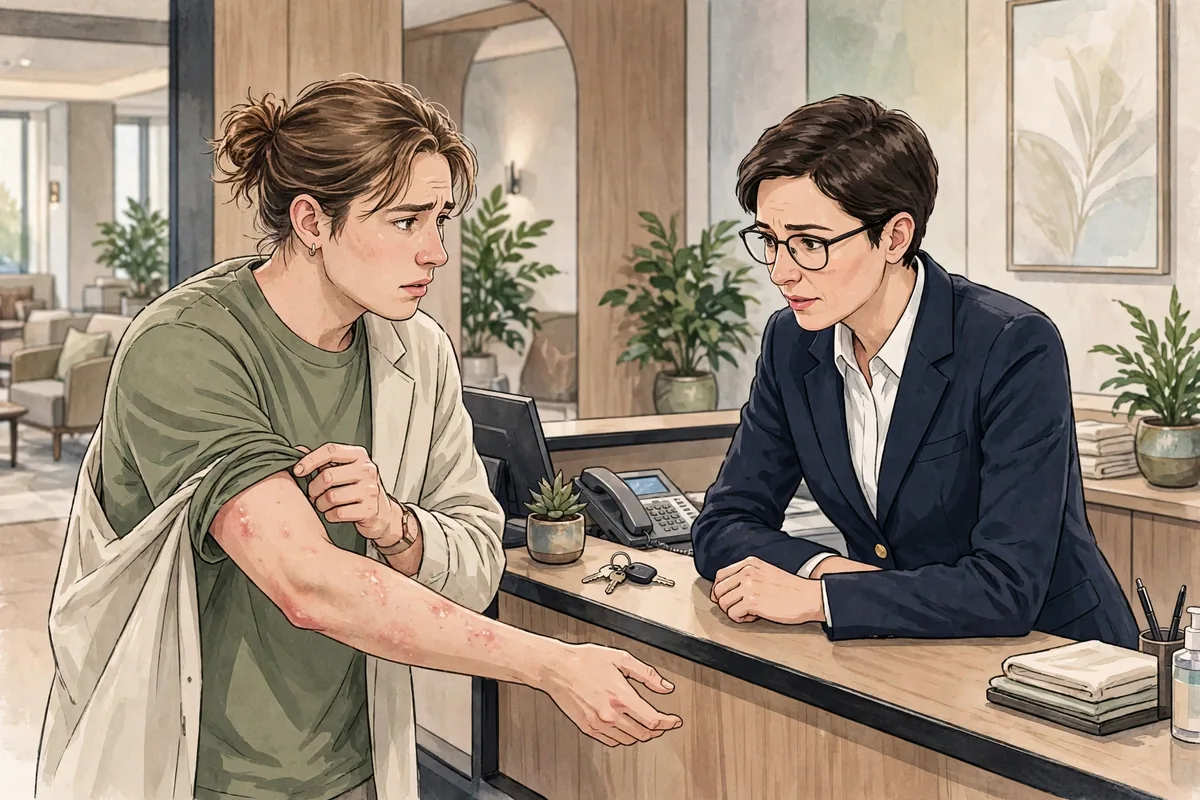
Ask, don’t demand. A calm, documented report with photos gives you the strongest position — many hotels will comp the night, move you, or cover laundry when approached reasonably. If they refuse and you believe the room was genuinely infested, dispute options include your credit card company and online reviews with factual, photo-backed accounts.
Can I get bed bugs from just one night in an infested room? #
Yes. It only takes one pregnant female hitchhiking in your luggage to start a home infestation. That’s why the luggage protocol matters more than the room change — the new room protects your sleep tonight; the decontamination protects your home for months.
Should I put my suitcase in the bathtub at the hotel? #
The bathroom is genuinely one of the safest places for luggage in a suspect room — tile, few hiding spots, and distance from the bed. The bathtub specifically is fine for overnight storage. Just inspect the tub first (unlikely to harbor bugs, but check anyway) and keep bags closed.
The hotel says they’ll “spray the room.” Is that enough? #
A spray alone, done casually, is often not enough for an established infestation — effective treatment usually involves thorough inspection, targeted treatment of harborages, and follow-up. What matters for you is that they take it seriously and that you get a different, inspected room. Their treatment quality is their problem; your luggage protocol is yours.
Medical and editorial note #
This page is general information about responding to suspected bed bug bites in hotels and is not medical or legal advice. Hotel policies and consumer-protection rules vary by location. If bites cause concerning symptoms, see a healthcare professional; if a home infestation follows, consult a licensed pest management professional promptly — early action is far cheaper than late action.


