
An Africanized bee colony defending its nest can pursue a person for up to a quarter mile — so if an africanized killer bee attack what to do question is racing through your mind mid-sprint, the answer is brutally simple: run in a straight line toward enclosed shelter, cover your head and face, and never swat. One sting of Africanized honey bee venom is no more potent than a regular honey bee sting; the danger is the sheer number of stings delivered in minutes. Your reaction in the first ten seconds decides how this ends.
The first 10 seconds: what to do when the attack starts #
Run. Do not pause to identify the bee species, gather belongings, or look back. The USDA and University of Florida guidance is unanimous: the only correct move is to get away from the nest as fast as possible. Africanized bees attack in far greater numbers than European honey bees and pursue perceived threats much farther — commonly a quarter mile or more.
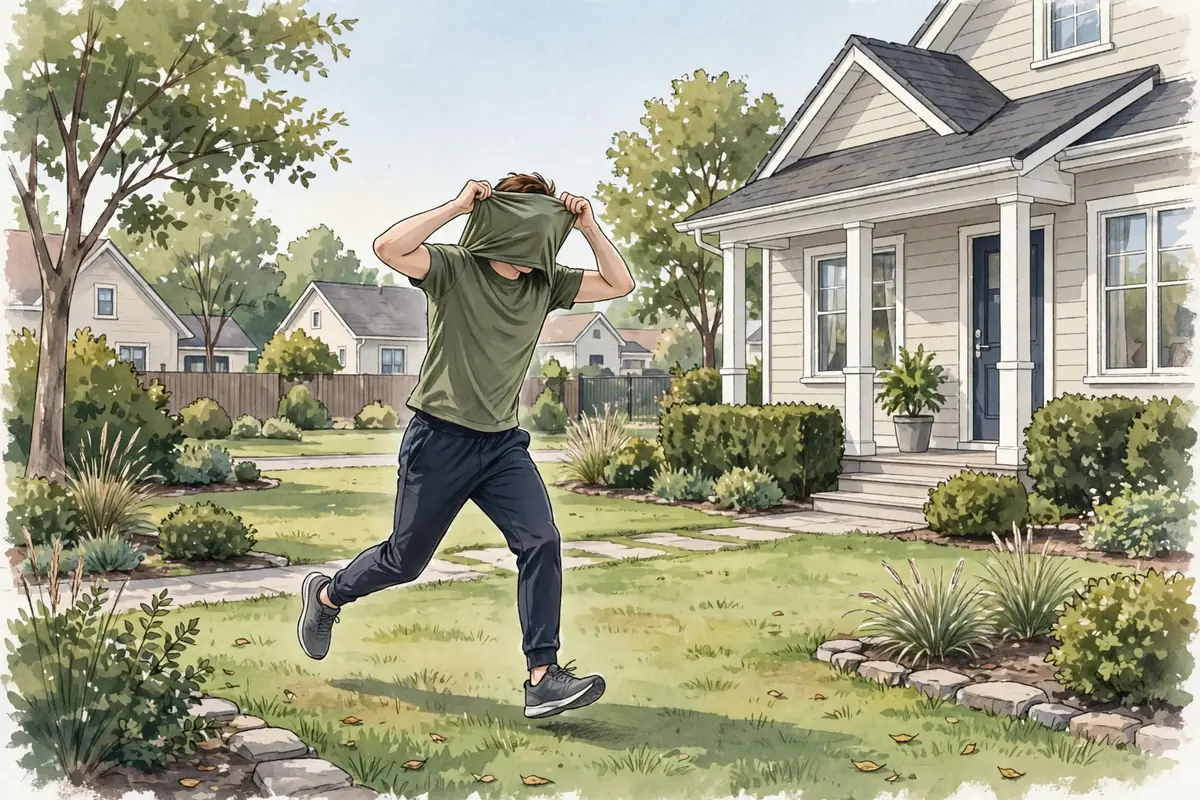
Cover your head and face while you run. Bees target the sensitive areas around the eyes, nose, and mouth. Pull your shirt up over your head and face, or use your hands, a jacket, or a towel. Shield your nose and mouth specifically — this restricts bees’ access to your airways and reduces the risk of stings to your face.
Run in a straight line. Zigzagging does not confuse bees and wastes energy. Pick the nearest enclosed shelter and commit. Africanized bees are defending a nest; you are simply too close to it. Your goal is to put distance between you and the colony, not to fight.
The mistakes that get people hurt #
The instinctive reactions most people have during a bee attack are the exact opposite of what works. Know them now so you can override them:
- Do not swat at the bees. Rapid flailing and crushed bees release alarm pheromones that summon even more defenders. Staying still and swatting turns a bad situation into a worse one.
- Do not jump into water. This is the most dangerous myth in bee safety. Africanized bees will hover above the surface and sting you every time you come up for air. Pools, ponds, and lakes are not refuge.
- Do not hide in brush or under porches. Exposed cover does not stop a colony-level defense. Only a fully enclosed space — a building, car, or room — ends the attack.
- Do not go back for someone. If you see a person being attacked, do not run into the swarm to help them. Yell for them to run toward you, then call 911. Children, older adults, and people with mobility problems are at the highest risk because they cannot escape quickly; professional responders have protective gear you do not.
For the full escape playbook that applies to any chasing swarm, see our guide on what to do when wasps or bees chase you.
What to do once you reach shelter #
Getting indoors does not end the work. Follow this sequence:
- Close every door and window immediately. A few bees will come inside with you — that is fine. They tend to become disoriented in well-lit areas and fly toward windows. Most of the swarm will stay outside.
- Move deeper indoors, away from windows and doors. Do not open the door “to check” — colonies can take 30 minutes or longer to calm down.
- Remove stingers now. Honey bee stingers remain embedded and keep pumping venom for a short time after the bee leaves. Scrape each one out sideways with a fingernail, credit card edge, or dull knife blade. Do not pinch stingers out with tweezers or your fingers — squeezing the venom sac injects more venom.
- Wash every sting with soap and water to reduce infection risk, then apply a cold compress wrapped in cloth for 10–15 minutes at a time to limit pain and swelling.
- Watch yourself for at least 30–60 minutes after multiple stings. Even people with no known allergy can develop concerning symptoms after dozens or hundreds of stings, including nausea, dizziness, and weakness.
After the attack: medical care and follow-up #
Call 911 immediately if anyone shows signs of a severe allergic reaction — trouble breathing or swallowing, swelling of the face, lips, tongue, or throat, widespread hives, dizziness or fainting, or a racing heartbeat. Use prescribed epinephrine if available, then call 911.
For large numbers of stings (generally dozens or more), seek emergency evaluation even without allergy symptoms. Massive envenomation can cause nausea, vomiting, muscle pain, and in rare cases serious complications. Our detailed guide covers when multiple stings require medical care.
For non-emergency follow-up, see urgent care or your doctor if: swelling keeps spreading after 48 hours, red streaks extend from sting sites, pus or increasing warmth appears, or you develop fever. If you were attacked by a colony on your property, call your county Extension office, a licensed beekeeper, or a certified pest control operator — do not try to remove or disturb a feral colony yourself, especially in southern Florida, Texas, Arizona, and California, where a large share of feral colonies are Africanized.
Prevention: avoiding Africanized bee encounters #

Africanized bees are established across the southern United States and slowly expanding their range. Prevention is a seasonal habit:
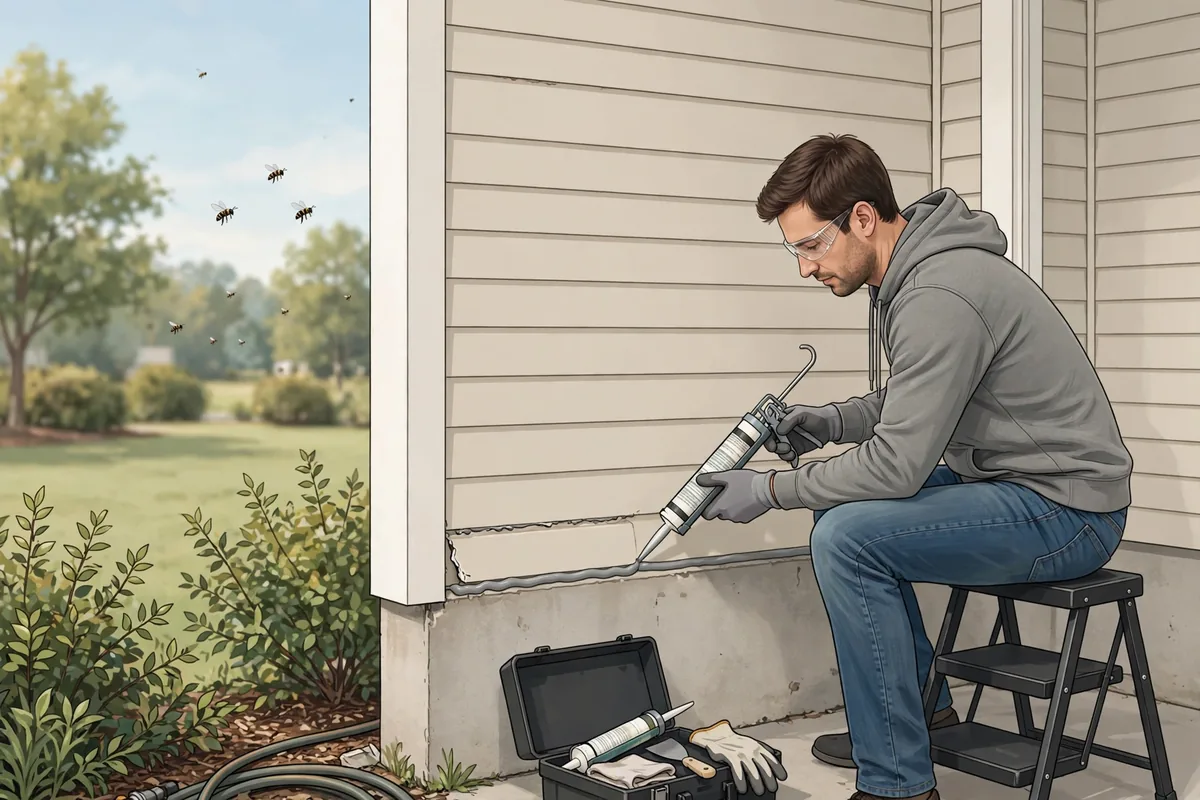
- Seal entry points on your home: gaps larger than 1/8 inch in walls, around chimneys, plumbing penetrations, vents, rain spouts, and fence posts. Use 1/8-inch hardware cloth over openings. This blocks colonies from establishing inside structures.
- Inspect before you disturb. Never kick a felled tree or stump, roll large rocks, or reach into wood piles, water meter boxes, or utility cabinets without checking for bee traffic first. Listen for a loud, steady hum near cavities.
- Keep an escape route in mind whenever you hike or work outdoors in known Africanized territory — know the nearest vehicle or building before you need it.
- Reduce attractants. Keep garbage covered, clean up fallen fruit, and avoid wearing strong fragrances or bright floral prints during peak bee activity (warm months, March through October).
- Have feral colonies professionally handled. A large percentage of feral honey bee colonies in southern Florida are Africanized, and agricultural departments in several states recommend all feral colonies be removed or exterminated by certified operators — never by the homeowner.
Warning signs: when to seek care #
Call 911 immediately if you or anyone with you develops: trouble breathing or swallowing; swelling of the face, lips, tongue, or throat; widespread hives or a spreading rash; dizziness, faintness, or collapse; or a racing or irregular heartbeat. If prescribed epinephrine (EpiPen or similar) is available, use it first, then call 911 — and expect a possible second wave of symptoms hours later, which is why every anaphylaxis episode needs an emergency department visit.
Seek urgent care or contact your doctor the same day if: you received dozens or more stings even without allergic symptoms (nausea, vomiting, or weakness warrant evaluation); swelling around any sting spreads after 48 hours; red streaks radiate from sting sites; pus, increasing warmth, or fever appears; or pain is severe or uncontrolled.
Frequently asked questions #
How are Africanized bees different from regular honey bees? #
Their venom is essentially the same — one Africanized sting hurts no more than one European honey bee sting. The difference is behavior: Africanized colonies defend in far greater numbers, respond to smaller disturbances, and pursue threats much farther. The medical danger comes from the total number of stings, not from a “killer” venom.
Can you identify an Africanized bee just by looking at it? #
No — and this matters. Africanized honey bees are visually almost identical to European honey bees; reliable identification requires expert measurement or genetic testing. Treat any feral honey bee colony in the southern US with full caution rather than trying to guess the species from appearance.
What if a child or elderly person is being attacked? #
Do not run into the swarm yourself. Shout for them to run toward the nearest shelter while you call 911. Children, older adults, and people with disabilities are at the highest risk because they cannot escape quickly — professional responders with protective equipment are the right help.
Should I try to kill the bees during an attack? #
No. Swatting or crushing bees releases alarm chemicals that recruit more attackers, and you cannot meaningfully fight a colony with your hands. Every second spent swatting is a second you are not moving toward shelter.
Medical and editorial note #
This guide is general information for educational purposes and is not medical advice. Anaphylaxis and massive stings are emergencies that require professional treatment — when in doubt, call 911. If you live in an Africanized bee region, discuss a personal action plan (including whether to carry epinephrine) with your healthcare provider.


