
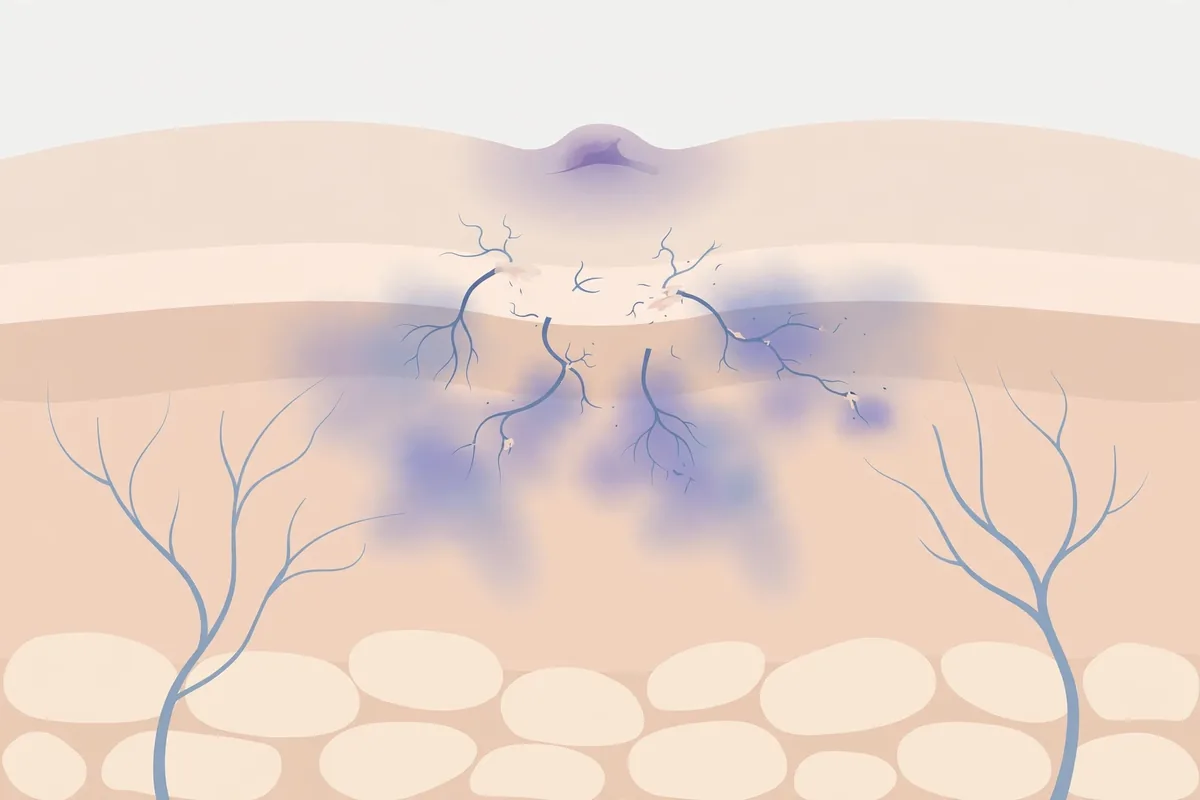
A bug bite that turned purple or bruise-like almost always comes down to tiny blood vessels breaking beneath the skin. When an insect’s mouthparts pierce the skin — or when you scratch hard — capillaries rupture and blood pools just under the surface, producing the same purple-red-yellow color sequence you see with an ordinary bruise. Most of the time this is harmless and fades within 1 to 2 weeks, but certain color patterns and accompanying symptoms deserve a closer look.
Why a bite turns purple or bruise-like #
Purple discoloration after a bite happens through a few well-understood mechanisms:
- Direct capillary damage. Biting mouthparts and stingers puncture the skin. If they nick small vessels on the way in, blood leaks into surrounding tissue and the spot turns purple within hours.
- Scratching. This is the most common cause. Fingernails tear capillaries across a wide area, turning a small red bite into a larger purple blotch. The discoloration often appears a day after the scratching session.
- Anticoagulant saliva. Mosquitoes, flies, and some other biting insects inject saliva that temporarily slows clotting so they can feed. A little extra bleeding under the skin can result, especially in people with delicate vessels.
- Large local reactions (skeeter syndrome). Some people develop big, hot, swollen reactions to mosquito bites that can darken to a deep purple-red at the center. These are allergic-type responses, not infections, and they peak around 24 to 48 hours.
- Blood-thinning medications or easy bruising. If you take aspirin, anticoagulants, or certain supplements, or if you bruise easily in general, a bite is more likely to leave a purple mark. Older adults with thinner skin notice this more often.
The classic bruise color timeline applies: purple-red at first, fading to brown, then greenish-yellow, then gone. A bite bruise typically follows this same sequence over 7 to 14 days.
How to tell a harmless bruise from a worrisome color change #
Run through these distinctions when the color looks alarming:
- Timing. Purple that appears within the first few hours to a day after the bite or after scratching is usually just a bruise. Purple that develops several days later, or that spreads outward each day, deserves medical attention.
- Spread. A bruise stays roughly the same size and fades inward. Redness that expands by an inch or more per day, especially with heat, suggests cellulitis (skin infection) rather than bruising.
- Texture. A simple bruise feels like normal skin — flat or only slightly raised. A hot, tight, very swollen area with a dark center behaves more like an infected or necrotic reaction.
- Pain pattern. Bruise tenderness is dull and fades with time. Pain that intensifies after 48 hours, throbs, or comes with fever points toward infection.
- Center color. A bruise’s center lightens gradually. A center that turns dark purple, gray, or black, or that blisters and opens, needs same-day care.
If the discoloration looks like a flat dark mark left after a bite healed, that is usually post-inflammatory hyperpigmentation rather than a bruise — a separate cosmetic process that fades over weeks to months. We cover that in our guide on bite dark marks fading.
Care steps for a purple or bruised bite #
When the purple is a plain bruise from a bite, this routine helps it resolve:
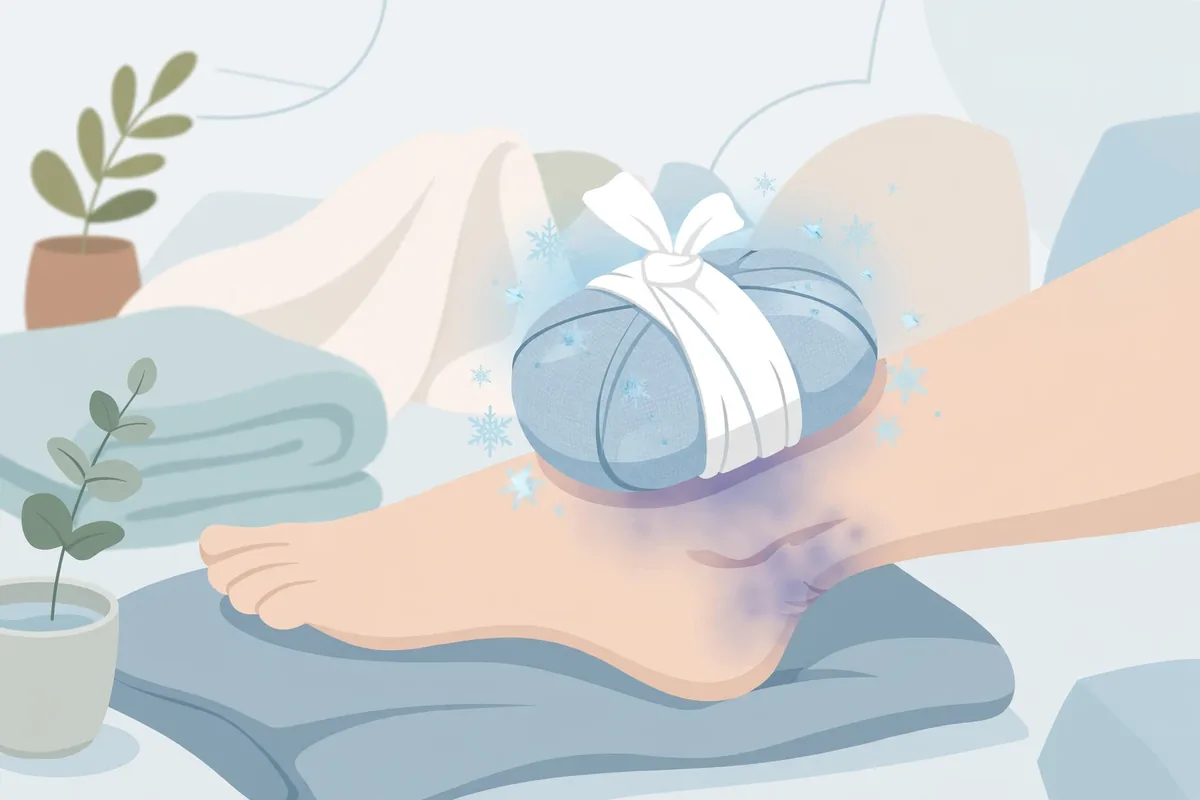
- Apply a cold compress early. For the first 24 to 48 hours, hold a cloth-wrapped cold pack on the spot for 10 to 15 minutes a few times a day. Cold constricts vessels and limits how much blood pools under the skin.
- Stop scratching. A bruised bite that gets scratched bleeds more under the skin and looks worse. Cover it with a clean bandage if you scratch at night, and keep nails trimmed.
- Elevate if it is on a leg or ankle. Lower-leg bites bruise more because blood pools under gravity. Raising the limb above heart level for 20 to 30 minutes, a few times daily, reduces pooling.
- Avoid heat for the first 48 hours. Heat and hot showers in the first two days can widen vessels and deepen the purple. After 48 hours, gentle warmth is fine.
- Skip topical “bruise” remedies until the skin calms. Products meant for bruises are fine on unbroken skin, but do not apply them to open, weeping, or cracked bite skin. Ask your pharmacist if the bite area is raw.
- Photograph the spot daily. A quick photo each morning in the same light makes it easy to tell whether the purple is shrinking (good) or spreading (a reason to call your clinician).
- Be patient with the color changes. Purple to brown to yellow-green is the normal fade sequence. The yellowish stage can look strange but is a sign of healing.
If you take blood thinners and notice that every bite turns into a large purple blotch, mention it at your next appointment — the doctor may want to review your medication list or check for easy-bruising causes.
When purple means something more serious #
Most purple bites are bruises, but a few patterns should prompt medical care:
- Spreading purple with fever or chills — can signal a serious bloodstream or tissue infection.
- A dark purple or black center that blisters, sinks, or opens into an ulcer — seen in severe local reactions and, rarely, in bites from venomous spiders such as the brown recluse. Brown recluse bites are uncommon and concentrated in the central and southern United States.
- Purple patches that appear far from the bite site, or multiple unexplained bruises with a bite — these suggest a clotting or platelet issue rather than a bite reaction, and warrant blood work.
- Rapidly expanding purple swelling with severe pain — in rare cases this can indicate necrotizing tissue infection, a medical emergency.
These are uncommon. The overwhelmingly common story is a scratched bite that bruised, and it gets better on its own within two weeks.
Warning signs: when to seek care #
Get medical care promptly if a purple or bruise-like bite shows any of these: redness spreading outward more than an inch a day, or red streaks running away from the bite; increasing pain, heat, or swelling after 48 hours; pus, drainage, or an open sore in the center; fever or chills; a center that turns dark purple, gray, or black and blisters; purple spots appearing in multiple places beyond the bite; or severe, sudden pain with rapid swelling. Call emergency services for trouble breathing, swelling of the lips, tongue, or throat, dizziness, or widespread hives — signs of a possible severe allergic reaction to a bite or sting.
Frequently asked questions #

How long does a purple bite mark take to fade? #
A typical bite bruise fades within 7 to 14 days, cycling through purple-red, brown, and yellow-green. Larger bruises on the lower legs can take a bit longer. Flat dark marks that remain after the bruise is gone may be lingering pigment, which fades more slowly over weeks to months.
Is a purple bite a sign of infection? #
Usually not. A purple color alone, without spreading redness, increasing pain, warmth, pus, or fever, is most often a simple bruise from capillary damage or scratching. Infection is signaled by change over time — the red area expanding, pain intensifying after 2 days, or fever. Our bite and sting warning signs checklist covers the distinction in more detail.
Why did my mosquito bite turn purple? #
Either the bite nicked small vessels on entry, the mosquito’s anticoagulant saliva allowed a little under-skin bleeding, or — most commonly — scratching broke capillaries around the bite. People with thinner skin or who take blood-thinning medications see this more often.
Should I see a doctor for a bruised bug bite? #
If the purple stays the same size or shrinks over a few days and there is no fever or spreading redness, home care is enough. See a clinician if the purple area keeps expanding, the center darkens to near-black, or you develop fever, chills, or severe pain.
Medical and editorial note #
This article is for general information only and is not medical advice. Skin discoloration from bites can look alarming, and only a qualified clinician can distinguish a simple bruise from an infected or necrotic reaction. If any warning sign above applies to you, seek medical care rather than waiting. For questions about medications you take — including blood thinners and topical products — consult your doctor or pharmacist.


