Direct answer: Blacklegged tick (Ixodes scapularis) and Ixodes ricinus bites usually cannot be separated by the skin mark. Both ticks can attach quietly and leave a small red spot after removal. The strongest differences are geography, the actual tick’s morphology, and regional disease risks: I. scapularis is a major U.S. Lyme vector, while I. ricinus is widespread across Europe.
Searches for blacklegged tick bite vs ixodes ricinus bite pictures often assume that the bite sites should have different shapes. In practice, they overlap. Both species belong to the genus Ixodes, both are hard ticks, both can feed on humans, and both can transmit Borrelia bacteria associated with Lyme borreliosis in their respective regions.
If the tick is still attached, remove it promptly rather than waiting for species identification. If possible, take a clear photo of the tick after removal. A photo of the tick, plus where the bite occurred, is much more useful than a photo of the skin alone.
[stinghelp_image filename=”blacklegged-tick-bite-vs-ixodes-ricinus-bite-01.webp” alt=”Educational comparison of Ixodes scapularis blacklegged tick and Ixodes ricinus castor bean tick” caption=”Both Ixodes ticks can leave similar bite marks; geography and the tick itself provide better identification clues.”]
Blacklegged Tick Bite vs Ixodes Ricinus Bite: Quick Comparison
| Feature | Blacklegged tick — I. scapularis | Ixodes ricinus |
|---|---|---|
| Main region | Eastern United States | Widespread across Europe, extending into parts of North Africa and western Asia |
| Common name | Blacklegged tick; deer tick | Castor bean tick; sheep tick; sometimes deer tick |
| Can the skin mark identify it? | No | No |
| Important disease association | Lyme disease and several other U.S. tick-borne infections | Lyme borreliosis and tick-borne encephalitis in relevant European areas |
| Habitat clue | Wooded, brushy, leafy habitats in established U.S. regions | Moist woodland, mixed forest, vegetation, meadows and other humid habitats across Europe |
| Immediate action | Remove promptly with fine-tipped tweezers and monitor for later symptoms | |
What Is the U.S. Blacklegged Tick?
The blacklegged tick is Ixodes scapularis. CDC surveillance updated in May 2026 describes it as widely distributed across the eastern United States, with important exposure risk in spring, summer, and fall and possible adult activity during warmer winter periods.
In the U.S., blacklegged ticks are best known for transmitting the bacteria that cause Lyme disease. CDC notes that Lyme disease is most common in the Northeast, mid-Atlantic, and upper Midwest. Blacklegged ticks can also be associated with other pathogens, so a later illness should be evaluated based on the full exposure history rather than the bite mark.
Nymphs are especially easy to miss because they are small. A tick can remain attached and feed without causing dramatic immediate pain. Finding the attached tick is often more informative than noticing a rash.
What Is Ixodes Ricinus?
Ixodes ricinus is an indigenous European hard tick with a broad geographic distribution. ECDC describes its range from Portugal to Russia and from North Africa to Scandinavia. Its current known European distribution was updated again in 2026, reflecting ongoing surveillance and newly reported areas.
ECDC notes that I. ricinus favors relatively humid conditions and is common in deciduous woodland and mixed forest, although it can live in many habitats that support suitable hosts and a moist microclimate. Larvae, nymphs and adults feed on different hosts, and the species frequently bites humans.
I. ricinus is involved in transmission of multiple pathogens, including Borrelia burgdorferi sensu lato associated with Lyme borreliosis and tick-borne encephalitis virus in areas where TBE circulates.
[stinghelp_image filename=”blacklegged-tick-bite-vs-ixodes-ricinus-bite-02.webp” alt=”Map-style educational illustration showing Ixodes scapularis in eastern United States and Ixodes ricinus across Europe” caption=”Geography is one of the strongest practical clues: I. scapularis is a major eastern U.S. tick, while I. ricinus is widespread across Europe.”]
Blacklegged Tick Bite vs Ixodes Ricinus Bite Symptoms
The immediate bite-site symptoms can be almost identical. Either bite may leave no obvious reaction, a small red spot, slight swelling, itching, or mild tenderness. A localized reaction soon after tick removal does not by itself indicate infection.
Later symptoms matter more. Lyme disease in both North America and Europe can include fever, headache, fatigue and an expanding erythema migrans rash. The rash does not always look like a perfect “bull’s-eye,” and not every infected person notices a classic rash.
With European I. ricinus exposure, clinicians may also consider tick-borne encephalitis depending on the country, vaccination status and region. TBE is a viral infection and has a different risk profile from Lyme borreliosis. The skin mark does not indicate which pathogen, if any, was transmitted.
Can Pictures Tell Which Ixodes Species Bit You?
Blacklegged tick bite vs ixodes ricinus bite pictures of skin are not reliable for species identification. The ticks themselves are related and the human skin response is nonspecific.
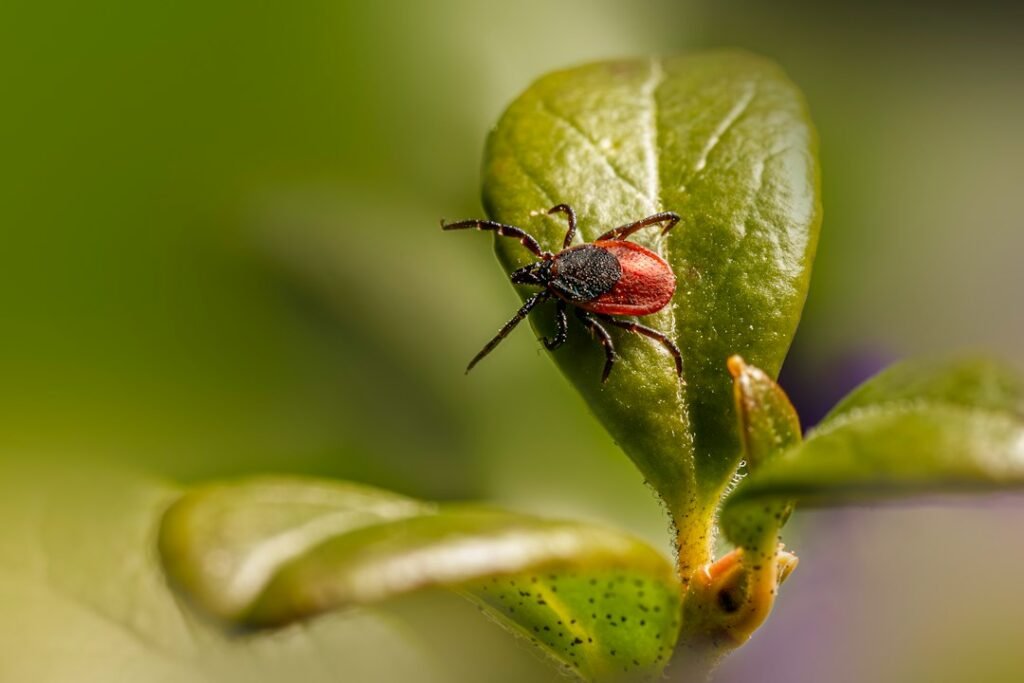
Photograph the actual tick if possible. Useful views include the dorsal surface, underside and mouthparts. Include a ruler, coin, or millimeter scale for size. Feeding makes ticks expand substantially, so size must be interpreted with life stage and engorgement in mind.
Geography often resolves much of the uncertainty. A tick acquired in the northeastern United States is much more likely to be I. scapularis than I. ricinus, while a human-biting Ixodes tick acquired in much of Europe may plausibly be I. ricinus.
How to Remove Either Tick
CDC’s June 9, 2026 tick-removal guidance recommends removing attached ticks as soon as possible. Use clean fine-tipped tweezers, grasp close to the skin surface, and pull upward with steady, even pressure. Do not twist or jerk.
- Grasp the tick close to the skin.
- Pull upward steadily.
- If tiny mouthparts remain and cannot be removed easily, leave them alone and let the skin heal.
- Dispose of the tick safely without crushing it with bare fingers.
- Clean the bite site and hands.
- Check for additional ticks.
- Write down the date and exact region of exposure.
Do not coat the tick with petroleum jelly, nail polish, heat, or other substances to make it detach. Prompt mechanical removal is preferred.
[stinghelp_image filename=”blacklegged-tick-bite-vs-ixodes-ricinus-bite-03.webp” alt=”Fine-tipped tweezers removing an attached Ixodes tick close to the skin” caption=”The safe removal technique is the same for I. scapularis and I. ricinus: grasp close to the skin and pull steadily upward.”]
Blacklegged Tick Bite vs Ixodes Ricinus Bite Treatment Differences
The immediate blacklegged tick bite vs ixodes ricinus bite treatment differences are limited because the attached tick should be removed the same way. The differences become important when a clinician evaluates regional disease risk and decides whether any post-exposure action is appropriate.
In the United States, CDC states that a single preventive dose of doxycycline may be considered after certain blacklegged-tick bites in areas where Lyme disease is common. This is not automatically recommended after every bite. Factors such as tick type, likely attachment duration, timing and individual medical circumstances matter.
In Europe, management after an I. ricinus bite follows local clinical guidance. Routine antibiotics are not automatically used after every tick bite. TBE vaccination can reduce TBE risk before exposure in recommended areas, but vaccination is preventive and does not treat an infection after it has already occurred.
Do not self-start leftover antibiotics. If fever, an expanding rash, neurologic symptoms or other concerning illness develops, contact a healthcare professional and report where and when the tick exposure occurred.
Lyme Disease: Similar Disease, Different Regional Context
Both ticks are important Lyme vectors, but the ecology and Borrelia species differ between North America and Europe. CDC identifies blacklegged ticks as the principal vectors of Lyme disease in the eastern U.S. ECDC states that I. ricinus is a major vector of Lyme borreliosis across Europe.
For practical purposes, the warning signs overlap: an expanding erythema migrans rash, fever, headache, fatigue, facial weakness, heart symptoms, neurologic symptoms or later joint swelling can require medical assessment. The absence of a classic rash does not prove that infection did not occur.
Tick-Borne Encephalitis and Ixodes Ricinus
In parts of Europe and Asia, I. ricinus can transmit tick-borne encephalitis virus. TBE risk is highly geographic. Many tick bites do not transmit TBE, and the local bite reaction cannot show whether the virus was present.
If fever or neurologic symptoms develop after a tick exposure in an area where TBE occurs, seek medical evaluation. Severe headache, neck stiffness, confusion, weakness, seizures or other neurologic symptoms require urgent assessment.
What About Infection at the Bite Site?
A small local red spot after removal can be an ordinary reaction. Secondary bacterial infection is more concerning when pain, warmth and redness progressively increase or when pus, drainage, red streaking or fever develops.
Do not repeatedly squeeze, scrape or probe the bite site. Keep it clean and monitor the trend. If a skin lesion is expanding, take a dated photograph for comparison.
Important distinction: An expanding Lyme erythema migrans rash is not the same as a small immediate ring of irritation where a tick was attached. A clinician should evaluate an enlarging rash, particularly when it grows over days or is accompanied by systemic symptoms.
When to Seek Medical Care
| Situation | Recommended action |
|---|---|
| Tick removed, person feels well | Clean the area, record the exposure, monitor |
| Expanding rash or fever in the following days to weeks | Contact a healthcare professional |
| Facial weakness, palpitations, severe joint symptoms or neurologic changes | Prompt medical assessment |
| Severe headache, neck stiffness, confusion or seizure after European tick exposure | Urgent/emergency evaluation |
| Increasing warmth, pus, red streaking or worsening local pain | Evaluation for possible bacterial infection |
Prevention in the United States and Europe
Preventing attachment is the most effective strategy. Wear long clothing in brushy or wooded areas, use appropriate tick repellents, stay toward the center of trails where practical, and conduct a full-body tick check after outdoor activity. Showering after returning indoors can help locate ticks that have not yet attached firmly.
Check the scalp, behind the ears, under the arms, waist, groin, behind knees and other hidden areas. Inspect children, pets, clothing and gear. Drying clothing at appropriate heat can help kill ticks on fabric according to local guidance.
For more practical guidance, visit the Tick Bites & Tick-Borne Risks hub and Prevention, Repellents & Personal Protection.
Related StingHelp Guides
For species comparisons, use What Bit Me? Identification & Comparisons. For removal and routine care, see First Aid & Treatment. For fever, neurologic symptoms, heart symptoms, spreading infection signs or rapidly worsening illness, review Safety / Red Flags and seek appropriate medical care.
Frequently Asked Questions
Is Ixodes ricinus the European version of the blacklegged tick?
They are closely related Ixodes ticks with similar ecological roles as major Lyme vectors in their respective regions, but they are different species.
Can the bite rash identify Ixodes scapularis vs Ixodes ricinus?
No. The bite-site appearance overlaps and is not species-specific.
Do both ticks transmit Lyme disease?
Yes. Infected I. scapularis can transmit Lyme disease in North America, while infected I. ricinus can transmit Lyme borreliosis in Europe.
Does Ixodes ricinus transmit tick-borne encephalitis?
It can transmit TBE virus in regions where the virus circulates. Risk varies greatly by country and local area.
Should an attached tick be removed immediately?
Yes. CDC recommends prompt removal with tweezers rather than waiting to see a healthcare professional.
Should I take antibiotics after every tick bite?
No. Preventive antibiotics are used only in selected circumstances. A healthcare professional should assess whether they are appropriate.
Bottom Line
For blacklegged tick bite vs ixodes ricinus bite pictures, skin appearance cannot reliably separate the two. Both are Ixodes ticks capable of transmitting Lyme-associated bacteria, but I. scapularis is primarily a U.S. concern while I. ricinus is widespread in Europe and can also transmit TBE virus in relevant areas. Remove attached ticks promptly, record the exposure location, and seek medical care for an expanding rash, fever, neurologic symptoms, or other significant illness.
Authoritative References
- CDC — What to Do After a Tick Bite, June 9, 2026
- CDC — Blacklegged Tick Surveillance, May 14, 2026
- CDC — About Lyme Disease
- ECDC — Ixodes ricinus Factsheet for Experts
- ECDC — Borreliosis (Lyme Disease)
- ECDC — Ixodes ricinus Current Known Distribution, April 2026
Editorial review recommended before publication. This article provides general educational information and does not replace individualized medical care.