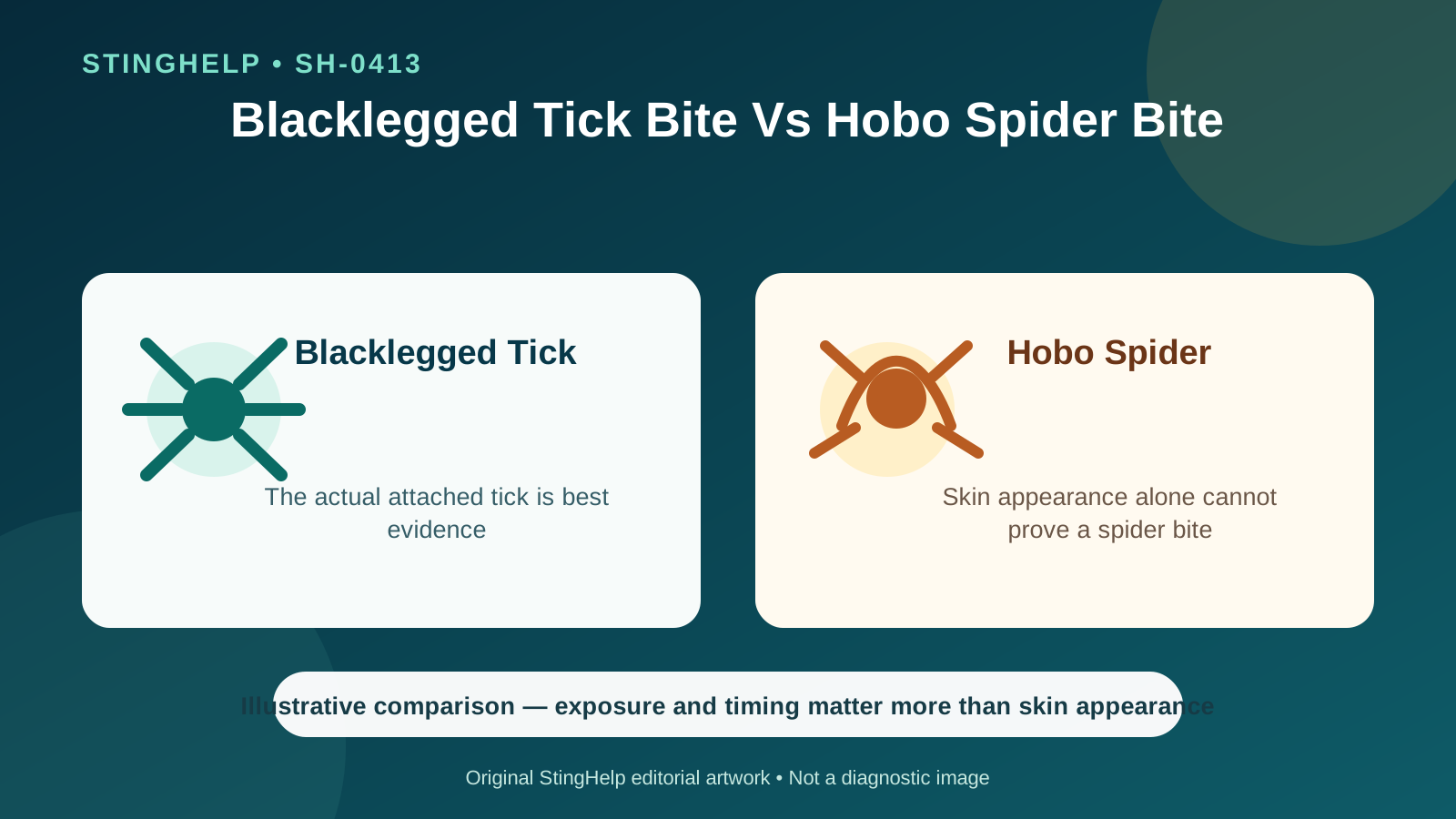
Direct answer: Blacklegged ticks and Hyalomma ticks can both attach to people and leave a small red bite site, so the skin mark alone usually cannot distinguish them. Geography, the tick’s body shape and markings, leg appearance, behavior, and a clear photo of the actual tick are more useful. Remove either attached tick promptly and monitor for later illness.
When comparing blacklegged tick bite vs hyalomma tick bite pictures, the key mistake is focusing on the bite mark instead of the tick. A blacklegged tick in the United States usually refers to Ixodes scapularis. Hyalomma is a different genus containing several hard-tick species found mainly across parts of Africa, Asia, the Middle East, and southern/eastern Europe. Both can bite humans, but their geographic patterns and disease associations differ.
No photograph of a red bump can prove which tick species caused it after the tick is gone. If the tick is still attached, remove it first; do not delay removal for identification. A clear photograph of the tick after safe removal can help experts assess the species.
[stinghelp_image filename=”blacklegged-tick-bite-vs-hyalomma-tick-bite-01.webp” alt=”Educational side-by-side comparison of an Ixodes scapularis blacklegged tick and a Hyalomma tick” caption=”Species identification depends on the tick itself, geography, and morphology—not on the appearance of the bite mark.”]
Blacklegged Tick Bite vs Hyalomma Tick Bite: Quick Comparison
| Feature | Blacklegged tick | Hyalomma tick |
|---|---|---|
| Typical name | Ixodes scapularis, often called deer tick in the U.S. | Several species in the genus Hyalomma |
| Main geographic context | Widely distributed across the eastern United States | Important in Africa, the Middle East, Asia, and parts of southern/eastern Europe |
| Can the bite mark identify it? | No | No |
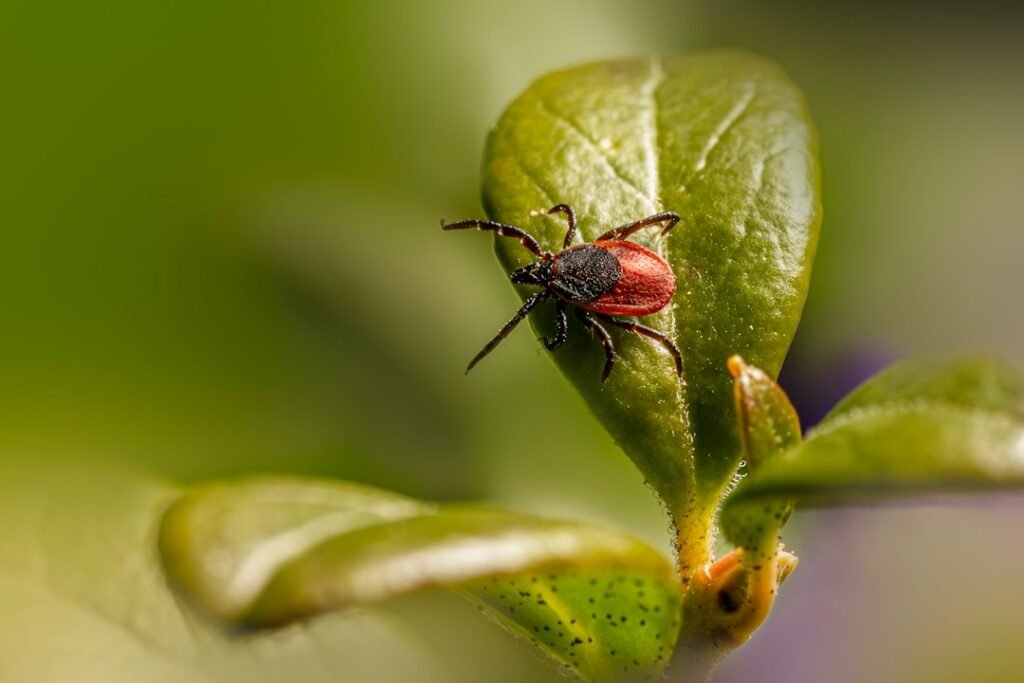
| Useful visual clue | Small hard tick; adult female has a dark scutum with a contrasting reddish-brown body when unfed | Many Hyalomma have relatively long legs with pale banding and a more actively moving appearance |
| Important disease context | Lyme disease and several other tick-borne infections in the U.S. | Some Hyalomma species are important vectors of Crimean-Congo hemorrhagic fever virus in endemic regions |
| Immediate action | Remove promptly with clean fine-tipped tweezers, clean the skin, and monitor for symptoms | |
What Is a Blacklegged Tick?
The blacklegged tick, Ixodes scapularis, is an important human-biting tick in the eastern United States. CDC surveillance updated in May 2026 describes it as widely distributed across the eastern U.S. Nymphs and adult females are reported on people most often, although larvae can also bite humans.
Blacklegged ticks are medically important because infected ticks can transmit the bacteria that cause Lyme disease as well as other pathogens. CDC states that Lyme disease is most common in the Northeast, mid-Atlantic, and upper Midwest of the United States. Risk depends on the region, the tick, local pathogen prevalence, and exposure details.
A blacklegged tick may be tiny, particularly in the nymph stage. This is why the tick can feed without being noticed. The bite itself may cause only a small localized reaction and may not be painful.
What Is a Hyalomma Tick?
Hyalomma is a genus rather than one single tick species. Several Hyalomma species are important in human and animal health. They are associated with warmer and drier habitats across parts of Africa, the Middle East, Asia, and southern/eastern Europe, although distribution can change over time.
Hyalomma ticks are often described as relatively large, long-legged ticks. Some species have distinctly banded legs. Unlike many ticks that wait passively on vegetation for a host, Hyalomma ticks can actively move toward potential hosts over short distances, which can make their behavior appear more “hunting” than typical questing.
WHO and ECDC identify Hyalomma ticks as principal vectors of Crimean-Congo hemorrhagic fever virus (CCHFV) in endemic regions. This does not mean that every Hyalomma tick is infected or that every Hyalomma bite causes CCHF. Disease risk depends on where the exposure happened and whether the virus is circulating locally.
[stinghelp_image filename=”blacklegged-tick-bite-vs-hyalomma-tick-bite-02.webp” alt=”Tick identification illustration highlighting the smaller Ixodes blacklegged tick and long banded legs often seen in Hyalomma ticks” caption=”Longer banded legs may suggest some Hyalomma species, but expert identification should use the whole tick and geographic context.”]
Blacklegged Tick Bite vs Hyalomma Tick Bite Symptoms
The immediate skin symptoms overlap. Either tick can leave a small red spot, mild swelling, tenderness, or itching after detachment or removal. A bite site may look nearly normal even when a tick has fed for a prolonged period.
The more useful symptom comparison concerns what happens later. After a blacklegged tick bite, fever, an expanding rash, headache, fatigue, facial weakness, joint symptoms, or other illness can raise concern for tick-borne disease depending on geography and timing. CDC advises seeing a healthcare professional if rash or fever develops within days to weeks after removing a tick.
After a Hyalomma bite in a CCHF-endemic area, sudden fever, severe muscle aches, headache, dizziness, abdominal symptoms, vomiting, bruising, or bleeding are important warning signs. WHO notes that CCHF can range from asymptomatic or mild disease to severe hemorrhagic illness. A person with compatible symptoms after a relevant exposure should seek urgent medical assessment and clearly report the tick exposure and location.
Can Pictures Tell the Difference?
Blacklegged tick bite vs hyalomma tick bite pictures of the skin are not reliable for species identification. The same red papule can follow many tick species. The actual tick is far more useful.
If the tick is still attached, photograph it quickly if convenient, but do not postpone removal. After removal, place it in a sealed container or photograph it against a plain background with a ruler or coin for scale. Photograph the top and underside if this can be done without touching the tick with bare fingers.
Features such as leg banding, body proportions, mouthparts, scutum pattern, and size can help an expert. Geography is essential because a species that is common in one region may be unusual in another.
How to Remove Either Tick Safely
CDC’s June 2026 guidance is the same regardless of which hard tick is attached: remove the tick as soon as possible. Use clean fine-tipped tweezers, grasp the tick close to the skin surface, and pull upward with steady, even pressure. Avoid twisting or jerking.
- Grasp as close to the skin as possible.
- Pull straight upward with steady pressure.
- Do not crush the tick with your fingers.
- Clean the bite area and your hands afterward.
- Check the rest of the body for additional ticks.
- Record the date and likely location of exposure.
Do not use petroleum jelly, heat, nail polish, or similar substances to force the tick to detach. CDC warns that delaying removal can increase the opportunity for transmission of some tick-borne pathogens.
[stinghelp_image filename=”blacklegged-tick-bite-vs-hyalomma-tick-bite-03.webp” alt=”Medical diagram showing safe tick removal with fine-tipped tweezers close to the skin” caption=”Prompt mechanical removal is recommended for both blacklegged and Hyalomma ticks.”]
Blacklegged Tick Bite vs Hyalomma Tick Bite Treatment Differences
The immediate blacklegged tick bite vs hyalomma tick bite treatment differences are small: both require prompt removal and routine skin care. The important differences appear in medical follow-up because the diseases associated with the ticks vary by region.
For a blacklegged tick bite in a U.S. area where Lyme disease is common, a clinician may consider whether Lyme post-exposure antibiotic prophylaxis is appropriate based on the specific exposure. CDC notes that a single dose of doxycycline may be considered in certain circumstances. That decision should be made with a healthcare professional; antibiotics should not be taken automatically after every tick bite.
For Hyalomma exposure in a CCHF-endemic region, routine preventive antibiotics do not prevent CCHF because CCHF is a viral infection. The priority is awareness of symptoms, location, animal or livestock exposure, and prompt professional assessment if a febrile illness develops. Severe illness requires specialized medical management.
Geography Is One of the Strongest Clues
A blacklegged tick is a much more plausible explanation after exposure in the eastern United States, especially in regions where Ixodes scapularis is established. Hyalomma becomes more plausible after exposure in areas where those ticks occur, including parts of southern and eastern Europe, the Middle East, Africa, and Asia.
Travel matters. Someone returning to the United States after rural travel, livestock contact, hiking, hunting, or field work abroad may have a tick species that is not common near home. Always tell a clinician where the tick was acquired, not just where symptoms appeared.
ECDC’s 2026 tick surveillance continues to track changes in European tick distributions. Climate, animal movement, migratory birds, and local environmental conditions can affect where ticks are found, so current surveillance is more useful than assuming a species never occurs outside an old range map.
Disease Risk: Blacklegged Tick
Lyme disease is the best-known concern associated with blacklegged ticks. CDC states that Lyme disease can cause fever, headache, fatigue, and an expanding erythema migrans rash, and untreated infection can affect joints, the heart, and the nervous system.
Not every blacklegged tick is infected, not every bite transmits Lyme disease, and not every infected person develops a classic “bull’s-eye” rash. The bite mark itself cannot show whether transmission occurred. This is why follow-up symptoms and exposure details matter.
Disease Risk: Hyalomma Tick
CCHF is the major high-consequence infection associated with Hyalomma ticks in endemic areas. WHO describes CCHF as a viral hemorrhagic fever that can spread through infected tick bites and through contact with infected animal or human blood or tissues. Farmers, livestock workers, veterinarians, slaughterhouse workers, hunters, and healthcare workers can have additional occupational exposure risks in affected regions.
Again, identifying a Hyalomma tick does not mean CCHF transmission occurred. The significance depends on regional surveillance, whether the tick was infected, and whether symptoms develop.
Travel warning: If fever or significant systemic illness develops after a tick bite acquired in a CCHF-endemic country, tell the healthcare team about the travel location and tick exposure immediately. This information can affect infection-control and diagnostic decisions.
When to Seek Medical Care
| Finding | What to do |
|---|---|
| Tick removed, no symptoms | Clean the area, record exposure details, and monitor |
| Rash or fever days to weeks after a U.S. blacklegged tick exposure | Contact a healthcare professional |
| Sudden fever or significant illness after Hyalomma exposure in a CCHF-risk region | Seek prompt medical care and report the location and tick exposure |
| Unexplained bruising, bleeding, severe weakness, confusion, or rapidly worsening illness | Urgent/emergency assessment |
| Increasing pain, pus, warmth, or red streaking at the bite site | Seek evaluation for possible secondary bacterial infection |
Prevention for U.S. and European Travelers
Wear long pants and long sleeves in tick habitat, use appropriate repellents, walk in the center of trails when possible, and perform a full-body tick check after outdoor activity. Showering after returning indoors can help identify unattached ticks. Inspect clothing, gear, children, and pets.
For livestock or animal work in Hyalomma regions, use appropriate protective clothing and follow local occupational guidance to reduce contact with ticks and animal blood. WHO emphasizes tick-bite prevention and protective measures in CCHF-risk areas.
For more prevention guidance, visit Prevention, Repellents & Personal Protection and the Tick Bites & Tick-Borne Risks hub.
Related StingHelp Guides
If you are uncertain which tick you found, use the What Bit Me? Identification & Comparisons hub. For safe removal and symptom care, see First Aid & Treatment. For fever, neurologic symptoms, bleeding, breathing difficulty, or rapidly worsening illness, review Safety / Red Flags and seek appropriate medical care.
Frequently Asked Questions
Can you identify a Hyalomma tick from the bite mark?
No. The bite mark is nonspecific. The tick’s morphology and geographic context are far more useful.
Are blacklegged ticks and Hyalomma ticks the same size?
Size varies by life stage and feeding status. Hyalomma adults are often visually larger and longer-legged than blacklegged ticks, but size alone is not enough for confident identification.
Does every Hyalomma tick carry CCHF?
No. Hyalomma ticks are important vectors in endemic regions, but an individual tick may not be infected. Risk depends on local virus circulation and exposure circumstances.
Does every blacklegged tick bite cause Lyme disease?
No. Transmission requires an infected tick, and risk is influenced by region and other exposure factors. A bite alone does not mean infection occurred.
Should I wait for a doctor to remove an attached tick?
No. CDC recommends prompt removal rather than delaying until a medical visit.
Should I have the tick commercially tested?
CDC generally does not recommend using commercial tick-testing results to make treatment decisions because positive and negative results can both be misleading about a person’s infection status.
Bottom Line
For blacklegged tick bite vs hyalomma tick bite pictures, the bite mark is the least reliable clue. A blacklegged tick is strongly associated with eastern U.S. exposures and Lyme disease risk, while Hyalomma ticks are more relevant in parts of Europe, Africa, the Middle East, and Asia and can be vectors of CCHF in endemic areas. Remove either tick promptly, save exposure details, and seek medical care for fever, rash, bleeding, neurologic symptoms, or other significant illness.
Authoritative References
- CDC — What to Do After a Tick Bite, June 9, 2026
- CDC — Blacklegged Tick Surveillance, May 14, 2026
- CDC — About Lyme Disease
- WHO Europe — Public Health Advice on Crimean-Congo Hemorrhagic Fever
- ECDC — Crimean-Congo Hemorrhagic Fever
Editorial review recommended before publication. This article is educational and does not replace individualized medical diagnosis or treatment.