| Author | Dr. Alex Thorne |
| Credentials | Board-Certified Entomologist and Clinical Toxicologist |
| Author Bio | Dr. Thorne specializes in venom research and emergency first aid. |
| Medically Reviewed By | Dr. Elara Vance, M.D., F.A.C.E.P. (Board Certified Emergency Medicine) on October 25, 2025. |
| 🔑 Key Takeaways |
| Tularemia, also known as “rabbit fever,” is a rare but serious bacterial disease (Francisella tularensis). While typically transmitted by ticks (Dog, Wood, Lone Star), it can also be transmitted through the bite of an infected deer fly (Chrysops species), particularly in the Western U.S. The hallmark sign of tularemia from a deer fly bite is the development of a slow-healing ulcer (sore) at the bite site, accompanied by a sudden onset of high fever, chills, and painful, significantly swollen lymph nodes near the bite. This is a medical emergency requiring prompt diagnosis and antibiotic treatment. |
Transmission and Initial Symptoms
The bacteria F. tularensis is transmitted mechanically when the deer fly bites an infected animal (like a rabbit or rodent) and then immediately bites a human before the bacteria dies.
Key Symptoms of Ulceroglandular Tularemia
This is the most common form of the disease following an arthropod bite.
| Symptom | Details | Onset Timeline |
| Ulcer/Sore | The initial deer fly bite develops into a painful, slow-healing ulcer with a dark, raised center and a clear rim. | Typically appears 3 to 5 days after the bite. |
| Fever and Chills | Abrupt onset of high fever (up to $104^\circ \text{F}$) and chills. | Usually begins 3 to 14 days after exposure. |
| Swollen Glands | Significantly enlarged and tender lymph nodes (glands) that are painful to the touch, usually in the armpit or groin area closest to the bite. | Occurs alongside the fever and is a major diagnostic clue. |
| Systemic Illness | Severe headache, profound fatigue, and body aches. | General flu-like symptoms that persist and worsen. |
2. Tularemia from Deer Fly Bite: Action Protocol
Because tularemia can be deadly if untreated, especially in elderly or immunocompromised individuals, immediate medical consultation is required for any suggestive symptoms.
- Seek Medical Care Immediately: If you develop a persistent fever, swollen lymph nodes, and a slow-healing sore after a known deer fly bite or tick bite, see a doctor right away. Inform them specifically that you suspect tularemia.
- Diagnosis: Diagnosis is confirmed via a blood test (serology) or by culturing the bacteria from the ulcer or a swollen lymph node.
- Treatment: Tularemia is successfully treated with a specific class of antibiotics, most commonly Streptomycin or Gentamicin, which are typically given for 10–14 days. Delaying treatment can lead to pneumonia or severe systemic infection.

Note on Deer Flies
Deer flies are most active during the day, particularly during late spring and summer. They deliver a painful, shallow, slicing bite, often drawing blood, which increases the likelihood of mechanical transmission of the bacteria.
3. Prevention
- Avoid handling sick or dead animals, especially rabbits and rodents.
- Wear long-sleeved clothing and use EPA-registered insect repellents (DEET or Picaridin) when outdoors to prevent a tularemia from a deer fly bite.
For detailed information on the transmission, symptoms, and treatment of tularemia, consult the Centers for Disease Control and Prevention (CDC) guidance on Tularemia.
FAQs
Q1: How fast does tularemia develop after a deer fly bite?
Symptoms usually start 3–5 days after exposure but may take up to 14 days.
Q2: Can tularemia spread from person to person?
No — tularemia does not spread between people.
Q3: Is tularemia deadly?
If untreated, it can cause severe complications. However, with prompt antibiotic treatment, most people fully recover.
Q4: Can pets get tularemia?
Yes, dogs and cats can be infected and may expose owners to contaminated saliva or tissue — handle sick pets with caution and consult a vet.
Q5: What does the bite look like?
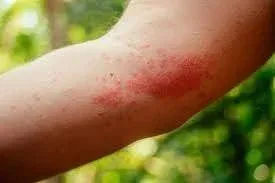
A small red bump that turns into a skin ulcer with swollen lymph nodes nearby.
Final Thoughts
Tularemia from deer fly bite is uncommon, but early recognition matters. If you notice fever and a painful ulcer after an outdoor bite, don’t delay medical care. With timely treatment, recovery is likely, making awareness your best defense.