| Author | Dr. Alex Thorne |
| Credentials | Board-Certified Entomologist and Clinical Toxicologist |
| Author Bio | Dr. Thorne specializes in venom research and emergency first aid. |
| Medically Reviewed By | Dr. Elara Vance, M.D., F.A.C.E.P. (Board Certified Emergency Medicine) on October 25, 2025. |
| 🔑 Key Takeaways |
| Essential oils that repel ticks can offer an alternative to synthetic chemicals like DEET, but they are generally less potent and require more frequent reapplication. The most effective natural options include Oil of Lemon Eucalyptus (OLE) and oils derived from Geranium, Cedarwood, and Lemongrass. OLE is the only plant-based active ingredient recommended by the CDC. Crucially, essential oils must always be diluted in a carrier oil (like coconut or jojoba) before applying to the skin, as using them undiluted can cause severe skin irritation. |
Top Essential Oils Recommended for Tick Repellency
The efficacy of essential oils comes from their volatile compounds (terpenes) that disrupt the tick’s ability to sense a host.
| Essential Oil | Active Compound | Efficacy & Duration | Safety Note |
| Oil of Lemon Eucalyptus (OLE) | p-Menthane-3,8-diol (PMD) | Highest Efficacy. Comparable to low-concentration DEET for up to 6 hours. CDC-recommended. | Do NOT use on children under 3 years old. |
| Geranium Oil (Pelargonium graveolens) | Geraniol, Citronellol | Proven Efficacy. Shows good short-term repellency against multiple tick species. | Use a maximum concentration of $10\%$ on the skin. |
| Cedarwood Oil | Cedrol | Moderate Efficacy. Known for repelling pests; safe when diluted. | Often used in sprays for clothing and gear rather than skin. |
| Lemongrass Oil | Citral | Moderate Efficacy. Provides a strong scent that deters ticks. | Must be diluted; avoid use on sensitive skin. |
| Thyme Oil | Thymol | High Initial Efficacy. Research suggests strong repellency, but protection time is very short. | Use very sparingly and highly diluted, as it can be highly irritating. |
2. Safe Application Protocol
Because essential oils are highly concentrated, they must be treated carefully to avoid skin burns or irritation.
Dilution is Mandatory: Mix the essential oil with a carrier oil (such as coconut, almond, or jojoba oil) before applying it to the skin. A safe dilution ratio for most oils is 5–10 drops of essential oil per 1 ounce of carrier oil (approximately 2–5% concentration).
Patch Test: Apply a small amount of the diluted mixture to a discreet patch of skin (e.g., inside the elbow) and wait 24 hours to ensure there is no allergic reaction or irritation.
Targeted Application: Apply the repellent to exposed skin. For clothing, use a diluted spray and let the clothing dry completely before wearing.
Reapply Frequently: Unlike DEET or Picaridin, which can last for hours, essential oils that repel ticks typically evaporate quickly and must be reapplied every 60 to 90 minutes to maintain effectiveness.

3. When to Choose a Synthetic Repellent
While many individuals prefer essential oils that repel ticks, they offer a shorter and less consistent protection time.
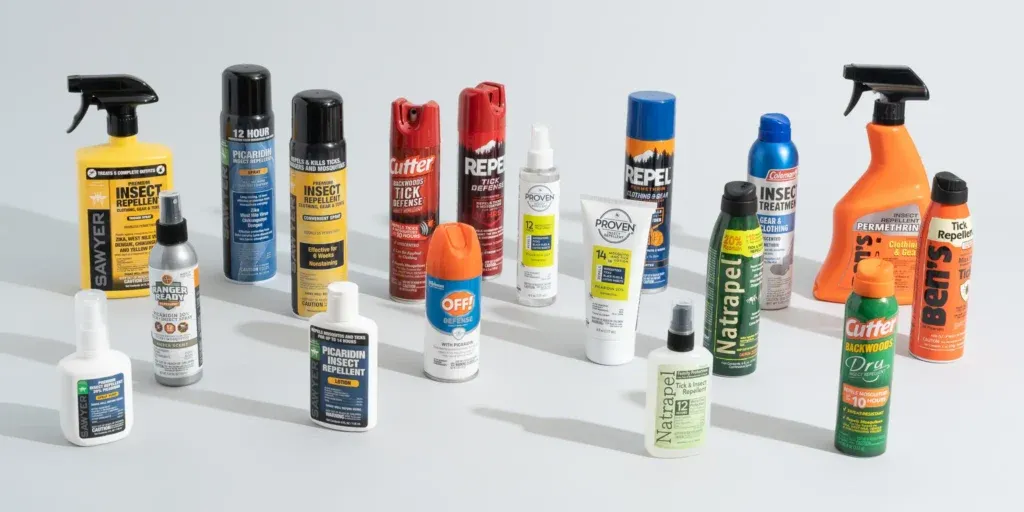
High-Risk Exposure: If you are hiking in high grass, dense woods, or an area endemic for Lyme disease, EPA-registered synthetic repellents (DEET or Picaridin) are the most reliable option for long-lasting, guaranteed protection.
Permethrin for Clothing: Always combine skin repellent with treating outer clothing and gear with Permethrin spray (an insecticide) for maximum safety against ticks.
For guidance on the only plant-based repellent recommended for effectiveness, consult the Centers for Disease Control and Prevention (CDC) page on insect repellents.
FAQs
1. Which essential oils repel ticks the best?
Top tick-repelling oils include lemon eucalyptus, eucalyptus, lavender, rose geranium, cedarwood, peppermint, and rosemary.
2. How do I apply essential oils for tick protection?
Dilute essential oils in a carrier oil (like coconut or jojoba oil) or mix them with water to create a spray. Apply to ankles, legs, socks, and clothing before going outside.
3. Is lemon eucalyptus the same as eucalyptus oil?
No. Lemon eucalyptus (OLE) is more effective against ticks and mosquitoes than regular eucalyptus oil.
4. Are essential oils safe for kids?
Most can be used safely when diluted, but avoid peppermint and eucalyptus on very young children. Always patch test first.
5. Can I use essential oils on pets for tick prevention?
Some oils—like cedarwood—are safe for dogs, but others can be toxic. Never apply essential oils to pets without confirming they are safe for that species.
6. How long do essential oils protect against ticks?
Protection usually lasts 1–3 hours, so frequent reapplication is necessary.
7. Can essential oils replace DEET or Picaridin?
They provide natural protection but are not as long-lasting. For high-risk, tick-infested areas, stronger repellents may be needed.
Final Thoughts
Using essential oils that repel ticks is a great way to add natural protection to your outdoor routine. While they’re not as long-lasting as chemical repellents, oils like eucalyptus, lemon eucalyptus, lavender, rosemary, and cedarwood are powerful and safer alternatives for people who prefer plant-based solutions. With proper dilution, consistent application, and a combination of yard care and protective habits, essential oils can become an important part of a holistic tick-prevention strategy. Always test oils on a small area of skin and use only pet-safe options if you have animals at home.