| Author | Dr. Alex Thorne |
| Credentials | Board-Certified Entomologist and Clinical Toxicologist |
| Author Bio | Dr. Thorne specializes in venom research and emergency first aid. |
| Medically Reviewed By | Dr. Elara Vance, M.D., F.A.C.E.P. (Board Certified Emergency Medicine) on October 25, 2025. |
‘
| 🔑 Key Takeaways |
| Lyme disease is prevented by safely removing the tick before transmission occurs. You cannot know if a tick carries Lyme disease without laboratory testing. Ticks, including those potentially carrying Lyme disease (like the Blacklegged or Deer Tick), should be killed immediately after removal to prevent reattachment or continued survival. The safest method to kill a removed tick is by placing it in a sealed container with rubbing alcohol (or hand sanitizer) or flushing it down the toilet. Never crush a tick with your fingers. |
How to Kill Ticks Carrying Lyme Disease and then kill it
The bacterium that causes Lyme disease, Borrelia burgdorferi, is typically transmitted only after 36 to 48 hours of feeding. Prompt, safe removal is the best defense.
Recommended Methods for Killing a Tick
| Method | Safety & Rationale | Note |
| Alcohol Immersion | Place the removed tick in a small, sealed container (like a pill bottle or zip-top bag) filled with rubbing alcohol (or hand sanitizer). | This is the most effective and recommended method, as it kills the tick immediately and preserves it for possible identification. |
| Flushing | Flush the tick down the toilet. | Quick and sanitary. If you need to save the tick for testing, use the alcohol immersion method instead. |
| Sealed Bag | Place the tick in a tightly sealed plastic bag. | The tick will eventually die, but this method is slower than using alcohol. |
Methods to AVOID
- Crushing with Fingers: This risks crushing the body and exposing yourself to potential pathogens.
- Burning/Heat: Can cause the tick to “spit up” its stomach contents, releasing pathogens and creating unnecessary risk.
- Leaving it Alive: A live tick could crawl away and reattach to a human or pet.
2. Proper Tick Removal Technique
Safe removal is crucial to ensure the tick’s mouthparts are completely detached and not left embedded in the skin.
- Grasp: Use fine-tipped tweezers to grasp the tick as close to the skin’s surface as possible. Do not grasp the tick’s body.
- Pull: Pull straight upward with slow, steady pressure. Do not twist or jerk, as this can break off the mouthparts.
- Clean: Thoroughly clean the bite area and your hands with rubbing alcohol or soap and water.
3. Post Removal Monitoring and Treatment
You should monitor the bite site and your general health for several weeks after removing any tick.
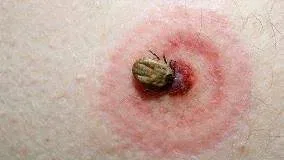
- Monitoring: Monitor the area for the characteristic Erythema Migrans (Bull’s-eye Rash) for up to 30 days. Watch for general symptoms of tick-borne illness, such as fever, severe headache, or joint pain.
- Medical Action: If a rash appears or flu-like symptoms develop, seek medical attention immediately. Do not wait for a test result. Treatment with antibiotics (Doxycycline) should begin based on clinical suspicion to prevent chronic disease.
- Tick Testing: Some state labs or commercial services offer tick testing to confirm the presence of Borrelia burgdorferi, but this should never delay treatment if symptoms appear, as testing can sometimes yield false negatives.
For detailed instructions on safe tick removal and identification of symptoms, consult the Centers for Disease Control and Prevention (CDC) guidance on removing ticks.