Direct answer: Most bald-faced hornet stings cause immediate pain, redness, and swelling around the sting site. The warning signs that need urgent attention are symptoms that go beyond the local area, especially trouble breathing, swelling of the lips, tongue, or throat, fainting, widespread hives, severe dizziness, or repeated vomiting. Those can signal anaphylaxis, which is a medical emergency. A sting that later becomes increasingly red, hot, painful, or drains pus may need evaluation for infection.
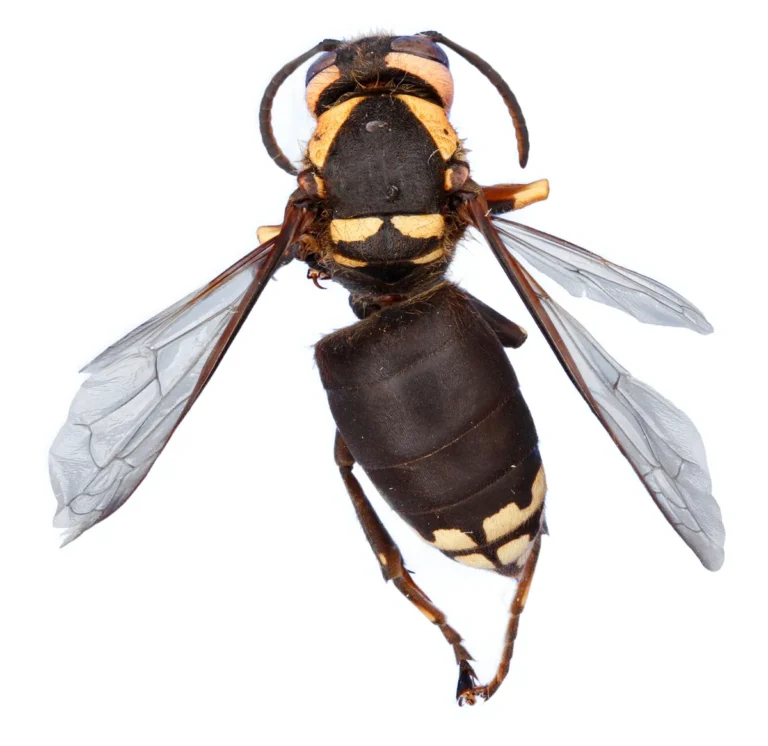
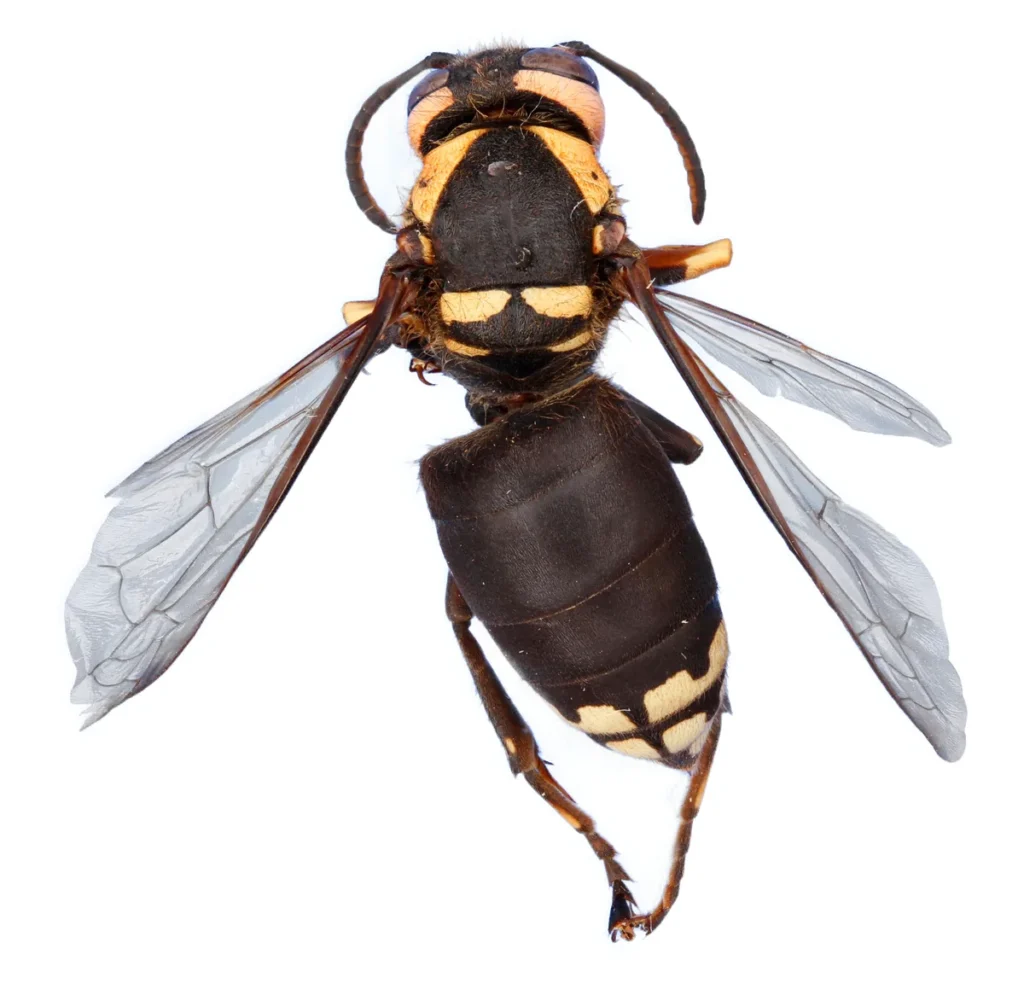
A bald-faced hornet is not a true hornet. Dolichovespula maculata is an aerial yellowjacket with distinctive black-and-white markings. Like other social wasps, it can sting repeatedly when defending its nest. That matters because multiple stings can increase the amount of venom delivered even in someone who is not allergic.
Emergency rule
Call emergency services now for difficulty breathing, throat tightness, swelling of the tongue or face, fainting, confusion, signs of shock, or a rapidly worsening whole-body allergic reaction after a sting. If the person has prescribed epinephrine, use it immediately according to their emergency plan.
Bald-faced hornet sting warning signs: quick guide
| Reaction | Typical clues | What to do |
|---|---|---|
| Normal local reaction | Pain, redness, mild swelling, itching near the sting | Clean, cool compress, monitor |
| Large local reaction | Marked swelling that extends beyond the immediate sting site | Monitor closely; seek advice if severe, progressive, or concerning |
| Possible infection | Increasing warmth, spreading redness, pus, worsening tenderness after the initial reaction | Contact a healthcare professional |
| Anaphylaxis | Breathing trouble, throat or tongue swelling, widespread hives, fainting, shock, severe GI symptoms with other allergic signs | Epinephrine if prescribed and emergency medical care |
| Multiple-sting toxicity | Many stings plus vomiting, weakness, severe headache, fainting, or other systemic symptoms | Urgent medical evaluation |
What is a bald-faced hornet?
The bald-faced hornet is a black-and-white social wasp native to North America. Penn State Extension notes that it is technically an aerial yellowjacket rather than a true hornet. Workers and queens build large gray paper nests that are often attached to tree branches, shrubs, eaves, or other elevated structures.
The white markings on the face and abdomen are useful identification clues. Colonies can contain hundreds of workers by late summer. These wasps are beneficial predators of other insects, but they can defend the nest aggressively if people approach or disturb it.
Unlike honey bees, social wasps can sting more than once. That means someone close to a disturbed nest may receive multiple stings in a short period.
What does a bald-faced hornet sting feel like?
A sting usually causes sharp or burning pain immediately. Redness, tenderness, itching, and localized swelling can follow. For many people, these symptoms remain limited to the area around the sting and improve with time.
The size of the skin reaction does not by itself prove an allergy. A person can have a large local reaction without developing anaphylaxis. The more important emergency clues are symptoms affecting the airway, circulation, or multiple body systems.
Normal local reaction vs warning signs
Common local symptoms
- Immediate pain or burning.
- A red or pink area around the sting.
- Mild to moderate swelling.
- Itching or tenderness.
- Symptoms limited mainly to the sting area.
A local reaction can look dramatic in sensitive areas such as a hand, foot, eyelid, or face because those tissues swell easily. Location matters when deciding whether swelling is dangerous.
Symptoms that deserve closer attention
- Redness that keeps spreading after the expected early reaction.
- Increasing warmth or pain rather than gradual improvement.
- Pus or drainage.
- Fever or feeling ill together with worsening skin findings.
- Extensive swelling that interferes with normal movement or function.
- Any symptoms away from the sting site that suggest an allergic reaction.
When is swelling an emergency?
Swelling directly around the sting is common. Swelling becomes much more concerning when it involves the tongue, throat, lips, or airway, or when it is paired with breathing difficulty, wheezing, fainting, or widespread hives.
A sting inside the mouth or throat can also be dangerous because even a local reaction may narrow the airway. MedlinePlus advises urgent evaluation when a sting occurs in the mouth or throat.
Decision guide
Small painful red area only: routine first aid and monitoring are usually reasonable.
Large but localized swelling: monitor closely and seek medical advice if severe, rapidly progressive, or function-limiting.
Face, tongue, throat swelling or trouble breathing: emergency care now.
Worsening redness, heat, pain, or pus after the first day or two: possible secondary infection; seek medical advice.
Many stings: consider urgent evaluation because a large venom dose can cause systemic toxicity.
Anaphylaxis after a bald-faced hornet sting
Stinging insect venom is a well-recognized trigger of anaphylaxis. The American Academy of Allergy, Asthma & Immunology describes anaphylaxis as a serious allergic reaction that can develop rapidly and may be fatal without prompt treatment.
Symptoms can involve more than one part of the body. Warning signs include:
- Difficulty breathing, wheezing, or chest tightness.
- Swelling of the tongue, throat, lips, or face.
- Widespread hives or intense itching away from the sting.
- Dizziness, fainting, confusion, or signs of low blood pressure.
- Repeated vomiting, severe abdominal cramps, or diarrhea together with other allergic symptoms.
If anaphylaxis is suspected, epinephrine is the first-line emergency treatment when available and prescribed. Call emergency services immediately. Do not wait to see whether symptoms improve on their own.
Can a severe reaction happen if you were fine before?
Yes. A person may have tolerated previous stings and still develop a significant allergic reaction later. Previous history can help estimate risk, but it does not guarantee that future reactions will be identical.
Anyone who has had anaphylaxis after an insect sting should discuss follow-up with an allergist. Allergy specialists can evaluate venom sensitivity and discuss emergency epinephrine and venom immunotherapy when appropriate.
Large local reaction vs anaphylaxis
A large local reaction can involve substantial swelling around the sting and may expand over several hours. It can be uncomfortable, but it is still different from anaphylaxis if symptoms remain limited to the local area.
Anaphylaxis is a systemic reaction. Symptoms may affect skin, breathing, circulation, and the gastrointestinal tract. A person does not need to have every classic symptom for the reaction to be serious.
When in doubt, airway symptoms, fainting, or rapidly progressive multi-system symptoms should be treated as an emergency.
Infection after a bald-faced hornet sting
Venom reactions happen soon after the sting. Bacterial infection is different and is more likely to become apparent later, especially if the skin has been scratched or broken.
Possible infection clues include increasing redness after an initial period of stability, warmth, worsening tenderness, pus, drainage, red streaking, or fever. Redness immediately after a sting is not automatically infection.
A healthcare professional can help distinguish normal inflammation, a large local venom reaction, and a secondary skin infection when the pattern is unclear.
What does a red streak mean?
A red streak extending away from the sting can have more than one cause. Local inflammation and scratching can produce linear redness, but a progressively spreading tender streak can also be a warning sign of lymphangitis or infection.
If a streak is spreading, painful, warm, or accompanied by fever or feeling unwell, seek medical evaluation rather than relying on home treatment alone.
What if you were stung many times?
Multiple stings are a separate concern from allergy. Social wasps can sting repeatedly, so disturbing a bald-faced hornet nest can result in a large venom exposure.
AAAAI notes that toxic venom reactions can cause systemic symptoms and may resemble an allergic reaction, especially after many stings. Symptoms such as nausea, fever, fainting, seizures, shock, or severe weakness after multiple stings need urgent medical assessment.
Children, older adults, and people with underlying medical conditions may need a lower threshold for evaluation after numerous stings.
First aid for a bald-faced hornet sting
- Move away from the nest area to prevent additional stings.
- Wash the sting site gently with soap and water.
- Apply a cool compress for pain and swelling.
- Remove tight rings or jewelry near a swelling hand or finger.
- Avoid scratching and keep broken skin clean.
- Use over-the-counter pain or anti-itch medicine only if it is safe for you and according to the product label.
- Monitor for symptoms away from the sting site.
Bald-faced hornets do not normally leave a barbed stinger behind the way honey bees can. If a foreign object is visible, do not dig aggressively into the skin.
For general first-aid steps, see the StingHelp bite and sting first-aid guide and What Bit Me? identification guide.
How long should a normal reaction last?
Pain is usually strongest early. Redness, itching, and swelling can persist longer and may peak after the initial sting. There is no exact timeline that fits everyone.
The key is the trend. A reaction that is stable or gradually improving is generally less concerning than one that becomes increasingly painful, hot, swollen, or systemic.
When should you go to urgent care or the emergency department?
Emergency care is appropriate for breathing difficulty, throat or tongue swelling, fainting, severe dizziness, shock, confusion, or a rapidly progressing allergic reaction.
Urgent evaluation may also be appropriate after many stings, a sting in the mouth or throat, severe swelling in a high-risk location, persistent vomiting, or rapidly worsening symptoms.
For localized symptoms that are not improving, infection concerns, or questions about a previous allergic reaction, contact a clinician or urgent-care service.
How to avoid another bald-faced hornet sting
Do not approach or strike a large paper nest. Bald-faced hornets can become defensive near the colony. If a nest is close to a doorway, playground, frequently used yard area, or someone with a known sting allergy, professional pest management is usually safer than do-it-yourself nest removal.
Penn State Extension notes that nests located away from regular human activity can often be left alone because these wasps are beneficial predators. When control is needed, disturbing the nest during the day can increase sting risk.
For related comparison content, see bee stings vs wasp stings and wasp stings vs hornet stings.
Bald-faced hornet identification clues
- Mostly black body with ivory-white markings.
- White markings on the face.
- Large enclosed gray paper nest.
- Nests commonly in trees, shrubs, or under eaves.
- Social colony that can defend the nest aggressively.
Correct identification can help with prevention, but emergency care decisions should be based on symptoms, not on perfect insect identification.
Normal inflammation vs infection: timing matters
The first several hours after a sting are dominated by venom-driven inflammation. Pain, redness, warmth, and swelling can all be part of that normal response. A large local reaction may continue to enlarge for a time before it settles, which can look alarming even when bacteria are not involved.
Infection becomes more concerning when the pattern changes after the initial reaction. Examples include redness that continues to expand instead of stabilizing, increasing tenderness, pus, drainage, fever, or a new painful red streak. Scratching can also damage the skin barrier and increase infection risk. If the sting is on the hand, foot, or near a joint, swelling may interfere with normal function and deserves closer attention even without infection.
Marking the edge of redness with a pen and noting the time can help you see whether the area is expanding, but this should not delay medical evaluation when symptoms are severe or systemic.
Who should be especially cautious after a sting?
Anyone with a previous systemic reaction to a bee, wasp, hornet, yellowjacket, or fire ant sting should follow their allergy action plan. People who carry epinephrine should keep it accessible rather than stored far away in a vehicle or building.
Extra caution is also reasonable after a sting in the mouth or throat, after many stings, or when the person is very young, older, medically fragile, or taking medicines that may complicate treatment of anaphylaxis. These factors do not guarantee a severe reaction, but they can lower the threshold for professional evaluation.
Frequently asked questions
Is a bald-faced hornet sting more dangerous than a bee sting?
Either can be dangerous in someone with venom allergy. The major risk is the person’s reaction and the number of stings, not simply the insect’s common name.
Can bald-faced hornets sting more than once?
Yes. Bald-faced hornets are social wasps and can deliver repeated stings, especially during nest defense.
Does redness mean the sting is infected?
No. Redness is a common early venom reaction. Infection is more concerning when redness, warmth, pain, or drainage becomes progressively worse later rather than improving.
When should you use epinephrine?
If you have prescribed epinephrine for insect-sting allergy, use it according to your emergency plan when anaphylaxis is suspected, and call emergency services immediately.
Should you remove a stinger after a bald-faced hornet sting?
Bald-faced hornets generally do not leave a barbed stinger in the skin. If something is visibly embedded, avoid digging into the skin and seek help if needed.
What should you do after multiple bald-faced hornet stings?
Move to a safe area, assess for allergic symptoms, and seek urgent medical advice when there are many stings or any systemic symptoms. A large venom dose can cause toxicity even without a classic allergy.
Authoritative references
- AAAAI — Stinging Insect Allergy
- AAAAI — Anaphylaxis
- MedlinePlus — Insect Bites and Stings
- MedlinePlus — Bee, Wasp, Hornet, or Yellow Jacket Sting
- Penn State Extension — Baldfaced Hornet
Bottom line
Most bald-faced hornet stings cause painful local redness and swelling, but the key warning signs are symptoms that spread beyond the sting site or affect breathing, circulation, or multiple body systems. Anaphylaxis needs immediate epinephrine when available and emergency care. Worsening redness, warmth, pus, or fever later can suggest infection, while numerous stings can cause a toxic venom reaction even in someone without a known allergy.
Educational information only. This article does not diagnose allergy, infection, or venom toxicity and does not replace professional medical care. Call your local emergency number for severe allergic symptoms.