








Newsletter Subscribe
Enter your email address below and subscribe to our newsletter

All voices matter
 ByQamar
Learn how to safely use vinegar for wasp stings. Discover why acetic acid neutralizes alkaline wasp venom, compare Apple Cider Vinegar vs. White Vinegar, and follow our step-by-step application protocol.
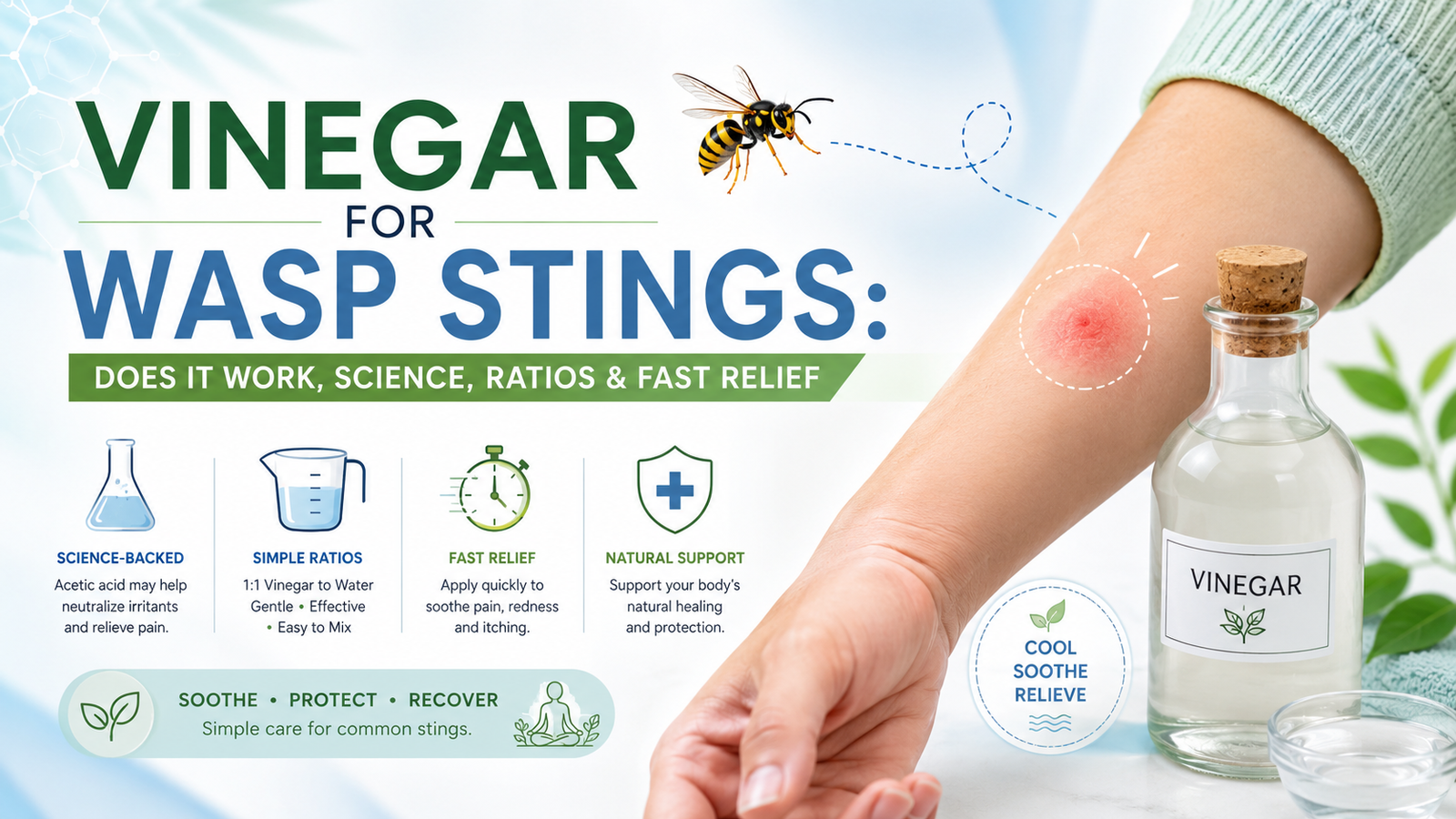
Yes, vinegar for wasp stings is one of the most effective, biologically backed home remedies available. Applying dilute or pure household vinegar (such as apple cider vinegar or distilled white vinegar) directly to a wasp sting works because wasp venom is alkaline (basic). The natural acetic acid (pH 2.4–3.0) in vinegar neutralizes alkaline venom components, halts localized enzymatic breakdown, constricts swollen capillaries, and rapidly quells the intense fiery pain and itching.
Soaking a cotton ball or clean cloth in vinegar and holding it over the sting for 15 to 20 minutes reduces localized inflammation and provides rapid, soothing relief within minutes of application.
⚠️ Emergency Warning: Vinegar is strictly a first-aid remedy for mild, localized sting symptoms (redness, local swelling, burning pain). If the stung person develops difficulty breathing, wheezing, throat or tongue swelling, dizziness, widespread hives, nausea, or loss of consciousness, call 911 immediately. These are signs of life-threatening systemic anaphylaxis requiring immediate intramuscular epinephrine (EpiPen).
A sudden encounter with a yellowjacket, paper wasp, or hornet is notoriously painful. Unlike honeybees—which can only sting once and leave their barbed venom apparatus behind—wasps possess a smooth, lancet-like stinger. This allows a single aggressive wasp to sting multiple times, injecting concentrated venom deep into your epidermal layers with each strike.
While generations of folk medicine have tested dozens of kitchen remedies (from mud to raw onions), vinegar has remained the undisputed champion for wasp sting relief among wilderness guides, outdoor professionals, and toxicologists alike. The reason is rooted in fundamental acid-base chemistry.
In this clinical guide, we explore the biochemical mechanism behind why vinegar neutralizes wasp venom, compare Apple Cider Vinegar (ACV) vs. Distilled White Vinegar, provide exact application ratios, outline essential over-the-counter medical adjuncts, and clarify the life-saving rule of why you should never mix up bee and wasp treatments.
To understand why vinegar provides rapid comfort, we must examine the biochemical makeup of wasp venom (vespid venom) and the pharmacological properties of acetic acid.
+--------------------------------------------------------------------------------+
|                   HOW VINEGAR SOOTHES A WASP STING                             |
|                                                                                |
|   [ Wasp / Hornet Venom ]                 [ Acetic Acid (Vinegar) ]            |
|   - Alkaline pH (~6.8 - 8.8)              - Acidic pH (~2.4 - 3.0)             |
|   - Acetylcholine & Serotonin             - Mild Organic Astringent            |
|   - Phospholipase A1 & Kinins             - Evaporative Cooling Agent          |
|              \                                       /                         |
|               \                                     /                          |
|                v                                   v                           |
|   +------------------------------------------------------------------------+   |
|   | 1. Acid-Base Neutralization at Epidermal Puncture Site                 |   |
|   | 2. Acetylcholine / Pain-Amine Degradation & Blunting                   |   |
|   | 3. Astringent Capillary Constriction (Reduces Local Edema)             |   |
|   | 4. Desensitization of C-Fiber Peripheral Pain Receptors                |   |
|   +------------------------------------------------------------------------+   |
+--------------------------------------------------------------------------------+
Unlike honeybee venom (which is mildly acidic with a pH of 5.0–5.5), wasp and yellowjacket venom is neutral-to-alkaline, with an effective basic pH range between 6.8 and 8.8. The venom contains basic amines (acetylcholine, serotonin, dopamine, and histamine) and peptide toxins (such as mastoparan and kinins).
Household vinegar is an aqueous solution containing 4% to 6% acetic acid (CH₃COOH), yielding a natural acidic pH of approximately 2.4 to 3.0. When topically applied over the open puncture wound, the acidic protons (H⁺) immediately react with the alkaline venom residues on and just beneath the skin surface. This acid-base reaction helps moderate the basic pH shift, dampening the chemical activation of nociceptors (pain receptors).
Wasp venom relies on active destructive enzymes—chiefly phospholipase A1, phospholipase B, and hyaluronidase—to break down cell membranes and dissolve intracellular connective tissue so toxins can spread rapidly. By lowering the localized skin environment pH, acetic acid helps denature these temperature- and pH-sensitive enzymes, substantially halting their tissue-spreading potency.
Acetic acid possesses mild natural astringent properties. When applied to inflamed dermal tissue, it causes mild contraction of superficial microcapillaries. This vasoconstriction slows the pooling of inflammatory serous fluid (edema), preventing the hard, swollen knot that typically develops around a wasp sting.
As the liquid vinegar evaporates from the skin, it draws away thermal energy, producing an instant cooling sensation. This cooling effect overrides peripheral nerve transmission (via the Gate Control Theory of Pain), interrupting the throbbing burn and intense secondary itching.
Both Apple Cider Vinegar (ACV) and Distilled White Vinegar are effective for wasp stings because both contain sufficient acetic acid. However, slight chemical differences make one slightly superior for skin application:
| Comparison Factor | Apple Cider Vinegar (ACV) 🍎 | Distilled White Vinegar ⚪ |
|---|---|---|
| Acetic Acid Concentration | 5% Acidity | 5% to 6% Acidity |
| pH Level | Approx. 2.8 – 3.0 (Gentler on skin) | Approx. 2.4 – 2.6 (Slightly more acidic) |
| Bioactive Components | Contains “The Mother” (polyphenols, malic acid, bioflavonoids) | Pure acetic acid and distilled water |
| Anti-Inflammatory Benefit | Higher: Raw enzymes and malic acid soothe irritated tissue | Standard: Relies purely on acetic acid mechanism |
| Skin Irritation Risk | Low (buffered by natural fruit acids) | Moderate (may cause brief stinging on raw abrasions) |
| Verdict | 🏆 Best Choice for soothing sensitive skin | ✅ Excellent & highly effective alternative |
Recommendation: Use raw, unfiltered Apple Cider Vinegar (with the Mother) if available, as its malic acid and trace antioxidants provide added soothing properties. However, if you only have Distilled White Vinegar in your pantry, use it immediately—speed of application matters far more than the specific vinegar brand.
Follow this clinical 5-step emergency protocol to maximize pain relief and prevent secondary complications:
Wasps emit alarm pheromones during an attack that summon other nest members. Immediately retreat to an indoor or shielded location.
Note: Unlike honeybees, wasps do NOT leave a stinger in your skin. If you see a dark speck or barb embedded in the puncture wound, you were stung by a honeybee, not a wasp (see the critical difference below).
Cleanse the area thoroughly for 20–30 seconds. Wasps are scavengers and predators that frequently land on decaying organic matter; their stingers can carry environmental bacteria (such as Staphylococcus or Streptococcus). Washing prevents secondary bacterial infections.
Soak a sterile cotton ball, gauze pad, or folded paper towel in undiluted Apple Cider Vinegar or White Vinegar.
If liquid compresses slide off or you need prolonged contact, mix 2 tablespoons of colloidal oatmeal (or plain baking flour) with 1 tablespoon of Apple Cider Vinegar to form a thick paste. Slather the paste onto the sting and allow it to dry for 20 minutes before gently rinsing with cool water.
After removing the vinegar compress, apply an ice pack wrapped in a clean cloth for 15 minutes. If the sting is on your hand, arm, leg, or foot, elevate the limb above heart level to prevent gravitational fluid accumulation.
❌ The Golden Rule of Insect Sting First Aid:
• Wasp / Hornet Sting: Venom is ALKALINE → Treat with ACID (Vinegar).
• Honeybee Sting: Venom is ACIDIC → Treat with ALKALINE BASE (Baking Soda Paste).
Applying vinegar to a honeybee sting adds acid on top of acid (formic and phosphoric acids), increasing local tissue irritation and worsening the burning sensation. Conversely, putting baking soda on a wasp sting provides minimal chemical neutralization. Always identify whether you were stung by a bee or wasp before choosing your remedy:
| Characteristic | Wasp / Hornet / Yellowjacket | Honeybee |
|---|---|---|
| Venom pH Chemistry | Alkaline / Basic (pH 6.8 – 8.8) | Acidic (pH 5.0 – 5.5) |
| Target Neutralizing Remedy | Vinegar (Apple Cider or White) | Baking Soda Paste (3:1 with water) |
| Stinger Left in Skin? | No (Smooth stinger is retained) | Yes (Barbed stinger with venom sac) |
| Multiple Stings Possible? | Yes (Can sting repeatedly) | No (Bee dies after stinging once) |
| Immediate First Action | Move away, wash with soap, apply vinegar | Scrape stinger out immediately, wash, apply baking soda |
While vinegar handles initial surface neutralization, clinical management of a wasp sting requires addressing deeper tissue inflammation and histamine cascade. Here is how to combine home care with evidence-based OTC medications:
Take an oral H1-blocker (such as Cetirizine 10mg or Diphenhydramine 25–50mg) immediately to halt histamine-driven swelling and intense itching from within.
Take Ibuprofen (400–600mg) or Naproxen to block cyclooxygenase (COX) enzymes, reducing prostaglandin release and controlling deep throbbing ache.
After removing the vinegar compress and drying the skin, apply 1% hydrocortisone cream 2–3 times daily to suppress delayed localized immune reactions.
Apply calamine lotion or topical pramoxine HCl to create a protective barrier that numbs itch receptors and prevents persistent scratching.
While over 90% of wasp stings heal cleanly with home first aid, sting reactions can occasionally escalate into medical emergencies. Learn to distinguish between emergency anaphylaxis and secondary infections:
If any of the following symptoms appear within 5 to 60 minutes of the sting, administer an epinephrine auto-injector (if available) and call emergency services without delay:
Seek non-emergency clinical evaluation at an urgent care clinic if:
Apply a vinegar-soaked compress for 15 to 20 minutes. This allows sufficient time for the acetic acid to penetrate the outer epidermal layers and neutralize surface venom. Do not leave undiluted vinegar bandages on overnight, as prolonged occlusion can irritate delicate skin.
Yes. Yellowjackets are members of the vespid wasp family (Vespidae). Their venom is alkaline, making vinegar the ideal acidic home treatment for yellowjacket stings.
Because a wasp puncture penetrates the protective stratum corneum layer of the epidermis, applying an acidic liquid can cause a momentary 10–20 second stinging sensation as exposed nerve endings react. However, this is rapidly replaced by significant cooling and pain relief.
No. Mixing acidic vinegar (CH₃COOH) and basic baking soda (NaHCO₃) causes a violent acid-base neutralization reaction that produces water, carbon dioxide gas (bubbles), and sodium acetate. This completely neutralizes both active agents, rendering the mixture therapeutically useless. Use vinegar alone for wasps, and baking soda alone for bees.
Yes, apple cider vinegar is safe for children older than 12 months. For toddlers and children with sensitive skin, dilute the vinegar 50/50 with cool water (1 tablespoon vinegar to 1 tablespoon water) to minimize initial stinging sensation.
Vinegar blunts the initial enzymatic damage and superficial vasodilation, which significantly minimizes early swelling. However, to prevent deeper allergic swelling (histamine release), you should combine vinegar application with limb elevation, cold packs, and an oral antihistamine.
Accidentally putting vinegar on a honeybee sting will not cause permanent harm, but it may temporarily intensify the sharp burning sensation because bee venom is already acidic. If you make this mistake, simply rinse the area with cool water and switch to a soothing baking soda paste.
You can reapply a vinegar compress 2 to 3 times during the first 6 hours post-sting if burning or throbbing pain returns. After the first 6–8 hours, switch to topical 1% hydrocortisone cream and calamine lotion for ongoing maintenance.